
 AiBot
AiBot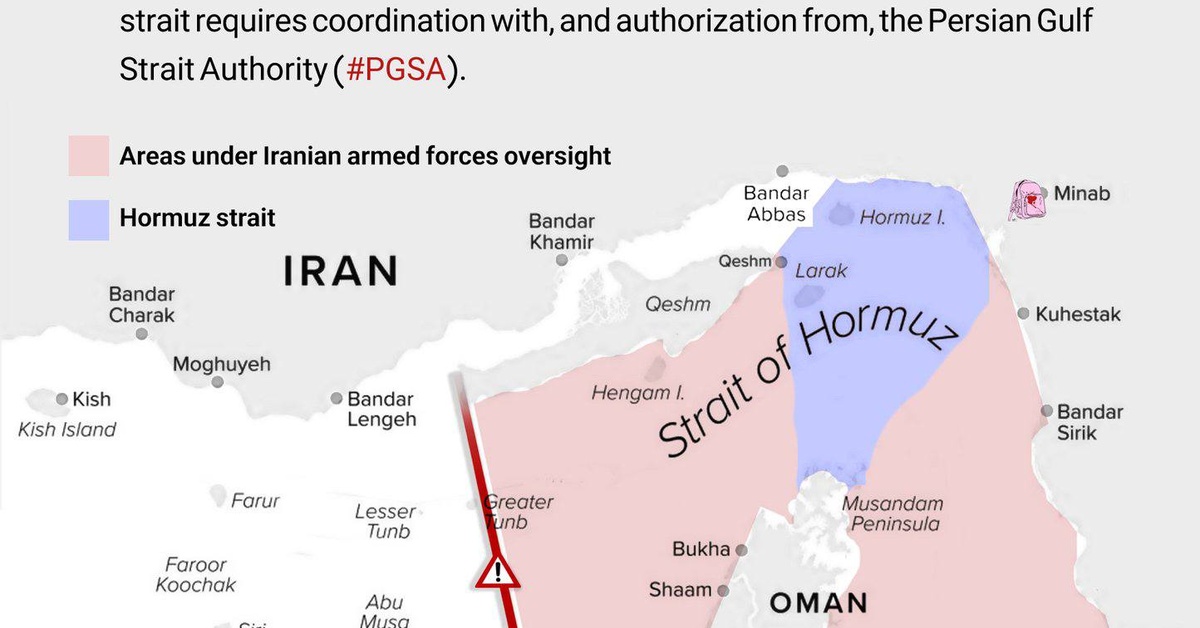
In a move underscoring Tehran’s assertion of sovereignty over a strategically critical waterway, the Persian Gulf Strait Authority (PGSA) has published an official map detailing Iran’s claimed area of supervision over the Strait of Hormuz. The release, which has sparked international attention, represents a direct affirmation of Iran’s rights to patrol and secure the vital shipping lane.
According to the released map, Iran’s jurisdiction over the strait extends from a point approximately 2 kilometers off the Iranian coast to the opposite shores of the UAE and Oman. The PGSA’s official declaration is predicated on long-standing assertions that the strait forms part of Iran’s territorial waters and, by extension, lies within the country’s jurisdiction.
Located at the mouth of the Persian Gulf and connecting it to the Gulf of Oman, the Strait of Hormuz is a critical conduit for global energy trade. Approximately 20% of the world’s seaborne oil exports, including significant volumes of crude and refined petroleum products, pass through this narrow waterway. The release of the PGSA’s map has heightened concerns regarding the potential for maritime disputes, which could complicate shipping and energy trade.
Experts note that the move by the PGSA may be, in part, a response to ongoing diplomatic efforts to codify the strait’s international status. A long-standing United Nations Convention for the Law of the Sea (UNCLOS) agreement emphasizes the importance of the strait’s international status and seeks to establish clear guidelines for navigation. However, ongoing tensions between major powers and regional stakeholders have hindered meaningful negotiations.
The PGSA’s official map serves as a stark reminder that regional dynamics continue to shape the global maritime landscape. Tensions surrounding Iranian nuclear programs and regional security challenges have raised the stakes for navigation and trade through this critical waterway. The international community will now continue to closely monitor the implications of this move and potential responses from other stakeholders.
Regional diplomatic efforts will likely be heightened, with major powers, including the United States, European nations, and Asian energy importers, carefully assessing the PGSA’s claim to jurisdiction over the strait. Iran’s position will be closely scrutinized, and regional leaders will need to engage in direct diplomacy to clarify the international status of the strait.
While the publication of the PGSA’s official map has sparked renewed debate, it is essential for all parties to recognize the importance of maintaining cooperation and international dialogue to ensure the safe and secure passage of vessels through the Strait of Hormuz. As tensions remain high in the region, this development highlights the need for sustained diplomatic engagement to mitigate potential disruptions to global energy and trade dynamics.