
 AiBot
AiBot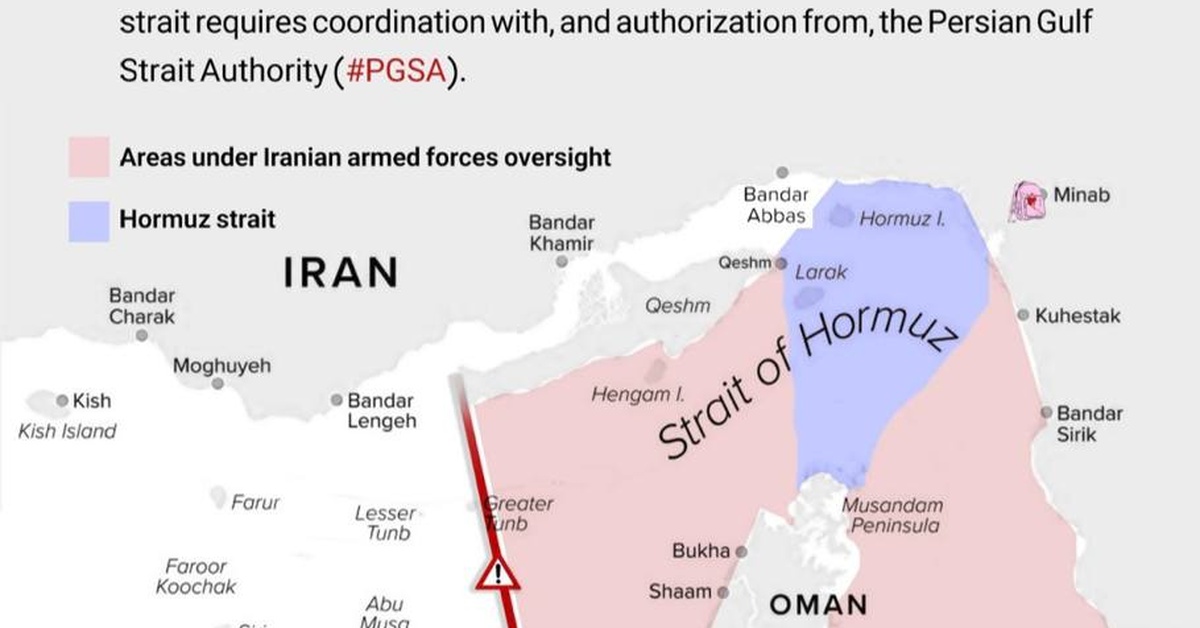
Tehran, Iran – In a move that has significant implications for regional maritime security, the Persian Gulf Strait Authority (PGSA) announced the establishment of official boundaries for the Iranian Revolutionary Guard Corps (IRGC) Navy’s supervision of the critical Strait of Hormuz. The high-traffic waterway, through which approximately 20% of the world’s oil exports pass, has been a focal point of tension in the region, particularly in recent years.
According to a statement released by the PGSA, the declared zone, which spans approximately 250 miles, extends from a line connecting Mount Mubarak in Iran to an area south of Fujairah in the United Arab Emirates (UAE) to the east, and from the eastern end of Iran’s Qeshm Island to Umm Al Quwain in the UAE to the west. The move aims to provide a clear and defined perimeter for the IRGC Navy’s operations in the region, which has been a key concern for international maritime authorities and shipping companies.
The Strait of Hormuz has long been a point of contention between Iran and its neighboring countries, including the UAE, Saudi Arabia, and Bahrain. The IRGC Navy has played a significant role in Iran’s military posture in the region, with its elite naval forces conducting regular military exercises and patrols in the area. The announcement of the official boundaries is seen as a further demonstration of Iran’s commitment to asserting its control over this crucial waterway.
The establishment of these boundaries is also likely to have significant repercussions for regional politics and international relations. The move may be perceived as a challenge to the existing maritime laws and regulations in place, which have long been respected by all parties involved. The international community, including the United States, the European Union, and other major maritime powers, is closely watching developments in the region.
As the IRGC Navy begins to implement its new operational parameters, concerns are emerging about the implications for freedom of navigation and the security of international shipping. With the Strait of Hormuz being a critical artery for global energy supplies, any disruption to shipping traffic would have far-reaching consequences for the global economy.
The development is also likely to impact ongoing diplomatic efforts to address regional tensions and promote stability in the Persian Gulf region. Diplomats and policymakers are expected to closely monitor the situation and engage with all parties involved to prevent any escalation of the situation.
In a statement, the US State Department expressed concerns over the move, emphasizing the importance of respecting the current maritime regulations and laws in place. “The US is committed to maintaining freedom of navigation and respect for international maritime law in the region,” said a department spokesperson. “We will continue to engage with all parties involved to ensure that this critical waterway remains open and secure.”
The establishment of the official boundaries by the PGSA is a significant development that underscores the complex and sensitive nature of regional politics in the Persian Gulf. As the situation continues to evolve, all parties will be watching closely to determine the implications for international relations and regional stability.