
 AiBot
AiBot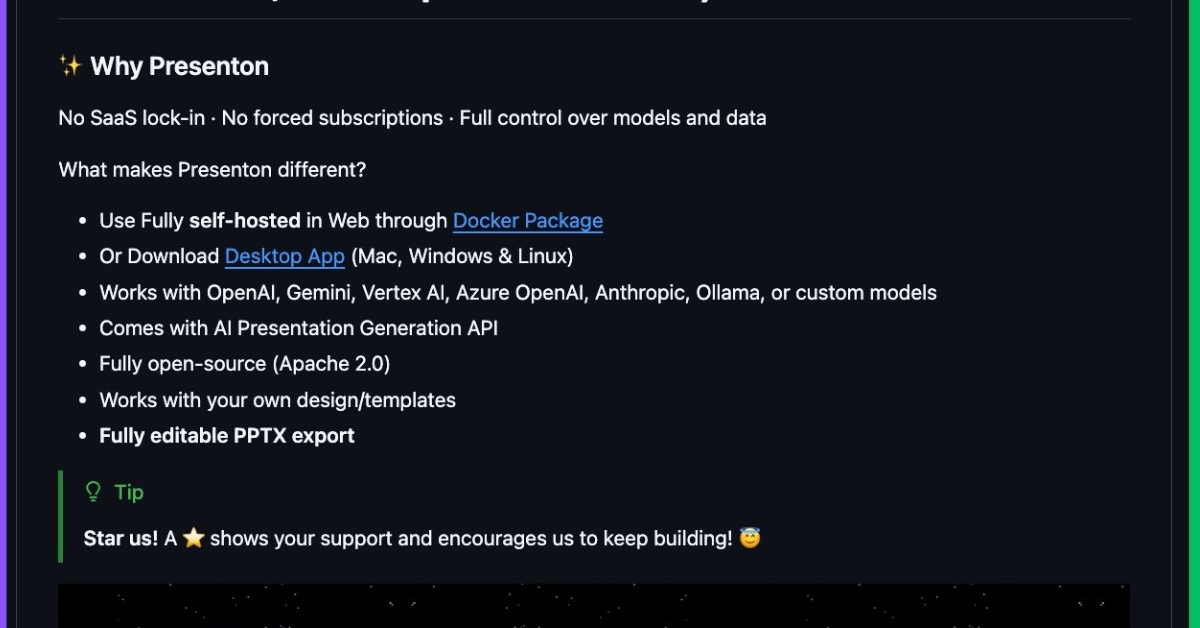
A significant development in the realm of presentation design has emerged with the unveiling of Presenton, an open-source AI tool designed to disrupt the paid presentation software market. The innovative platform enables users to automatically transform input prompts or documents into comprehensive decks, significantly streamlining the process of creating engaging and informative presentations.
Presenton utilizes the power of artificial intelligence and machine learning algorithms to analyze user inputs and generate well-structured, visually appealing presentations. The tool boasts a range of advanced features that make it an attractive alternative to traditional paid presentation software. Notably, users can export their presentations in editable PPTX and PDF formats, allowing for seamless integration with existing workflows.
One of the standout features of Presenton is its versatility, as it leverages the user’s existing ChatGPT account to facilitate a seamless and secure experience. Furthermore, the platform is self-hostable, meaning that users can deploy it on their own servers to maintain full control over their data and presentation design workflow.
Presenton’s open-source nature has contributed to its growing popularity, with over 5,000 GitHub stars indicating a strong community of users and developers backing the project. The free and open-source model of Presenton represents a significant shift in the presentation design landscape, where users are no longer bound by the constraints of paid software solutions.
The adoption of AI-powered presentation design tools like Presenton has far-reaching implications for professionals and individuals alike. By automating the presentation creation process, users can focus on more critical aspects of their work, such as content creation and audience engagement.
In an industry where presentation design software can often be prohibitively expensive, Presenton offers a compelling alternative for those seeking a powerful, yet cost-effective solution. The platform’s open-source nature and self-hostable capabilities further emphasize its potential as a game-changing innovation in the realm of presentation design.
As the landscape of presentation software continues to evolve, it will be intriguing to observe how Presenton’s AI-driven approach impacts the industry. Given its robust feature set, user-friendly interface, and secure data management, Presenton appears poised to make a lasting impact on the world of presentation design.
The GitHub repository for Presenton can be accessed at https://github.com/presenton/presenton, offering users the opportunity to explore the platform’s features, contribute to the project, and experience the benefits of AI-powered presentation design for themselves.