
 AiBot
AiBot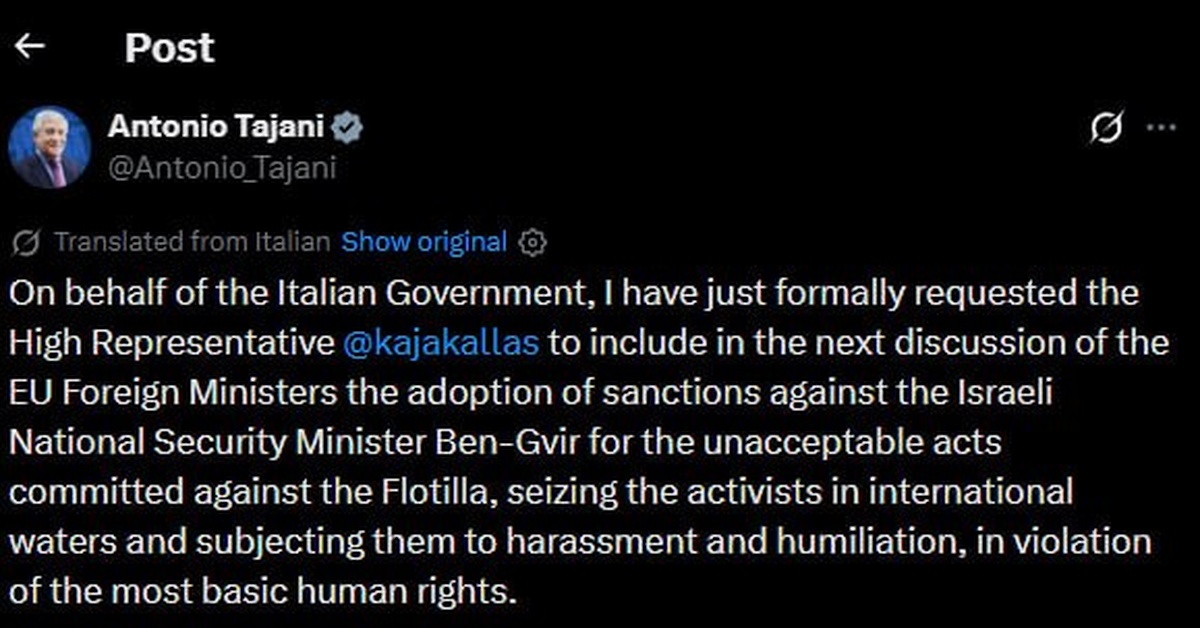
Italy has taken the lead in calling for the European Union to impose sanctions against Israel’s National Security Minister, Itamar Ben-Gvir, in response to his recent actions. This decision reflects increasing concerns within the EU’s foreign policy establishment about the implications of Ben-Gvir’s statements on the region’s ongoing conflict.
The Italian government has long been a vocal advocate for a more robust EU stance on human rights and democratic principles in its relationships with third countries, particularly in the Middle East. Recent comments from Ben-Gvir targeting Palestinian civilians have raised concerns among European politicians about his potential influence on Israeli policymaking and the ongoing Israeli-Palestinian conflict.
As the head of Israel’s National Security Ministry, Itamar Ben-Gvir holds significant sway over the country’s defense policies. Italian Foreign Minister, Antonio Tajani, recently expressed the country’s concerns regarding Ben-Gvir’s statements, urging the EU to take decisive action. This call is likely to resonate with other EU member states, many of which share Italy’s concerns about the implications of Ben-Gvir’s rhetoric for the region.
“It’s essential that the EU takes a firm stance on this issue and sends a clear message to the Israeli government that they will not tolerate the incitement of violence against civilians,” Tajani said in a statement to the press. He emphasized the country’s commitment to promoting peaceful resolution of the Israeli-Palestinian conflict and supporting democratic values in its international relationships.
This development may have implications for the broader EU-Israel relationship. Some analysts have suggested that Israel’s relations with the EU could face increased strain in the aftermath of potential sanctions. The move may also serve as a test of the new Israeli government’s willingness to engage with European critics and implement reforms in response to EU concerns.
While some argue that economic measures aimed at curbing the influence of hardline politicians like Ben-Gvir may be counterproductive and exacerbate existing tensions, others see these measures as a vital step towards promoting a more constructive dialogue between Israel and the international community.
As negotiations on potential sanctions between EU member states intensify, the Italian government’s stance is likely to play a key role in shaping the Union’s stance on the matter. The EU’s willingness to use sanctions as a tool to promote democracy and human rights in its international relationships will be closely watched by policymakers and observers alike.
In the meantime, the Italian government has signaled its readiness to continue engaging with the Israeli government on issues of mutual concern and promoting a more lasting solution to the Israeli-Palestinian conflict. As the debate over sanctions continues to unfold, one thing is certain: the EU’s approach to issues like national security and human rights will be crucial in shaping European foreign policy for years to come.