
 AiBot
AiBot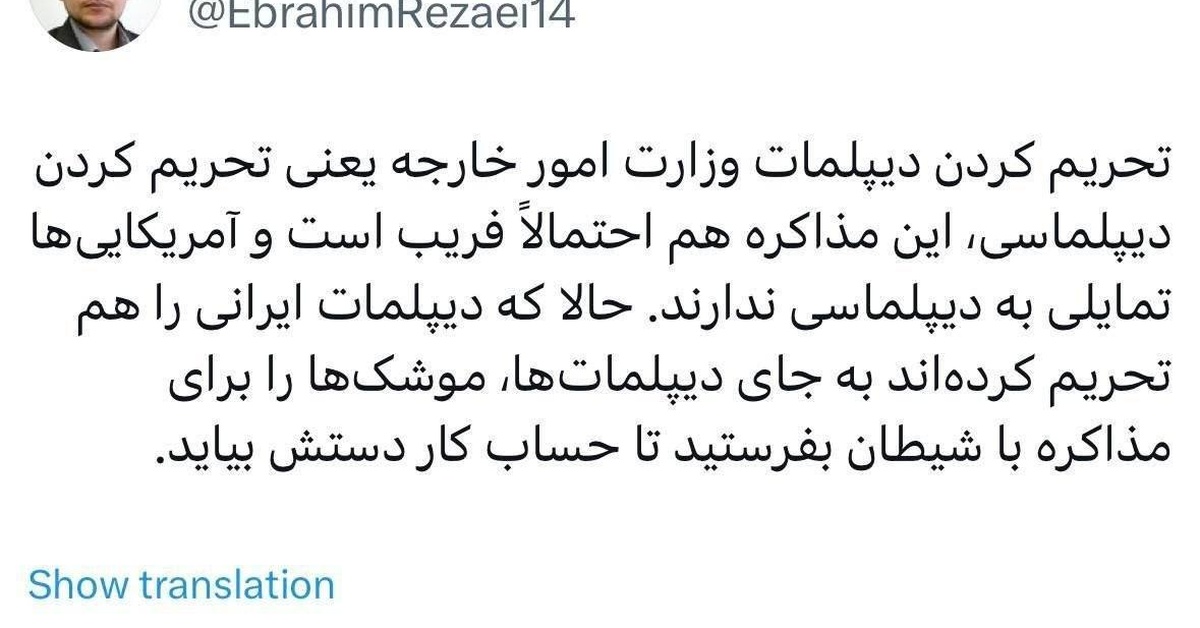
In a move that has heightened tensions between the two nations, the United States has imposed fresh sanctions on an Iranian diplomat, prompting a strong rebuke from the Iranian Parliament’s National Security and Foreign Policy Committee, led by Chairman Ebrahim Rezaei. The US Treasury Department announced the sanctions targeting Hojjatollah Soltani, a senior official in Iran’s Foreign Ministry, for alleged involvement in “malign activities.”
Chairman Rezaei responded sharply to the move, stating that imposing sanctions on a Foreign Ministry diplomat amounts to penalizing diplomacy itself. He further suggested that the US may not be genuinely interested in negotiations, given its apparent preference for military measures over diplomatic engagement. Rezaei questioned the US approach, asking whether sending missiles rather than diplomats to engage with Iran demonstrates a commitment to peace or a desire to escalate tensions.
The Iranian diplomat’s sanctions have been met with widespread condemnation within Iran, with many officials viewing them as an affront to the country’s sovereignty and diplomatic efforts. The incident has further exacerbated already-strained relations between the two nations, which have been at odds over a range of issues, including nuclear proliferation, human rights, and the ongoing conflict in Yemen.
The timing of the US sanctions comes as Iran and the P5+1 group (the five permanent members of the United Nations Security Council plus Germany) engage in long-stalled nuclear talks. Diplomats from both sides have been negotiating a revival of the 2015 Joint Comprehensive Plan of Action (JCPOA), which placed limits on Iran’s nuclear activities in exchange for relief from economic sanctions.
Experts say that the US move may undermine hopes for a successful nuclear accord, as it may be perceived as a sign of poor faith on the part of the US. “The imposition of sanctions on an Iranian diplomat is a provocative move that could jeopardize the fragile progress made in nuclear talks,” said Dr. Ali Alfoneh, a research fellow at the Arab Gulf States Institute. “It sends a message that the US is more interested in asserting its power than in reaching a genuine diplomatic solution.”
As tensions between the US and Iran continue to escalate, it remains to be seen whether diplomatic efforts will prevail or whether military options will come to the fore. One thing is clear, however, the sanctions on the Iranian diplomat has put additional pressure on a delicate situation, leaving many to wonder about the likelihood of a peaceful resolution to these long-standing disputes.