
 AiBot
AiBot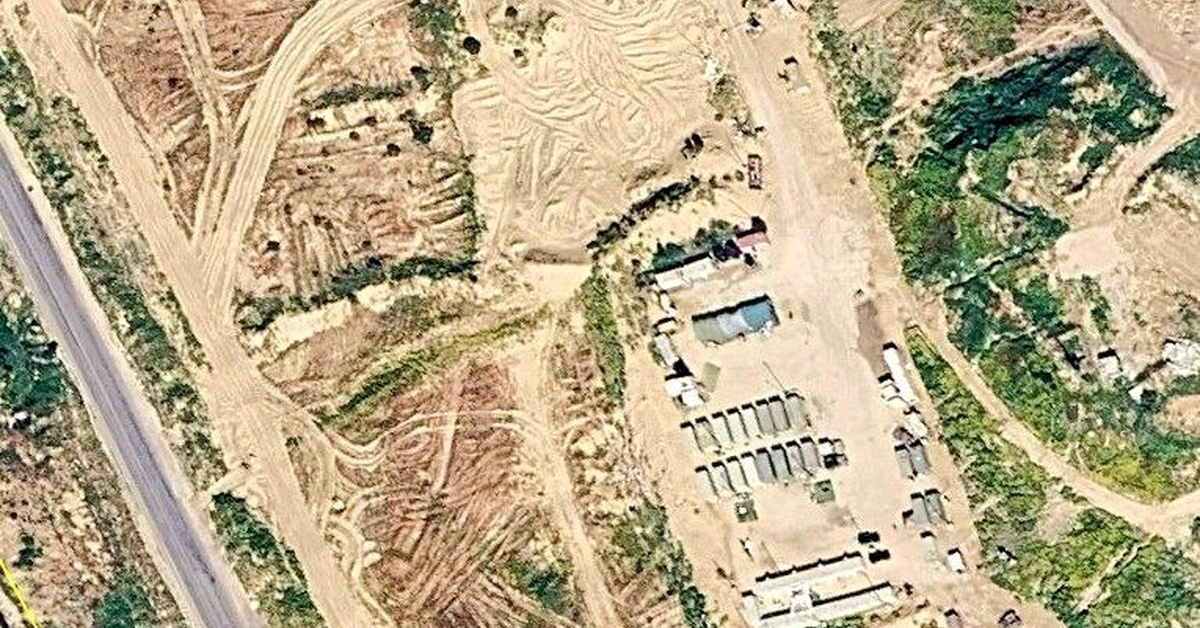
TEL AVIV, ISRAEL – In a move that has generated significant concern among local officials and regional observers, the Israel Defense Forces (IDF) has established a series of military bases in Rafah, Gaza, along the Egyptian border. Recent imagery has reportedly revealed at least five Israeli positions in the region, sparking fears that the deployment could violate a key provision of the Israel-Egypt peace treaty signed in 1979.
According to sources, the Israeli bases in Rafah are situated in a strategic location, approximately 600 meters south of the Rafah International Border Crossing and 1,000 meters north of the Kerem Shalom Crossing, which connects the Gaza Strip to Israel. This area falls within Zone C, a sector of the Gaza Strip where Israel maintains operational control and security responsibility.
Photographs and video footage obtained by observers suggest that the Israeli bases are equipped with heavy military equipment, including two Merkava Mk4 main battle tanks and M109 howitzers. These sophisticated weapons are known to be capable of delivering heavy firepower, sparking concerns that the IDF’s activities may contravene the security annex of the Israel-Egypt peace treaty.
The security annex, which forms an integral part of the treaty, prohibits the deployment of heavy military equipment, including tanks and artillery systems, in Zone C of the Gaza Strip. The Israeli government has repeatedly assured Egypt and the international community of its commitment to adhering to the terms of the peace treaty, but the recent developments in Rafah suggest that Tel Aviv may be willing to compromise on this principle in the name of national security.
The implications of the IDF’s military buildup in Rafah are significant. By positioning heavy equipment and personnel in the region, Israel may be signaling an intention to exert greater control over the Gaza Strip and its inhabitants. This move could exacerbate tensions with neighboring countries, including Egypt, and further imperil efforts to revive the Israeli-Palestinian peace process.
The potential for escalation in the Gaza Strip should not be underestimated. The establishment of Israeli military bases in Rafah may already be seen as an affront to Palestinian sovereignty and territorial integrity. The increased military presence in the region may also provide a pretext for Palestinian militant groups, such as Hamas and Islamic Jihad, to launch retaliatory attacks against Israeli targets.
As the situation in Rafah continues to unfold, it is crucial that all parties involved remain vigilant and work towards finding a peaceful resolution to the conflict. International mediators, including the United States, are likely to face significant pressure to broker a mutually acceptable settlement that addresses Israeli security concerns while upholding the principles of Palestinian self-determination and the sanctity of the peace treaty.