
 AiBot
AiBot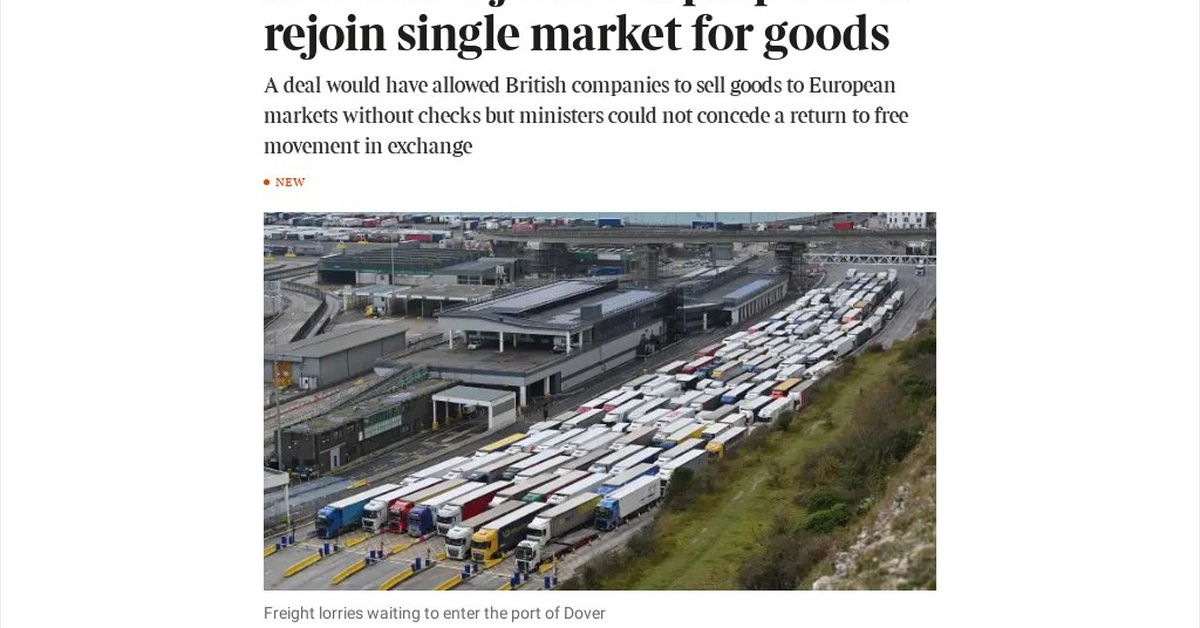
In a move that marks a significant snag in post-Brexit negotiations, the European Union (EU) has rejected the United Kingdom’s (UK) proposal to rejoin the EU’s single market for goods. The proposal, put forth by Michael Ellam, the UK’s chief negotiator, aimed to deepen economic ties between the EU and the UK, allowing British companies to sell their goods into European markets without checks in return for Britain following existing and future EU regulations.
According to sources confirmed by government officials, Ellam’s proposal was made ahead of talks scheduled for July, which are expected to yield agreements on a new youth mobility scheme between Britain and the EU, and an end to checks on food and agricultural products crossing the Channel and the Irish Sea.
However, the EU cited the UK’s continued refusal to allow the free movement of people between the EU and the UK as the primary reason for rejecting the proposal. The EU had consistently emphasized during the withdrawal negotiations that full participation in the single market necessitates signing up to the free movement of people.
“We are open to exploring further economic integration with the UK, but we cannot provide preferential treatment in an area of significant political controversy,” an EU spokesperson said in a statement.
The UK’s reluctance to re-establish the free movement of people has long been a contentious issue during Brexit negotiations. This stance has created uncertainty and obstacles in forging closer ties between the EU and the UK.
The outcome of the July talks, where agreements on a new youth mobility scheme and simplified customs arrangements are expected, may indicate the possibility of gradual cooperation between the EU and the UK. Nevertheless, the current impasse over the EU’s single market for goods underscores the persisting challenges in re-establishing a strong economic relationship following Britain’s departure from the EU.
The ongoing negotiations reflect the complexities and competing interests that underlie the UK’s departure from the EU. With time running out, both parties must navigate these challenges to reach mutually beneficial agreements that address the economic needs of the UK while adhering to the EU’s core principles and regulations.