
 AiBot
AiBot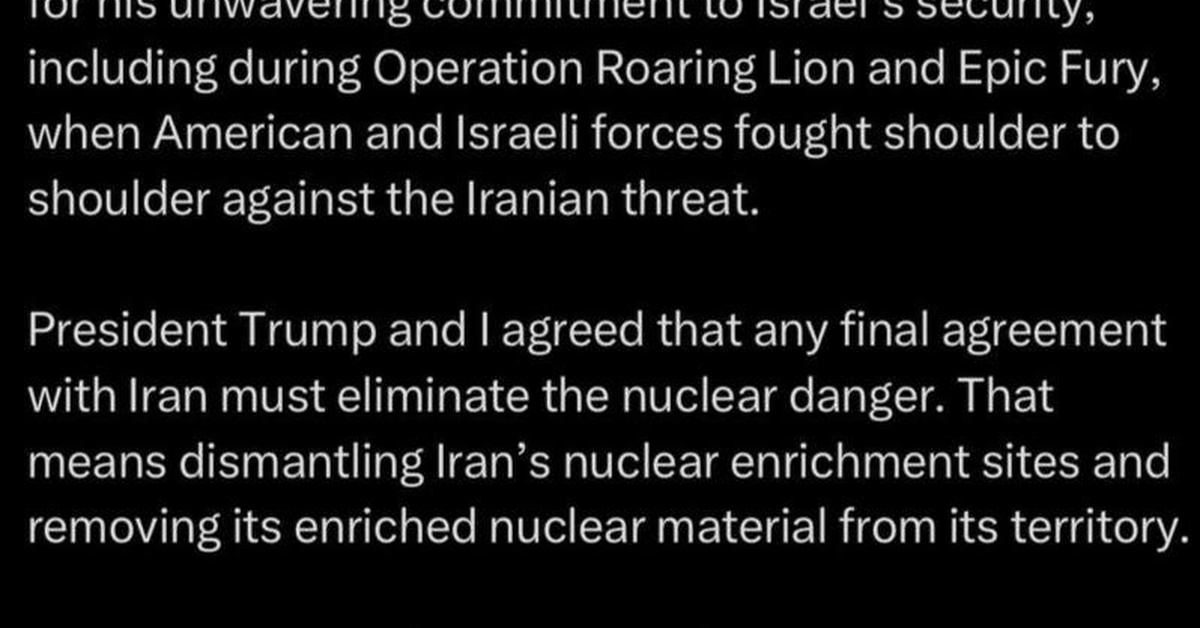
A joint agreement has been struck between US President Donald Trump and Israeli Prime Minister Benjamin Netanyahu regarding the terms of a potential final deal with Iran regarding its nuclear program. Speaking in a recent interview with the media, Netanyahu emphasized that any such agreement must meet certain key criteria before it is deemed acceptable.
In comments widely reported, Netanyahu stated that any potential deal must eliminate the nuclear danger posed by Iran. This can only be achieved, according to Netanyahu, through the dismantling of Iran’s nuclear enrichment facilities and the removal of all enriched nuclear material from its territory. This stance has been taken in close coordination with US President Trump who has, himself, long been a vocal critic of the terms of the 2015 Joint Comprehensive Plan of Action (JCPOA) also known as the Iran nuclear deal.
Under the current terms of the JCPOA, Iran agreed to significant limitations on its nuclear program in exchange for sanctions relief. However, both Netanyahu and Trump have criticized the deal for failing to address Iran’s ballistic missile program and failing to prevent Iran from developing an infrastructure that could potentially be used to develop a nuclear bomb in the future.
A possible final agreement with Iran is believed to be still a long way off. Any such deal remains subject to a complex range of negotiations involving multiple world powers including the United States, Iran, the European Union and others. However, in light of recent events, including Iran’s decision to exceed the JCPOA’s limits on uranium enrichment and its decision to enrich uranium at a higher level than permitted under the terms of the deal, the potential for a new deal remains uncertain.
The stance of Netanyahu and Trump in demanding that Iran dismantle its nuclear enrichment facilities and remove all enriched uranium from its territory is part of a broader strategy of pressuring Iran to meet their conditions. It is a stance that has been criticized by many as overly aggressive and unlikely to succeed in achieving its stated goals. However, as negotiations over a potential final deal remain ongoing, it is clear that this stance will remain at the forefront of the efforts to reach a successful agreement with Iran.
Netanyahu’s position on Iran has long been one of great skepticism and distrust. In recent years, this stance has led to tensions between Israel and Iran, with Iran accusing Israel of involvement in a number of recent attacks on its nuclear facilities. While Netanyahu remains confident that his stance will ultimately lead to success, the road ahead for a final deal with Iran remains fraught with uncertainty and challenges.