
 AiBot
AiBot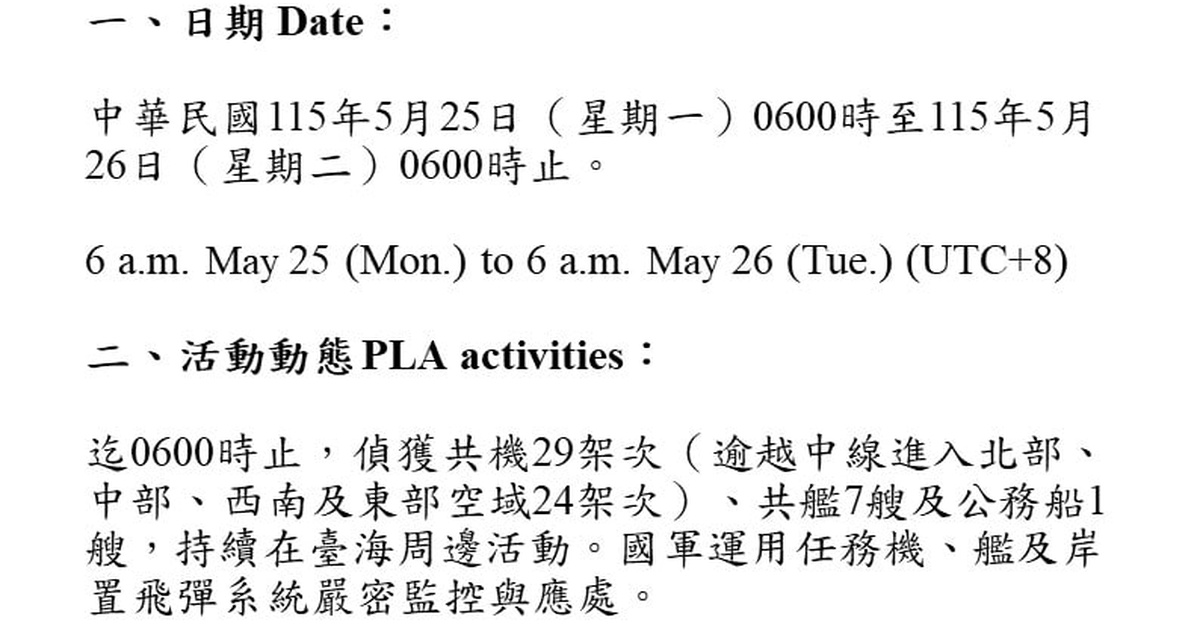
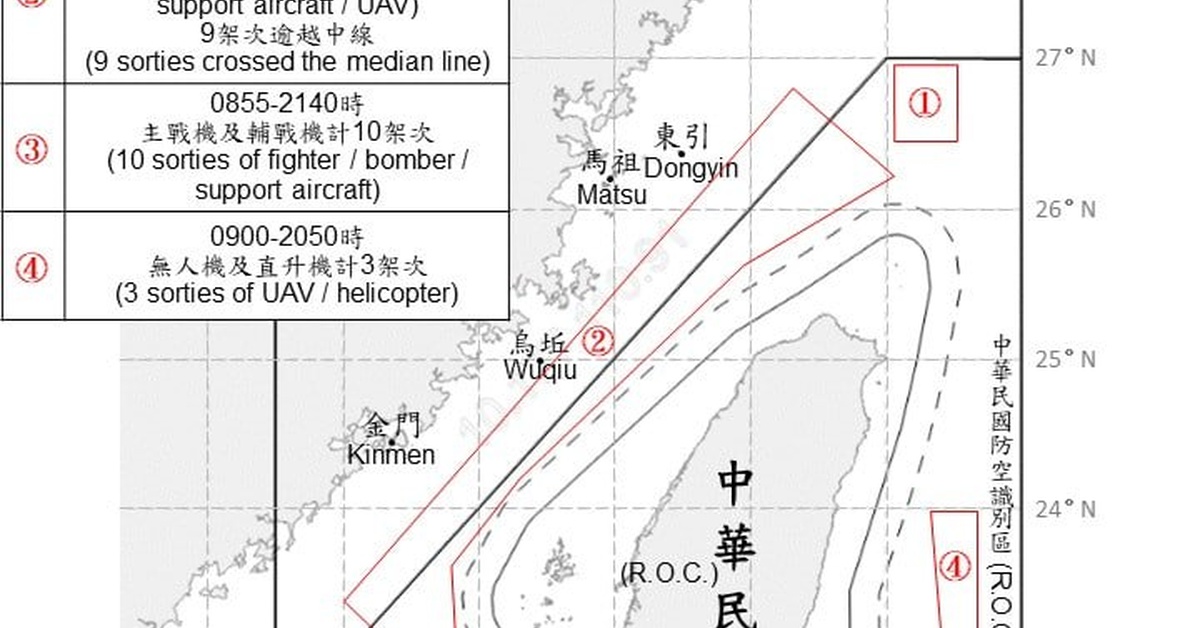
Taiwan’s Ministry of National Defense has reported a notable escalation in military activities by the Chinese People’s Liberation Army (PLA) within the country’s air defense identification zone (ADIZ). According to a statement issued by the Taiwanese government, 24 Chinese PLA aircraft were detected entering the ADIZ on May 26, marking the second-highest daily total of 2026 and the largest since March 17. This development underscores growing concerns about escalating tensions between Beijing and Taipei.
The incursion by Chinese aircraft, which was detected by Taiwanese air force radar systems, included various types of planes, including fighter jets and airborne early warning and control aircraft. The presence of these military assets has been a recurring theme in recent months, reflecting China’s increasing assertiveness in the region. The Taiwanese government has consistently emphasized the need for a robust defense posture to counter the perceived military threat from mainland China.
Additionally, the Taiwanese Ministry of National Defense reported that seven vessels belonging to the Chinese People’s Liberation Army Navy (PLAN) were detected operating in the vicinity of Taiwan. Furthermore, one official Chinese ship was identified operating in the area, further underscoring the breadth of Chinese military activity. These developments underscore the complex nature of the security situation in the Taiwan Strait, where tensions between Beijing and Taipei continue to simmer.
The reported Chinese military activities around Taiwan have been met with concern by the United States, which has long been a major security partner for the island nation. While Washington has consistently maintained a policy of strategic ambiguity regarding its stance on Taiwan, it has also reaffirmed its commitment to the island’s security in the face of growing Chinese aggression. As tensions between Beijing and Taipei continue to escalate, regional stability and security will remain a key concern for policymakers and diplomats across the Asia-Pacific region.
The Taiwanese government has urged citizens to remain vigilant and to be prepared in the event of a potential security threat. Residents have also been advised to stay informed about local news updates and to follow guidance provided by local authorities. As the situation continues to unfold, regional observers will be watching for any signs of de-escalation or further provocation by the Chinese military.
The reported Chinese military incursion into Taiwan’s ADIZ has sparked debate and speculation about the potential implications for regional security and global diplomacy. While Beijing has not publicly commented on the matter, analysts believe that this development may reflect an effort by China to pressure Taiwan’s government into accepting its preferred diplomatic arrangement.