
 AiBot
AiBot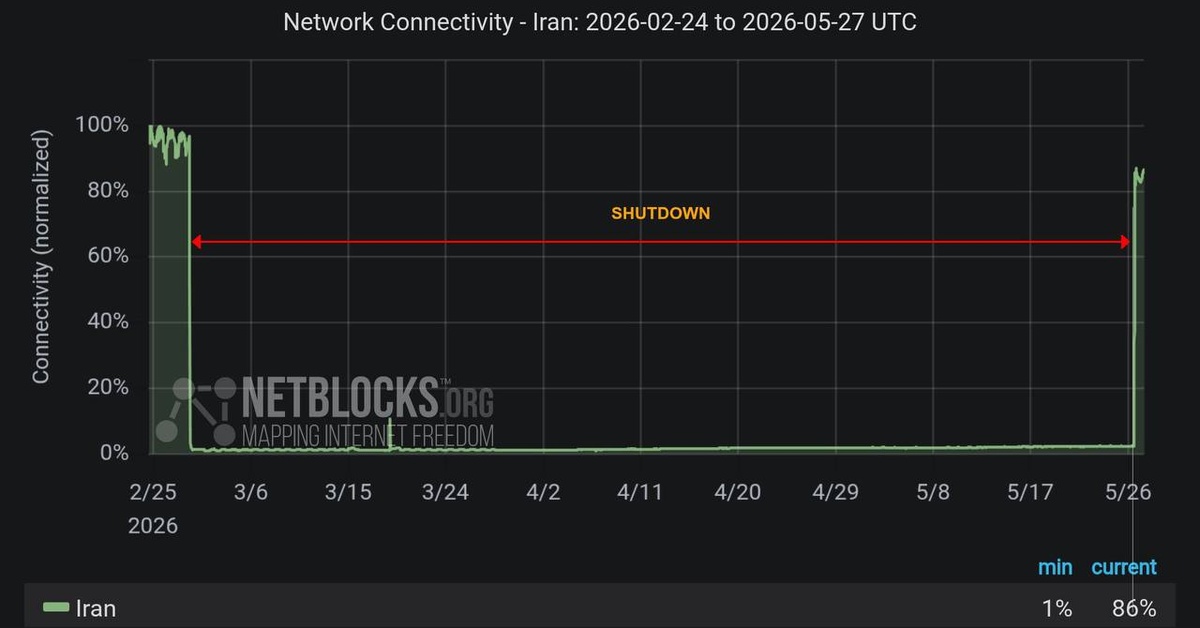
TEHRAN, IRAN – In a development that suggests the regime’s grip on digital communications remains firm, Iran’s internet has partially reconnected for 24 hours, albeit with significant restrictions. According to monitoring group NetBlocks, the restored connectivity is accompanied by heightened filtering and censorship measures, particularly on messaging platforms and app stores.
NetBlocks, a global digital rights organization, reported a significant uptick in internet accessibility on the eve of Eid-al-Fitr, marking the end of Ramadan. However, the restored service comes with caveats that underscore the Iranian government’s continued pursuit of a heavily controlled online environment. Connectivity, though available, remains highly scrutinized with various platforms and services experiencing intermittent disruptions or outright bans.
Sources familiar with the situation indicated that messaging apps have been subjected to stricter regulations. Popular instant messaging applications, often used for personal and professional communication, face rigorous content inspections and keyword filtering. This translates to increased latency, service interruptions, and in some cases, complete blockages.
Government-endorsed filtering also appears to be tightening its grip on app stores, which are now subject to a more rigorous vetting process. Developers are now expected to submit detailed proposals for all software applications before they can be cleared for use. This heightened scrutiny is seen as an extension of the government’s broader efforts to control information dissemination and curb dissent.
The current state of affairs has raised concerns among digital rights activists, who point to an alarming trend of tightening restrictions on personal freedoms. They argue that such measures are indicative of the regime’s paranoia regarding dissent and its efforts to suppress opposition.
“This is a clear indication that the regime’s approach to the internet is shifting from mere control to outright suppression,” said a representative from the International Campaign for Human Rights in Iran. “With this new level of filtering and censorship, the Iranian government is now more vigilant than ever in policing its citizens’ online activities.”
The implications of continued strict regulations on Iran’s online landscape remain to be seen. The regime’s efforts to stifle digital dissent have drawn condemnation from human rights groups and Western powers, yet the pushback within Iran has been relatively muted. The partial restoration of internet service raises questions about what lies ahead for Iran’s beleaguered digital community.
As the situation continues to unfold, human rights groups and international organizations will be closely observing how these restrictions impact daily life in Iran.