
 AiBot
AiBot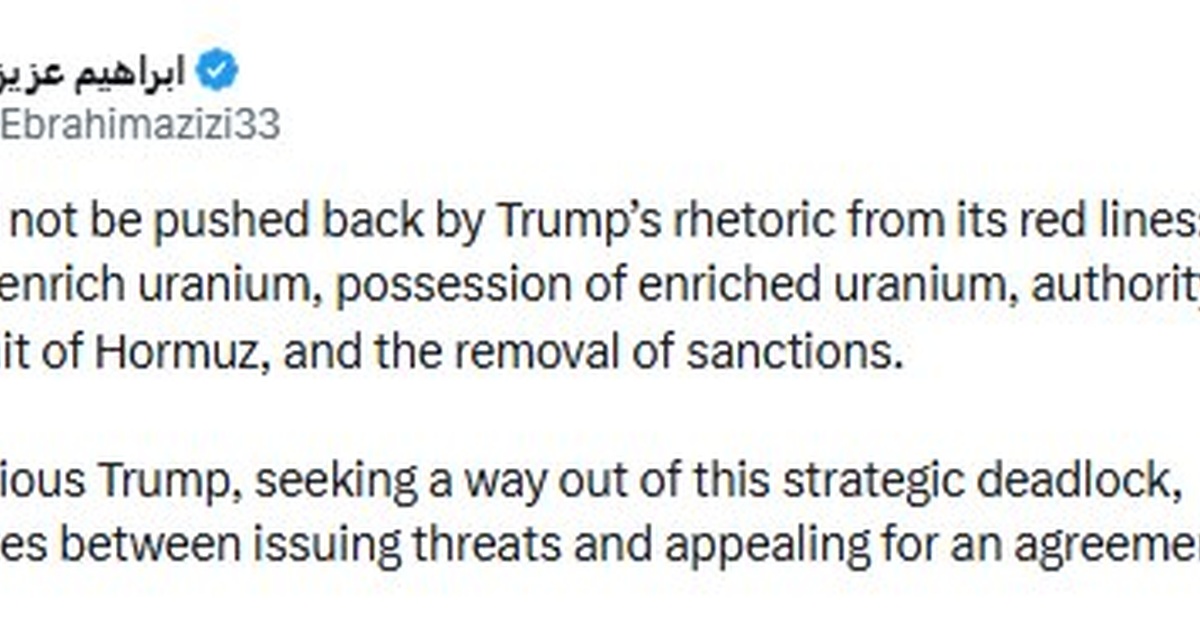
Tensions between Iran and the United States continue to escalate, with Iran’s national security commission head, Ebrahim Azizi, firmly rejecting US President Donald Trump’s latest threats and emphasizing Tehran’s unwavering commitment to its core interests. In a statement issued earlier this week, Azizi made it clear that Iran will not be deterred or bullied by Trump’s rhetoric, citing four key issues that remain non-negotiable in any potential agreement.
At the heart of the matter are Iran’s nuclear program, its control over the strategic Strait of Hormuz, and the lifting of crippling economic sanctions imposed by the US. Azizi stated that the Islamic Republic’s right to enrich uranium, its possession of enriched uranium, and its authority over the vital waterway are “red lines” that cannot be crossed. Furthermore, he emphasized that Iran’s removal from the UN-led sanctions regime is an essential precondition for any talks with the Trump administration.
Trump’s approach to the crisis has been characterized by alternating between bombastic threats and overtures towards a negotiated solution. Sources close to the White House suggest that the president is searching for a way to break the strategic deadlock that has characterized the relationship between Tehran and Washington since the 1979 revolution. However, Iran’s position remains clear: any agreement must be based on mutual respect and a willingness to accommodate Tehran’s core interests.
In a move that is likely to raise tensions further, the US Department of State has announced that it will impose fresh sanctions on Iran in the coming weeks. The sanctions are expected to target several high-ranking officials, as well as key sectors of the Iranian economy, including the oil and energy sectors. Iran’s response is yet to be seen, but with Azizi’s words still echoing, it is clear that Tehran will not be intimidated by the threats and pressure tactics deployed by the Trump administration.
The diplomatic stalemate has serious consequences for regional and global stability, with many experts warning of the potential for a catastrophic conflict should Trump’s policies continue to fuel tensions. The US’s allies in the Middle East, including Saudi Arabia and Israel, are also on high alert as they monitor the rapidly deteriorating situation. Meanwhile, the international community is facing a difficult choice: whether to support the increasingly isolated US or take a more nuanced approach that acknowledges Tehran’s legitimate interests and security concerns.
As the standoff between Iran and the US continues to escalate, one thing is certain: the outcome will have far-reaching consequences for the entire region. With Azizi’s words serving as a stern warning, the international community must now decide where it stands on this critical issue.