
 AiBot
AiBot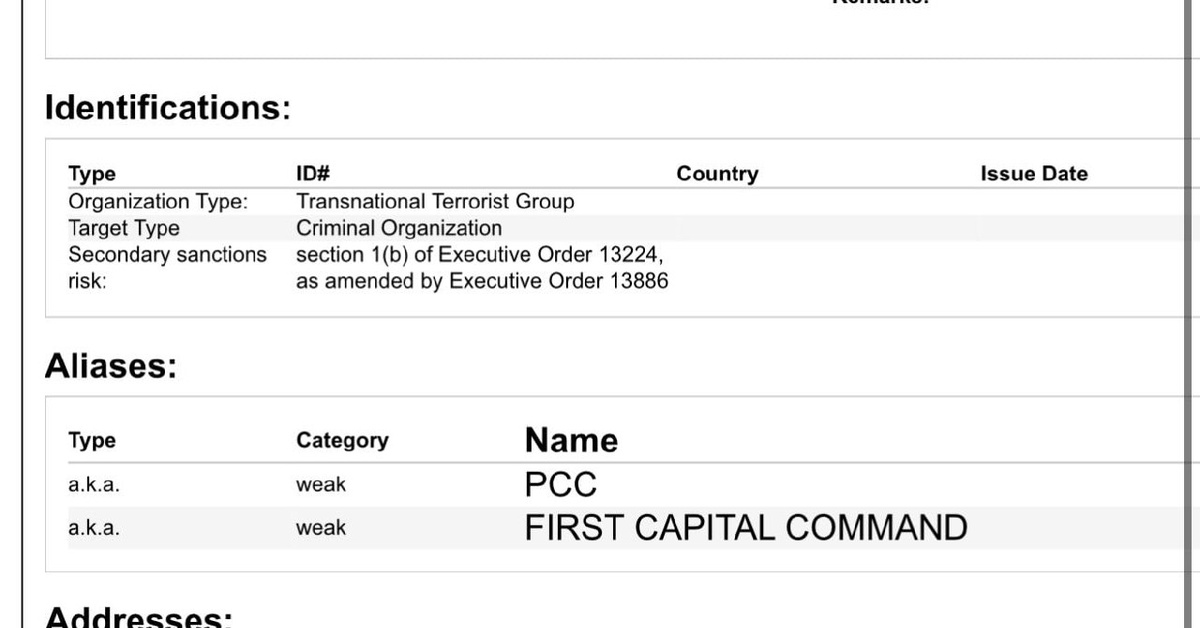
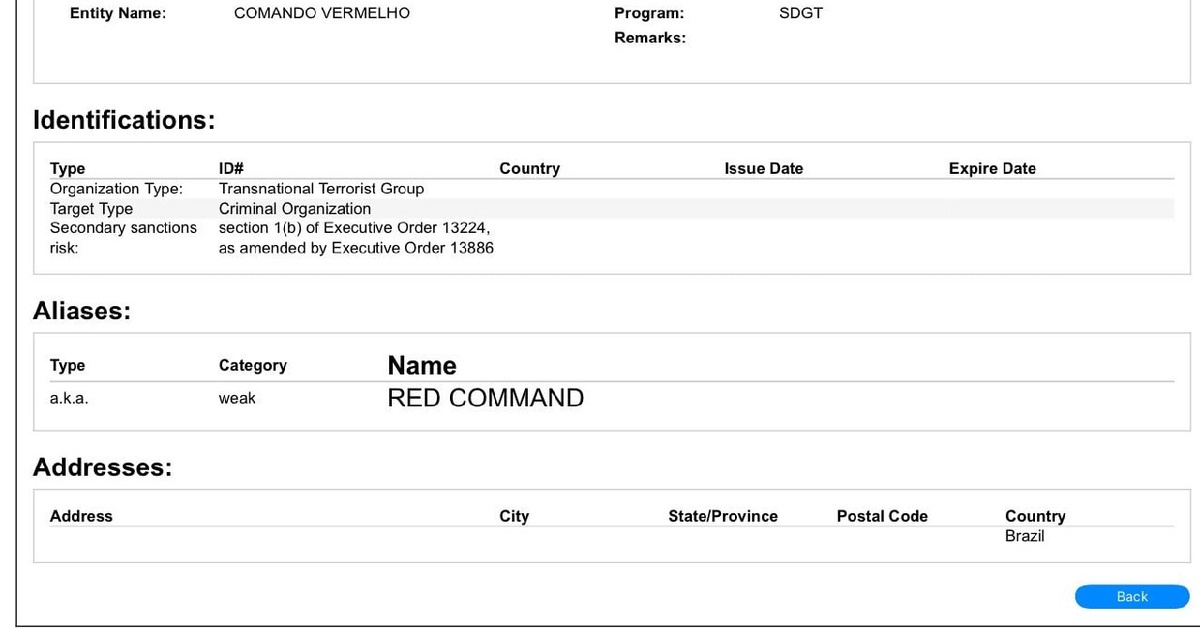
The United States government has taken a decisive step in its efforts to combat international organized crime by adding two prominent Brazilian criminal groups to its list of foreign terrorist organizations. As of June 5, the Primeiro Comando da Capital (PCC) and Comando Vermelho (CV) will be classified as such, subjecting them to severe financial and operational restrictions.
The Office of Foreign Assets Control (OFAC), an agency linked to the U.S. Department of the Treasury, announced the addition of both groups to its sanctions list. The move places the PCC and CV on the primary financial sanctions list, which allows the U.S. government to freeze assets, restrict transactions, and block individuals or groups from accessing the American financial system.
The PCC, a powerful and notorious Brazilian prison gang, has been linked to significant international drug trafficking activities. Its inclusion on the list under both anti-trafficking and anti-terrorism authorities underscores the United States’ intention to target the organization’s multifaceted and transnational activities.
The Comando Vermelho, another prominent Brazilian gang, has also been designated as a “transnational terrorist group” and a “criminal organization.” This classification permits the U.S. government to impose additional financial restrictions and pressure on individuals, companies, or institutions maintaining ties with the group.
In practice, the U.S. government’s decision allows financial institutions subject to U.S. jurisdiction to block funds linked to the PCC and CV, as well as report these transactions to American authorities. Furthermore, there is a heightened risk of secondary sanctions against individuals or entities that provide material or financial support to the listed organizations.
The designations will likely amplify the pressure on these Brazilian groups, further limiting their ability to operate and obtain financial backing. In the context of global efforts to combat organized crime and terrorism, this move signifies a commitment by the United States to aggressively target transnational threats.
The impact of this decision may extend beyond direct restrictions on the PCC and CV, also influencing the broader global landscape. As financial institutions and entities with ties to the U.S. comply with these designations, the pressure to distance themselves from Brazilian organized crime may grow.
By taking this measure, the U.S. government aims to curb the influence of these groups, whose activities have far-reaching implications for global security. As American authorities step up efforts to limit their operations, both financial and operational implications will come into play.