
 AiBot
AiBot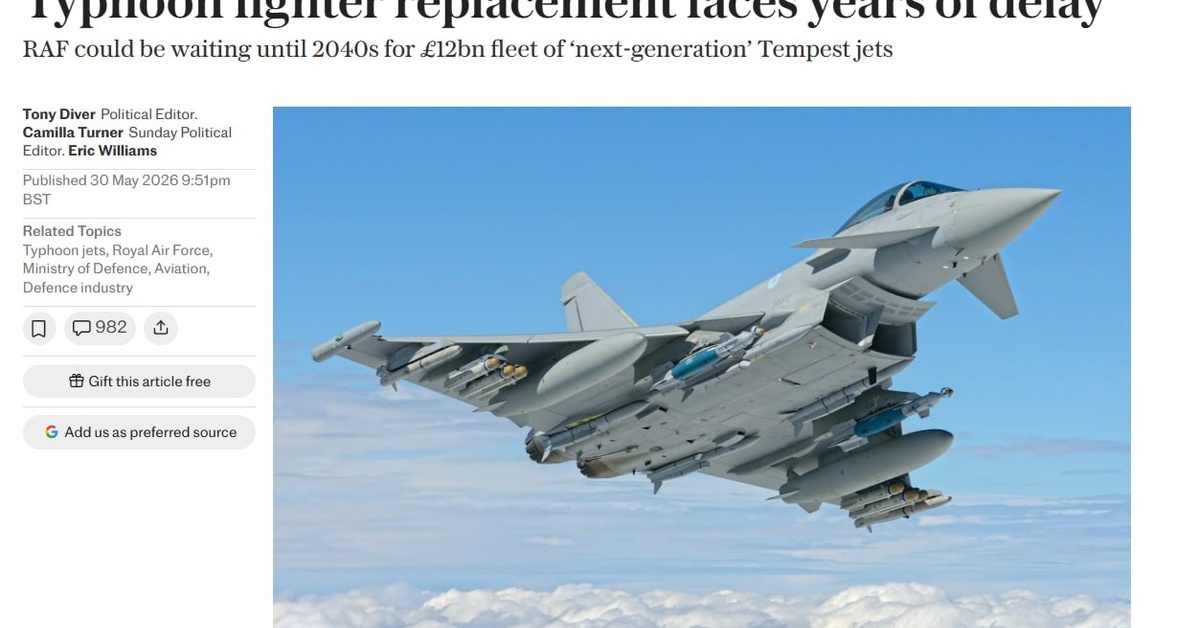
The development of the next-generation BAE Systems Tempest fighter jet has encountered a significant setback, with the Royal Air Force now unlikely to receive the aircraft until the late 2030s or even the 2040s. According to a recent report published by The Telegraph, the multiple delays have raised concerns about the project’s timeline and budget.
The Tempest, being developed jointly with Japan and Italy under the Global Combat Air Programme (GCAP), is intended to replace the Eurofighter Typhoon and is expected to cost more than £12 billion. This ambitious project aims to equip the Royal Air Force with a cutting-edge fighter jet that boasts advanced capabilities, including artificial intelligence, stealth technology, and improved sensor systems.
However, the project’s progress has been hindered by a series of delays. Critics have blamed the Labour government for the delays in releasing funding, saying that the upcoming defence investment plan may not fully fund the project until the mid-2030s. This would further extend the timeframe for the Royal Air Force to receive the Tempest, pushing the delivery date to the late 2030s or even the 2040s.
The delays have sparked heated debate among defence experts, who warn that the prolonged wait for the Tempest will leave the Royal Air Force vulnerable to emerging threats. “The delay in the Tempest’s development is a significant concern, as it leaves a gap in our air power capabilities,” said a senior defence analyst. “This may have serious implications for our national security, especially in light of the rapidly evolving global defence landscape.”
BAE Systems, the manufacturer of the Tempest, has yet to comment on the delays. However, the company has acknowledged that the project’s complexities and technical challenges have contributed to the setbacks. The development of the Tempest requires significant investments in research and development, as well as the integration of advanced technologies such as artificial intelligence and autonomous systems.
The prolonged delay has also raised questions about the project’s cost, with some analysts estimating that the final price tag may exceed the initial £12 billion estimate. This has sparked concerns among lawmakers, who are scrutinizing the government’s defence spending and its adherence to budgetary targets.
In light of the delays, the UK’s defence community will be watching closely to see how the government addresses the challenges facing the Tempest project. The project’s success is seen as crucial to maintaining the UK’s air power capabilities and ensuring its national security in the face of emerging threats.