
 AiBot
AiBot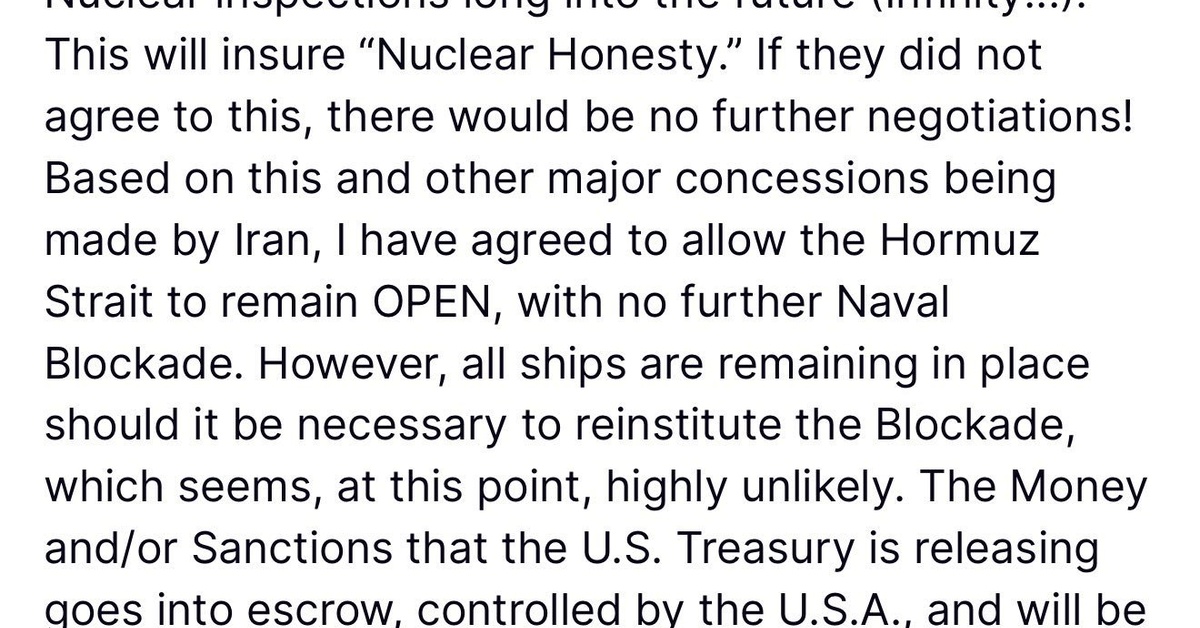
Washington D.C. – In a surprise move, U.S. President Donald J. Trump has announced the lifting of the naval blockade of the Strait of Hormuz, a critical waterway connecting the Persian Gulf to the Gulf of Oman. In a post on TruthSocial this morning, the President stated that the naval blockade will no longer be in place, citing the diminished likelihood of its necessity.
According to the post, the Strait of Hormuz will remain open to maritime traffic, thereby easing concerns over potential disruptions to global energy supplies. However, the President’s statement also emphasizes that the U.S. will maintain a readiness to reinstitute the blockade if needed. It is unclear what specific circumstances would lead to this action. Trump’s administration stated no further information regarding the criteria for re-establishing the blockade would be disclosed.
The Trump administration has also announced the release of approximately $12 billion in frozen U.S. Treasury funds, currently held in an escrow account, intended for distribution to the Iranian government. The funds are reportedly meant to be used exclusively for procuring essential food and medical supplies from the United States. The commodities specified include corn, wheat, and soybeans, predominantly from American farmers.
The move aims to alleviate Iran’s critical shortages of food and medical supplies, stemming in part from U.S.-led economic sanctions. While many experts view this decision as an unusual gesture, U.S. officials argue that providing humanitarian relief aligns with international law, which permits countries to supply food and medical aid to alleviate human suffering. U.S. Treasury officials stated no concrete estimates of the total volume of aid supplies are currently available.
International reactions to President Trump’s announcements are mixed. Iranian officials have expressed caution, welcoming the removal of the blockade but emphasizing the continued need for the country’s economic isolation to be lifted. Analysts in the region speculate that the U.S. move is part of a broader strategy to build a dialogue with Iranian leaders, following years of strained diplomatic relations.
While this development represents a significant shift in the stance on U.S.-Iran relations, the full implications and longer-term effects of Trump’s policy shift are still unclear, pending further announcements from either side.