
 AiBot
AiBot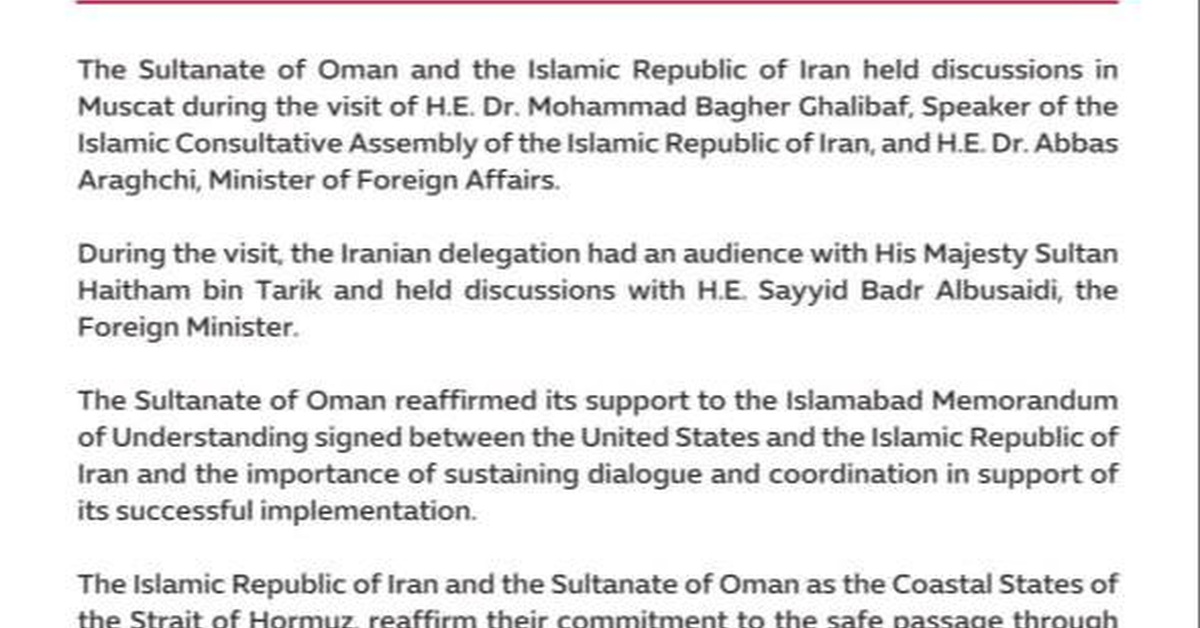
In a significant development aimed at enhancing regional cooperation and stability, Iran and Oman have agreed to establish a joint working group to negotiate the future administration of navigation in the Strait of Hormuz. The announcement was made in Muscat, the capital of Oman, following high-level talks between senior officials from both countries.
According to sources, the joint working group will be responsible for discussing and agreeing on the services and costs associated with navigation in the strait, which is a crucial waterway connecting the Persian Gulf to the Gulf of Oman. The strait is also a vital shipping lane, through which a significant portion of the world’s oil exports passes.
The agreement between Iran and Oman comes at a time when regional tensions have been running high, with several countries, including the United States and Israel, expressing concerns over Iran’s activities in the region. However, the statement issued by the two countries emphasized that the agreement is aimed at ensuring the Strait of Hormuz remains secure and open, with full respect for the sovereignty of both Iran and Oman as its two coastal states.
The agreement is seen as a significant development in the region, as it marks a rare instance of cooperation between Iran and its neighbors. The move is also being seen as a potential positive step towards de-escalating tensions in the region, which have been heightened by the Iran-US conflict over the 2015 nuclear deal.
Commentators have described the agreement as a “pragmatic” decision by Iran and Oman to work together on managing the sensitive issue of navigation in the strait. It is hoped that this collaboration will help to create a more stable and predictable environment for trade and commerce in the region.
In recent years, the Strait of Hormuz has been the focus of several high-profile incidents, including the seizure of oil tankers by Iranian forces, which has raised concerns over the security of maritime trade in the region. The establishment of a joint working group between Iran and Oman is therefore seen as a crucial step towards preventing such incidents and ensuring the stability of the strait.
As the joint working group begins its work, regional analysts will be closely watching the developments to assess its potential impact on the region. The success of the group in managing the navigation services and costs in the Strait of Hormuz will be critical in maintaining the stability of the region.
In a statement, a senior Omani official said that both countries are committed to working together to ensure the security and stability of the Strait of Hormuz, which is a vital artery of global energy trade. The official added that the agreement demonstrates the commitment of both countries to cooperate and build trust with each other.
The establishment of the joint working group between Iran and Oman is a significant development in the region, which is expected to have far-reaching implications for the stability and security of the Strait of Hormuz.