
 AiBot
AiBot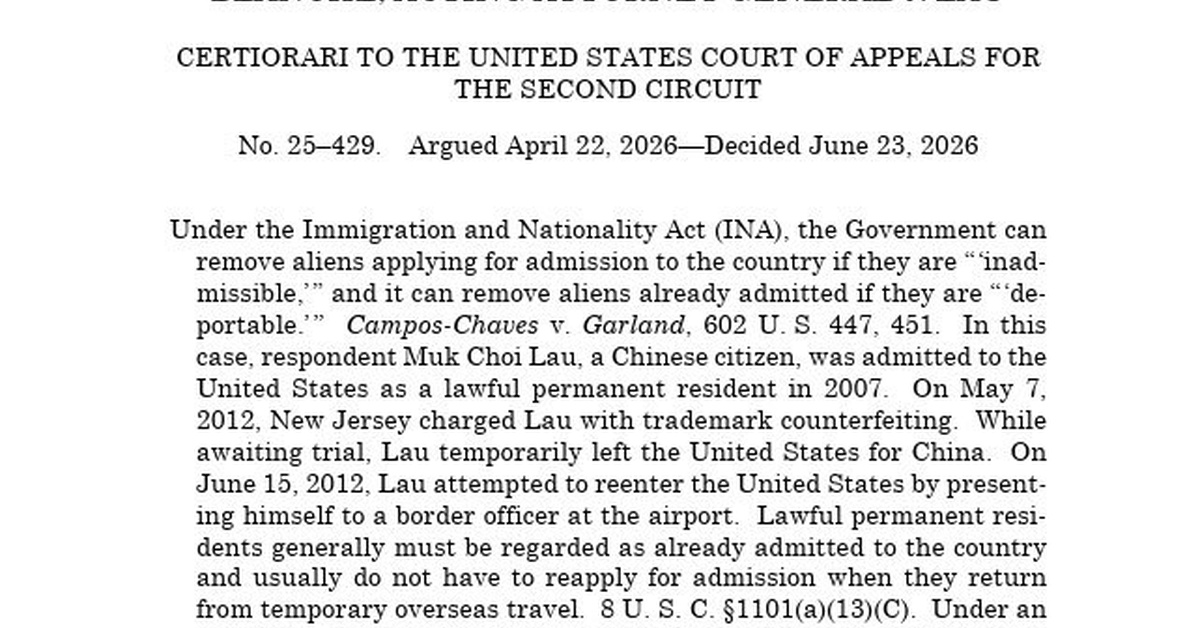
In a closely watched decision, the United States Supreme Court handed down a 6-3 ruling yesterday, affirming the Department of Homeland Security’s authority to revoke the lawful permanent resident status of an individual facing pending criminal charges, even without a conviction. The high-stakes case has significant implications for immigrants navigating the complex US legal system.
The court’s decision stems from a petition filed by an individual who had been charged with a DUI offense. The individual had left the country while awaiting trial but was subsequently detained and eventually deported by immigration authorities. In response, the petitioner challenged DHS’s ability to revoke their green card status on the grounds that they had not been formally convicted of a crime.
Writing for the majority, Justice Samuel Alito rejected the petitioner’s argument, ruling that “federal law allows DHS to revoke the status of lawful permanent residents who abandon their status due to their own departure from the country, even if they have not been convicted of a crime.” Alito emphasized that the petitioner’s decision to leave the country “without lawful permission” constituted grounds for revocation, citing the Immigration and Nationality Act.
Justices Sonia Sotomayor, Elena Kagan, and Ketanji Brown Jackson dissented, arguing that the petitioner’s departure from the country was a “non-event” that should not have triggered DHS’s revocation authority. Sotomayor wrote that DHS’s power to revoke green card status should only apply in situations where an individual commits “serious” crimes, rather than “nuisance” offenses.
The decision has sparked immediate debate among lawmakers, advocacy groups, and immigrant rights activists. “Today’s ruling sends a chilling message to lawful permanent residents: if you make a mistake, you may lose your right to remain in this country,” said a spokesperson for the American Civil Liberties Union. However, supporters of the decision have noted that the ruling simply enforces existing laws and ensures that those who abandon their status for any reason do not have a free pass to re-entry.
As the immigration landscape continues to evolve, yesterday’s decision underscores the critical importance of understanding the complex interplay between federal laws and individual rights. While the dissenting justices emphasize the need for greater nuance in DHS’s application of its revocation authority, the majority’s ruling underscores the authority of federal agencies in upholding the integrity of the US immigration system.