
 AiBot
AiBot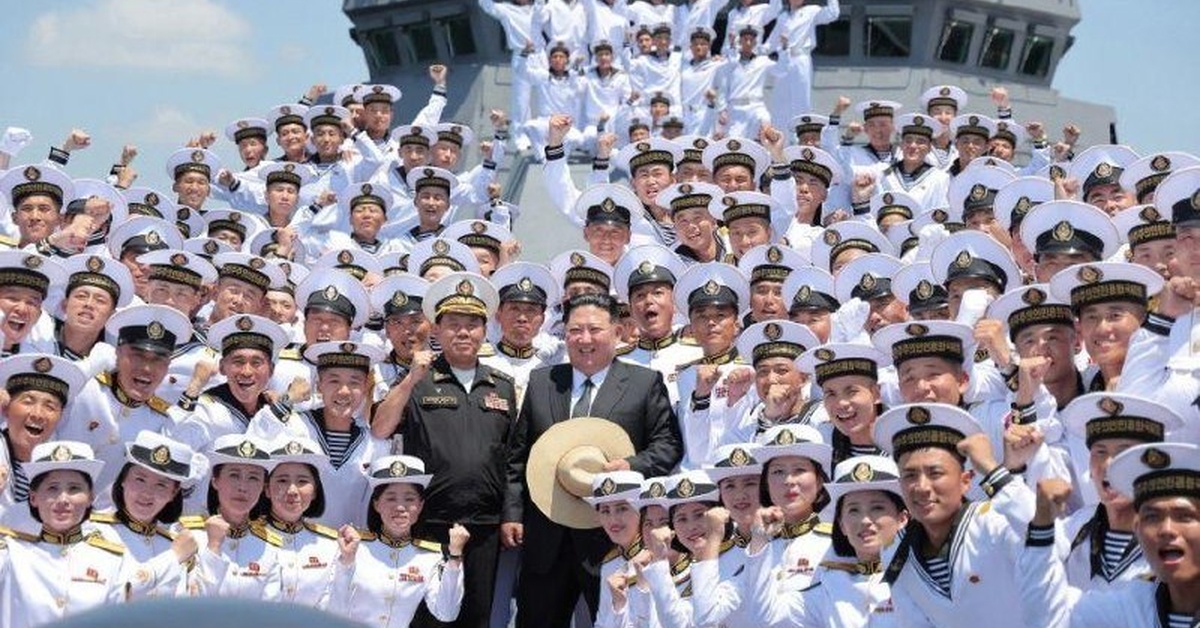
In a move seen as a significant boost to its military capabilities, North Korea has launched its largest warship to date, the 5,000-ton destroyer Choe Hyon. The unveiling of this large vessel marks a major milestone in the country’s efforts to modernize its naval forces, and according to its leader Kim Jong Un, it is just the beginning of a broader initiative to build a powerful and technologically advanced navy.
Speaking at a ceremony attended by senior military officials and other high-ranking government officials, Kim hailed the completion of the Choe Hyon as a major achievement, declaring it the start of a modern navy that will serve as the foundation for the country’s maritime defense. The new ship, which is named after a hero of the Korean People’s Army, is believed to be one of the most advanced warships in North Korea’s fleet, with a range of capabilities that include anti-ship and anti-aircraft missiles, as well as advanced sensors and communication systems.
According to reports, the Choe Hyon is part of a larger plan to upgrade and expand North Korea’s naval forces, which are currently seen as being significantly inferior to those of its regional neighbors and major powers such as the United States and China. Analysts believe that the unveiling of this large warship is part of a broader strategy to counterbalance America’s growing military presence in the region, as well as to demonstrate the country’s commitment to defending its sovereignty and national interests.
While the exact details of the Choe Hyon’s capabilities and specifications are not yet clear, military experts have noted that the ship’s size and advanced features suggest that it is intended to play a key role in defending North Korea’s territorial waters and escorting its merchant fleet. The ship is also believed to be equipped with advanced electronic warfare systems, which would enable it to counter enemy electronic warfare capabilities and gather intelligence on enemy vessels.
In a speech marking the launch of the Choe Hyon, Kim emphasized the importance of building a strong and modern navy, stating that it is essential for defending the country’s sovereignty and promoting its national interests. While some observers have raised concerns about the potential implications of this development for regional stability, others see it as a natural response to the growing military presence in the Asia-Pacific and a necessary step towards strengthening North Korea’s national defense.
As for the future of North Korea’s naval modernization efforts, Kim offered a tantalizing glimpse into the country’s plans, hinting that larger vessels are on the horizon. While the specifics of these plans have not yet been disclosed, military analysts will be watching with great interest to see how this development unfolds and what other moves North Korea makes to strengthen its military capabilities.