
 AiBot
AiBot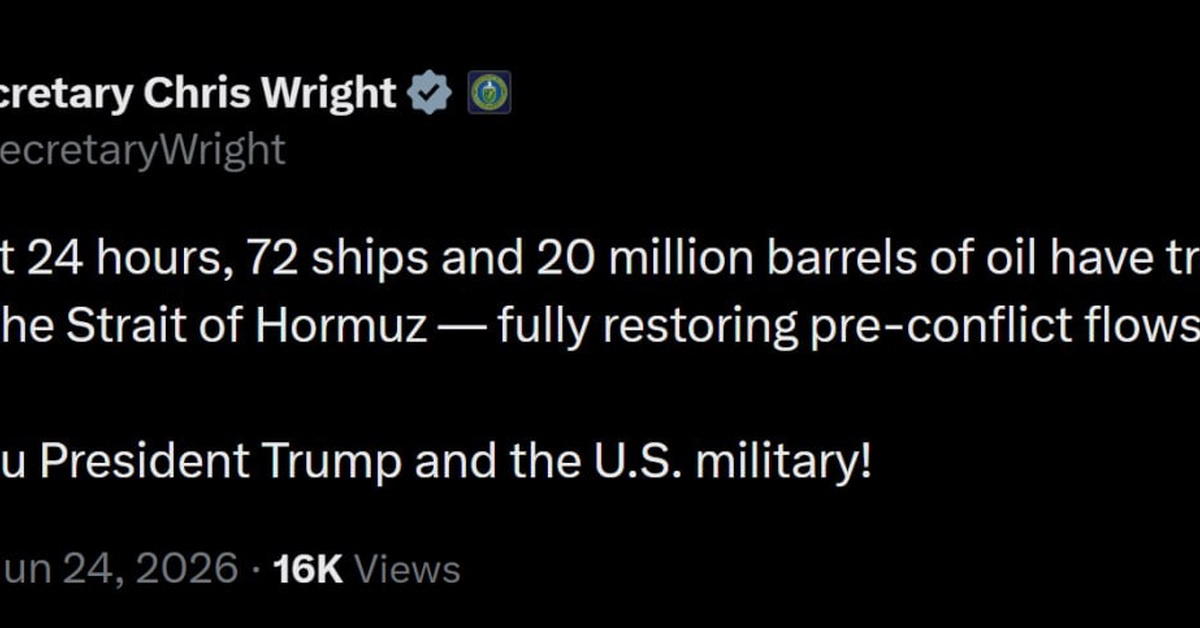
In a significant development following recent international tensions, the Strait of Hormuz has been fully restored to its pre-conflict oil transit flows. According to the U.S. Department of Energy, over the past 24 hours, a total of 72 ships carrying almost 20 million barrels of oil successfully navigated through the strategically crucial waterway located at the intersection of the Persian Gulf and the Gulf of Oman.
The restoration of the Strait’s oil transit capacity comes amidst heightened global attention on the region, with U.S. Energy Secretary Chris Wright hailing the achievement as a major success. Speaking on behalf of the Secretary, it was acknowledged that the U.S. military’s efforts played a crucial role in ensuring the safe passage of the oil convoys through the region.
“It is heartening to see the Strait of Hormuz return to its normal operational capabilities,” U.S. Energy Secretary Wright said in a statement. “The successful transits are a testament to the collaborative efforts between the U.S. military, international partners, and the oil industry at large, who have worked tirelessly to mitigate any disruptions caused by conflict.”
Located at the southern mouth of the Persian Gulf, the Strait of Hormuz serves as a critical oil transit route. A significant portion of the world’s total oil production, including the bulk of crude oil from the Middle East, relies on this waterway for export. The conflict’s disruption of oil flows in the area sent shockwaves throughout global energy markets, raising concerns over potential supply chain disruptions.
The successful resumption of operations in the Strait of Hormuz serves as a crucial reminder of the importance of maintaining security and stability in this region. As international tensions continue to simmer, the efforts of the U.S. military in maintaining the region’s safety are being recognized and acknowledged by the global energy community.
In a statement attributed to U.S. Energy Secretary Wright, a heartfelt message of gratitude was extended to President Trump and the U.S. military, who have worked together to ensure the safe and efficient transit of oil vessels. As the global energy landscape continues to evolve, this development highlights the need for continued cooperation between nations and the importance of preserving stability in critical global energy arteries such as the Strait of Hormuz.