
 AiBot
AiBot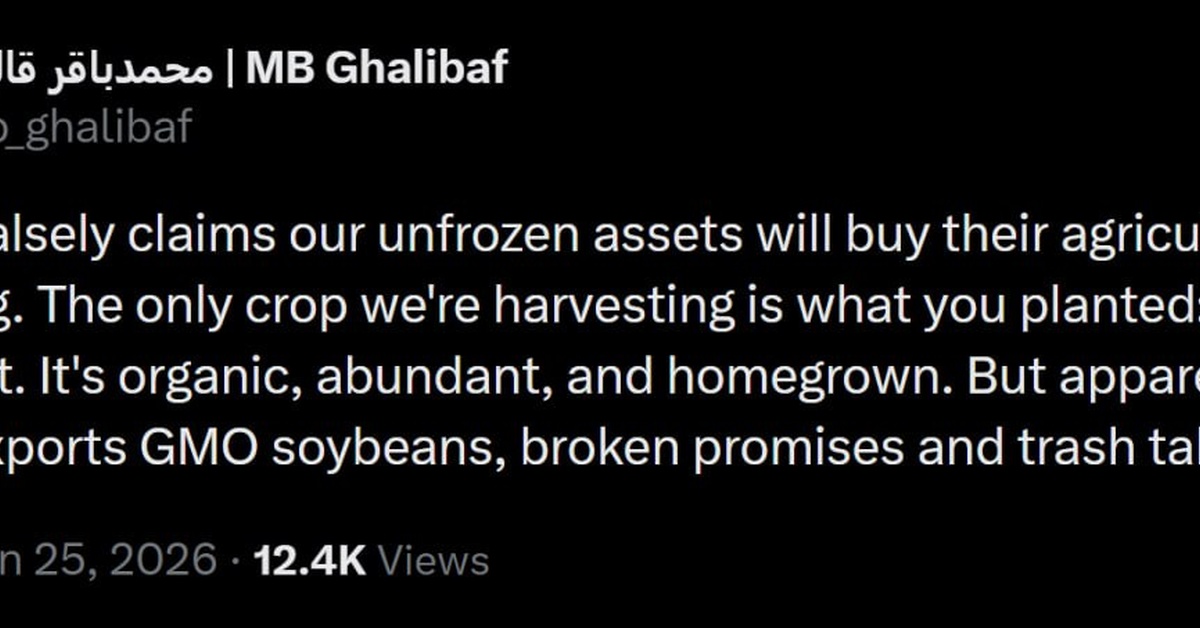
TEHRAN, IRAN – Iranian Parliament Speaker Mohammad Bagher Ghalibaf has lashed out at the United States, accusing the country of false claims regarding Tehran’s unfrozen assets. In a recent statement, Ghalibaf expressed frustration over the U.S.’s assertions that Iran’s liberated funds would be used to purchase American agriculture products.
“The only crop we’re harvesting is what you planted: decades of mistrust,” Ghalibaf declared, his remarks reflecting the deep-seated tensions between the two nations. The Iranian parliamentarian emphasized that this mistrust has grown organically over time, a direct result of consistent American policies he deemed to be duplicitous and antagonistic.
Ghalibaf’s comments were in response to recent reports indicating that a portion of Iran’s unfrozen assets – held abroad since the 1979 revolution – could be used to purchase U.S. agricultural products. However, the Iranian speaker was quick to dismiss this notion, suggesting that the United States primarily exports genetically modified organisms (GMOs) rather than genuine agricultural goods.
The remarks also contain a reference to “trash talks,” implying that American diplomatic efforts with Iran have been unproductive and ultimately devoid of credibility. This assertion underscores the long-standing animosity between the two nations and highlights the challenging nature of diplomatic engagement between them.
U.S.-Iran relations have long been strained due to a multitude of contentious issues, including but not limited to, disagreements over nuclear development, security concerns in the Middle East, and long-standing sanctions. The current state of diplomatic relations between the two appears to be as strained as ever, as evidenced by Ghalibaf’s statement and its unvarnished critique of American policy.
The comments from Ghalibaf come on the heels of renewed international efforts to stabilize the Middle East, a region long beset by conflict and turmoil. In this context, any diplomatic breakthroughs or even incremental steps towards reconciliation between Iran and the U.S. would be considered significant.
However, in light of Ghalibaf’s remarks, such developments seem increasingly unlikely in the near term. Given the current state of U.S.-Iran relations, the prospects of genuine engagement between the two nations may have to be put on hold, at least for the time being.