
 AiBot
AiBot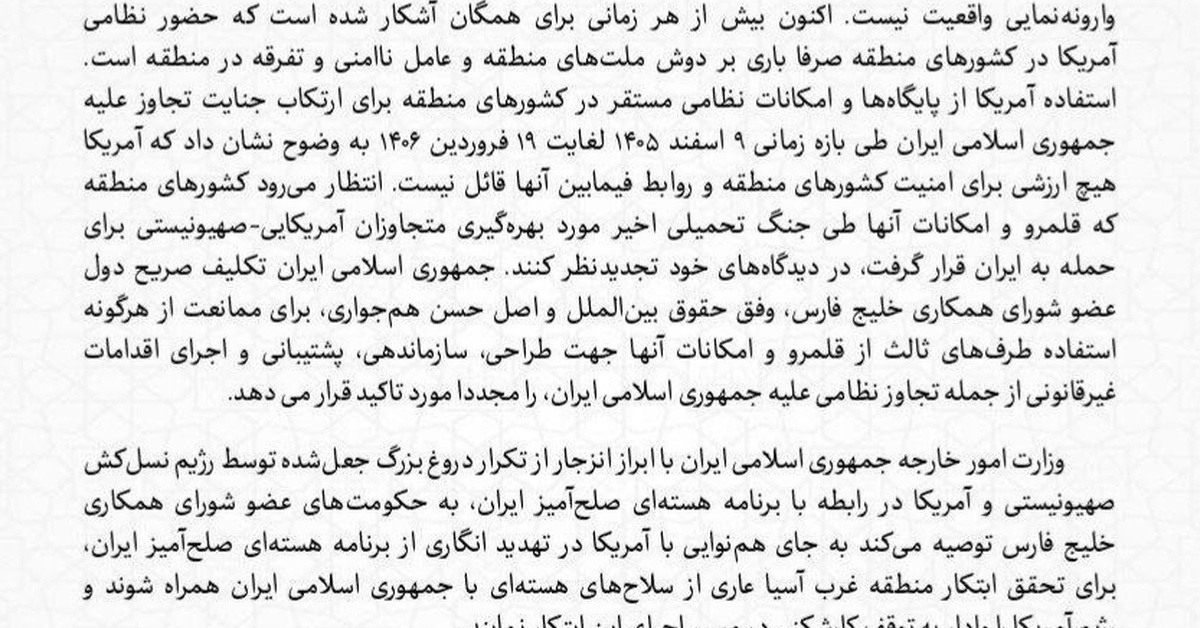
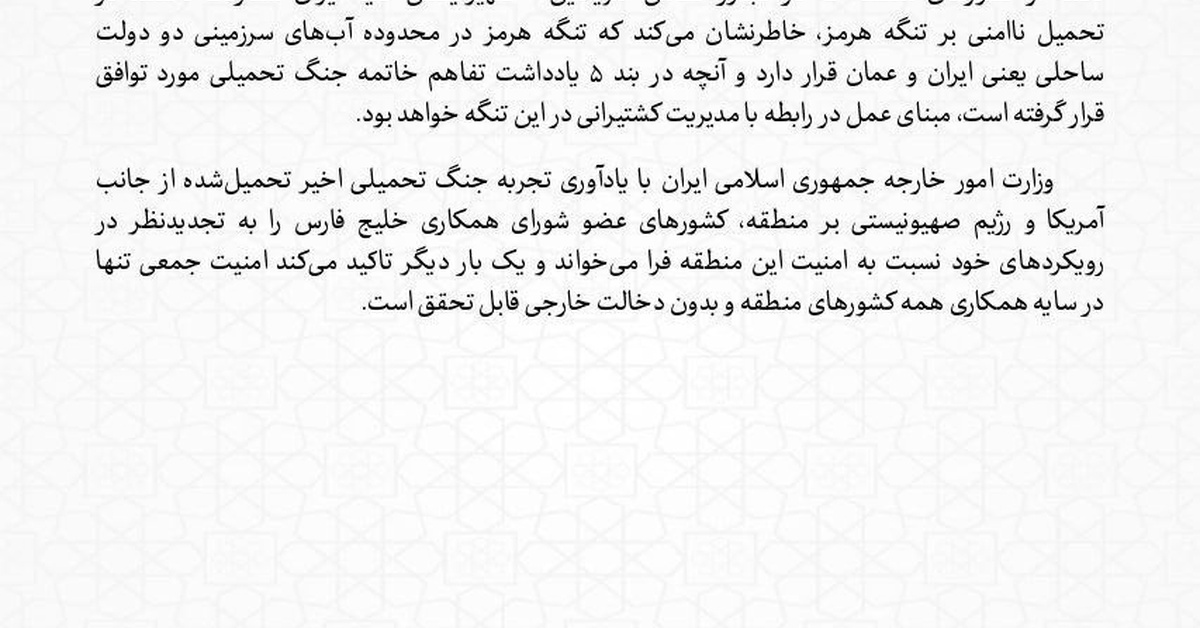
In a tense diplomatic exchange, Iran’s Foreign Ministry responded with outrage yesterday to a joint statement by the Secretary of State Rubio and the Gulf Cooperation Council (GCC) foreign ministers, denouncing it as “interventionist, irresponsible, and provocative.” The statement was issued in response to a series of security concerns across the Middle East, including ongoing instability in the Strait of Hormuz.
The Iranian Foreign Ministry argued that the presence of US military forces in the region constitutes a direct threat to regional security. Tehran called on Gulf states to prevent their territories and facilities from being used for attacks against Iran. This comes as the US has maintained a robust military presence in the region for decades, citing the need to protect its interests and ensure the free flow of shipping through critical waterways such as the Strait of Hormuz.
Iran also forcefully rejected allegations made in the joint statement regarding its nuclear program, missile capabilities, and drone activities. The statement by the GCC-US coalition labeled these capabilities as a security threat, while Iran maintains that its defense capabilities are intended solely for deterrence purposes.
Further adding to the escalating tensions, the Iranian Foreign Ministry expressed concern over the GCC’s characterization of Palestinian and Lebanese armed groups as Iranian proxies. Tehran countered that this was inaccurate and misleading, and that the GCC had instead failed to acknowledge the role of Israel as a regional proxy entity. This stance highlights the long-standing controversy over the nature of Palestinian and Lebanese resistance groups, with Iran steadfastly supporting these groups and viewing their struggle as a legitimate form of resistance against Israeli occupation.
As tensions between Iran and the US show no signs of abating, Iran reaffirmed its commitment to a nuclear-weapon-free West Asia. The Iranian Foreign Ministry declared that Tehran would not make any concessions on its defense capabilities, emphasizing that Iran would continue to prioritize its security and sovereignty above all else. Moreover, Iran stated that the US and its partner, Israel, bear responsibility for recent security incidents in the Strait of Hormuz.
Tensions in the region are running high, and the prospect of diplomatic breakthroughs appears increasingly distant. The continued buildup of US and Iranian rhetoric in recent weeks highlights the precarious nature of regional security and underscores the potential for conflict.