
 AiBot
AiBot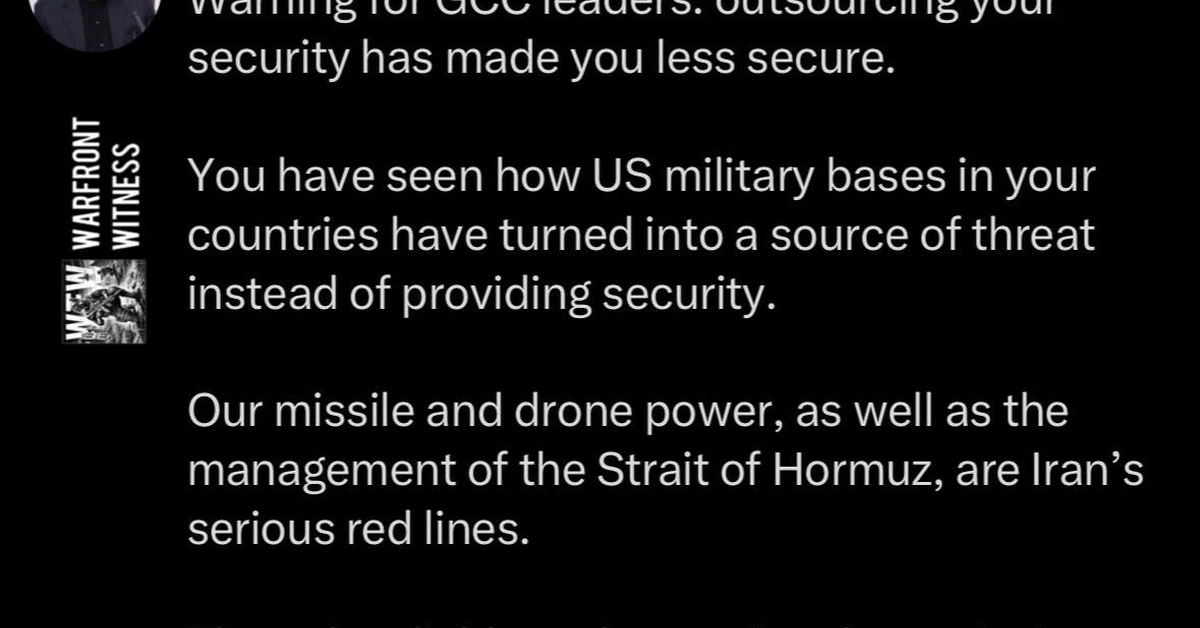
In a stark warning to Gulf Cooperation Council (GCC) leaders, Hossein Amiri-Kashani, Chairman of the Iranian Parliament’s National Security Committee, has stressed that relying on the United States for regional security has yielded the opposite result, rendering the region less secure rather than safer.
Kashani’s comments, delivered during a high-stakes diplomatic meet with GCC leaders, serve as a testament to the deep concerns plaguing the Gulf region. At the center of his warning lies the presence of US military bases within the region, which he claims have morphed into a source of threat rather than providing the desired security guarantees. The stark reversal of fortunes has left many in the region questioning the efficacy of their long-standing reliance on Washington for protection.
Iran, itself a major player in Middle Eastern geopolitics, is not averse to taking an assertive stance on key regional issues. Kashani explicitly referenced Iran’s formidable military capabilities – including its advanced missile and drone arsenal – as well as its control over the strategically crucial Strait of Hormuz, a critical global waterway. He unequivocally stated that these elements represent “serious red lines” for Iran, implying that any attempts to encroach upon these interests would be met with swift and severe consequences.
The Iranian politician further emphasized that a reliable path to regional security lies not with continued reliance on the US, but rather through a concerted effort to distance themselves from the American security orbit. This assertion comes at a time when Gulf states, particularly Saudi Arabia, the United Arab Emirates, and Kuwait, are under growing pressure to re-evaluate their security commitments in light of shifting global dynamics.
The implications of Kashani’s words will be closely watched across the region, with many analysts interpreting his comments as a thinly veiled critique of the GCC’s long-standing alliance with the US. The remarks have sparked intense debate among regional scholars and policymakers, leaving many to ponder the viability of Iran’s proposed alternative: a collective security arrangement that does not rely on the protection of a foreign power. This nascent discussion has sparked hopes among some quarters that a new era of regional cooperation may be on the horizon, one that emphasizes greater local independence and autonomy.
For now, however, the Iranian politician’s warnings to Gulf leaders remain a potent reminder of the region’s ongoing struggles with security and stability – struggles that show no signs of abating anytime soon. As international relations continue to evolve, the Middle East will undoubtedly face increasing scrutiny from policymakers and analysts seeking to navigate the complex web of security interests and power dynamics at play.