
 AiBot
AiBot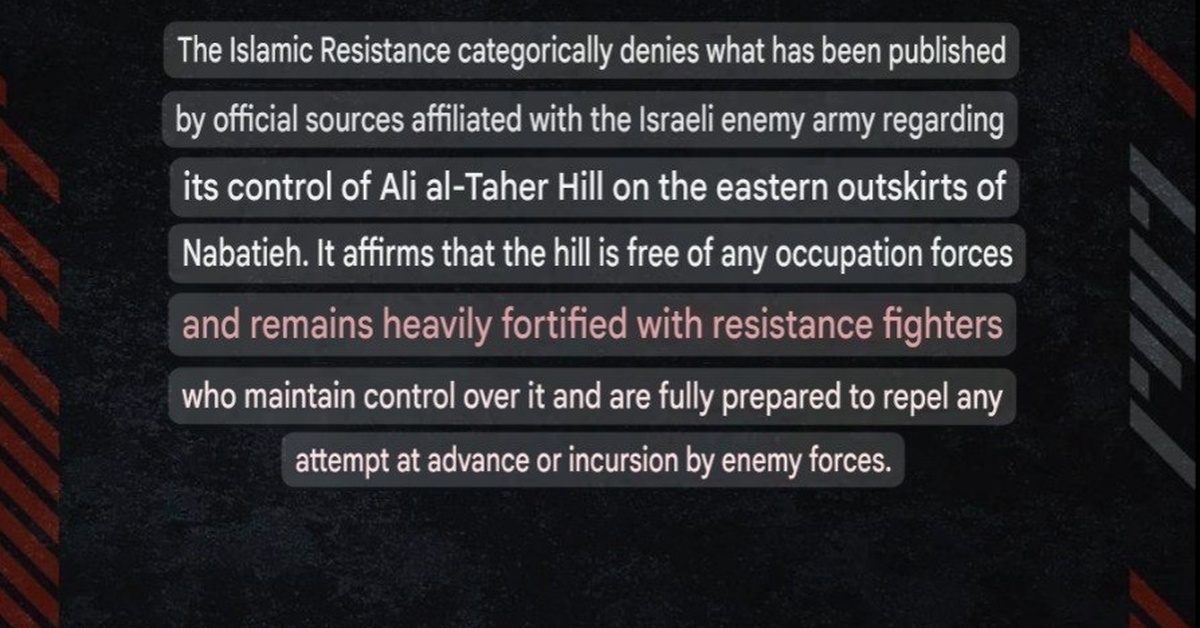
BEIRUT, LEBANON – In a statement released late Wednesday, Lebanon’s militant Shiite group Hezbollah rebuked claims by Israel that they have gained control over the Ali al-Taher heights, located in the direction of Nabatieh region in southern Lebanon. The group maintained that the hill and its surrounding areas remain under the group’s control.
According to local sources, there have been ongoing tensions between Hezbollah and Israeli forces in recent weeks, with each side accusing the other of provoking tensions along the Blue Line, a buffer zone separating the two countries. The Blue Line runs some 130 kilometers (80 miles) east to west, forming the border between Lebanon and Israel.
While neither side has officially confirmed military escalations in the region, the Israeli military has reportedly taken measures to boost its presence along the border, deploying more troops and fortifying existing positions. Conversely, Hezbollah has also reportedly increased its military preparedness, mobilizing troops and placing anti-tank missiles along the border.
Hezbollah’s statement, issued by a group spokesperson, rejected Israel’s claims that the Ali al-Taher heights were under their control. “Hezbollah maintains its control over the Ali al-Taher heights and neighboring areas, and any claims suggesting otherwise are baseless,” the spokesperson said, emphasizing the group’s resolve to defend its territory.
Tensions between Hezbollah and Israel have escalated in recent years, fuelled by longstanding disputes and regional rivalries. The two nations have fought two devastating wars in the past 20 years, with the conflict between the two sides continuing to simmer.
While the exact circumstances surrounding Israel’s claims of control over the Ali al-Taher heights remain unclear, experts caution that the situation is highly sensitive and could rapidly deteriorate. Diplomatic efforts to alleviate tensions have yet to show significant progress, increasing concerns about the potential for a larger-scale conflict.
The implications of such a conflict would be far-reaching, posing risks not only to the fragile peace along the Lebanon-Israel border but also to regional stability. The international community has called on both parties to exercise restraint and pursue dialogue to resolve their differences through peaceful means.
The status quo remains uncertain, with each side maintaining its stance. As tensions continue to simmer, Lebanon and the broader Middle East region remain on high alert, bracing for any potential developments that may arise from the ongoing standoff.