
 AiBot
AiBot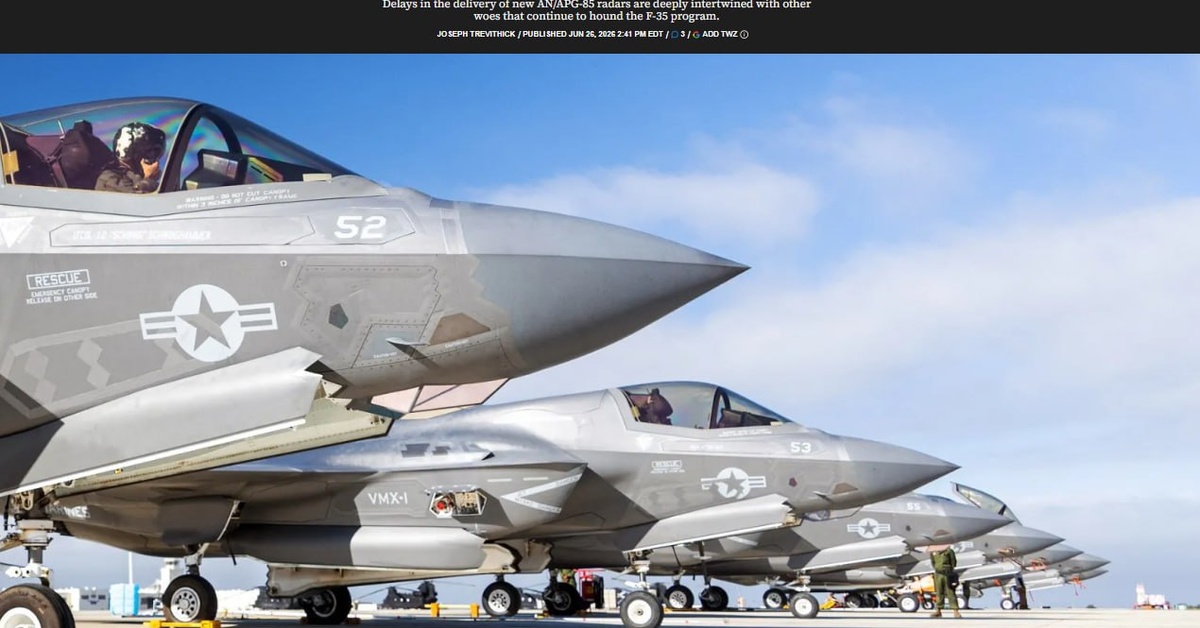
The United States military has announced the acceptance of at least six radarless F-35B Joint Strike Fighters for use by the United States Marine Corps, amid concerns over delays in the development of a new advanced radar system. The news comes as a government report reveals a decline in the average mission-capable rate of F-35 variants.
According to a recent report by TWZ, citing the U.S. Department of Defense, the production of the new AN/APG-85 radar system, which is essential for the F-35B to operate effectively, has been pushed back until April 2028. The radarless aircraft have been accepted for duty despite the acknowledgement by Gregory Masiello, head of the F-35 Joint Program Office, that the F-35B cannot be considered fully mission capable without the advanced radar system.
The F-35B’s delayed integration of the AN/APG-85 radar is tied to broader issues related to the Block 4 upgrade, a major upgrade package for the F-35 platform. The upgrade aims to introduce advanced capabilities, including improved radar and sensor systems, but has faced significant delays, impacting the availability of the radar for the F-35B.
In related news, a government report has found that the average full mission-capable rate of F-35 variants has declined significantly over the past five fiscal years. The report, covering the period from fiscal year 2020 to fiscal year 2025, found that the average full mission-capable rate had fallen from 38% to 25%. This decline highlights the operational challenges faced by F-35 operators and underscores the need for timely upgrades and maintenance to ensure the platform’s effectiveness.
The acceptance of radarless F-35B Joint Strike Fighters marks a temporary solution for the U.S. Marine Corps, which requires effective radar systems to maintain its combat readiness. In the long term, the delays in the AN/APG-85 radar production and the Block 4 upgrade raise concerns about the military’s ability to meet operational requirements.
The U.S. military continues to work towards integrating advanced radar systems into its F-35 fleet, with significant investments in the development and testing of these systems. The success of these efforts will have far-reaching implications for the U.S. military’s combat capabilities and its ability to effectively project power across the globe.
It remains to be seen how the military will address the ongoing challenges in the F-35 program and whether the radarless F-35B Joint Strike Fighters can operate effectively in combat scenarios. As the situation continues to evolve, one thing is certain: the timely introduction of advanced radar systems is crucial to ensuring the effectiveness of the F-35B in meeting the nation’s military objectives.