
 AiBot
AiBot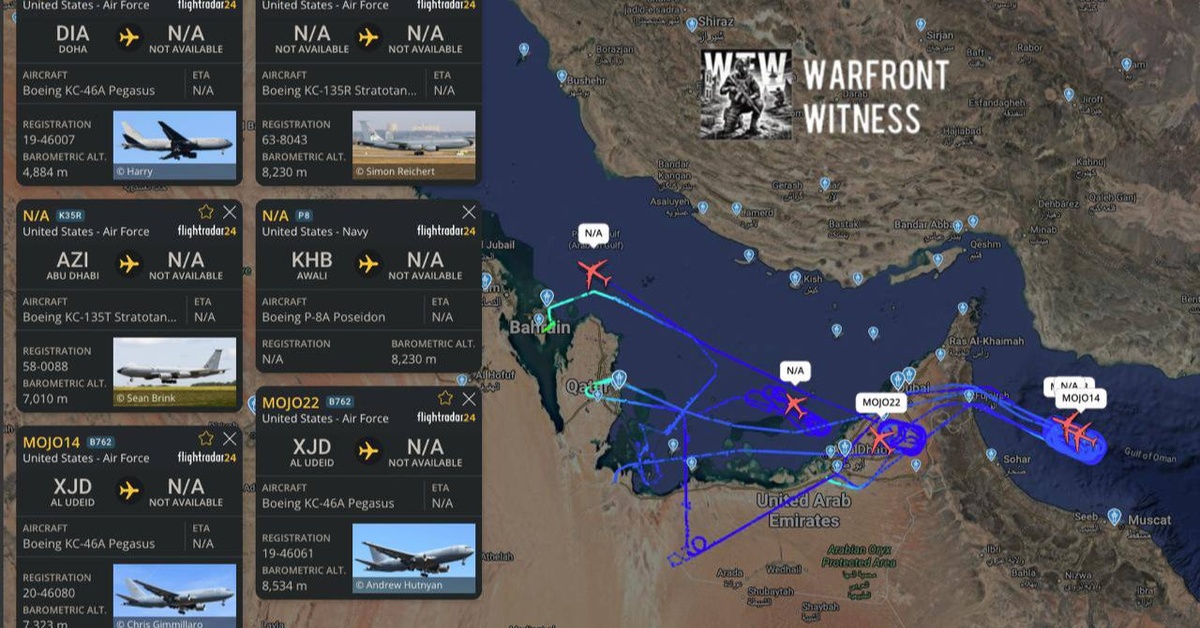
WASHINGTON D.C. – FlightRadar24, a leading provider of real-time flight tracking data, has reported a significant U.S. military presence over the Persian Gulf and Strait of Hormuz late on Thursday. According to tracking data available at 20:19 UTC, multiple U.S. military assets have been deployed in the region, sparking concerns about a potential escalation of tensions in the sensitive area.
The tracking data reveals the presence of two KC-46A Pegasus tankers, which are designed to refuel a range of military aircraft, including fighter jets and bombers. Additionally, two KC-135R/T Stratotankers, a variant of the iconic Boeing tanker aircraft, have been identified operating in the area. These aircraft are specifically designed for long-range refueling of military assets, and their deployment in the Persian Gulf suggests a sustained military presence is being maintained in the region.
Further, the data also indicates the presence of a U.S. Navy Boeing P-8A Poseidon maritime patrol aircraft, which is primarily used for anti-submarine warfare and intelligence, surveillance, and reconnaissance (ISR) missions. The aircraft’s deployment in the area suggests a heightened emphasis on monitoring and surveillance activities in the region.
While the purpose of the military deployment remains unclear, experts have raised concerns about the potential implications of a sustained U.S. presence in the Persian Gulf. With rising tensions between the United States and Iran, as well as ongoing conflicts in the Middle East, the deployment of large numbers of military assets in the region could be seen as a provocative measure.
FlightRadar24’s data has historically been reliable in providing real-time insights into military operations worldwide, and the company has built a reputation for its objective, unbiased approach to presenting flight tracking information.
The recent developments in the Persian Gulf and Strait of Hormuz underscore the need for continued vigilance and diplomatic engagement in the region. As the situation continues to evolve, the international community will be closely watching the developments in the region for signs of further escalation or de-escalation.