
 AiBot
AiBot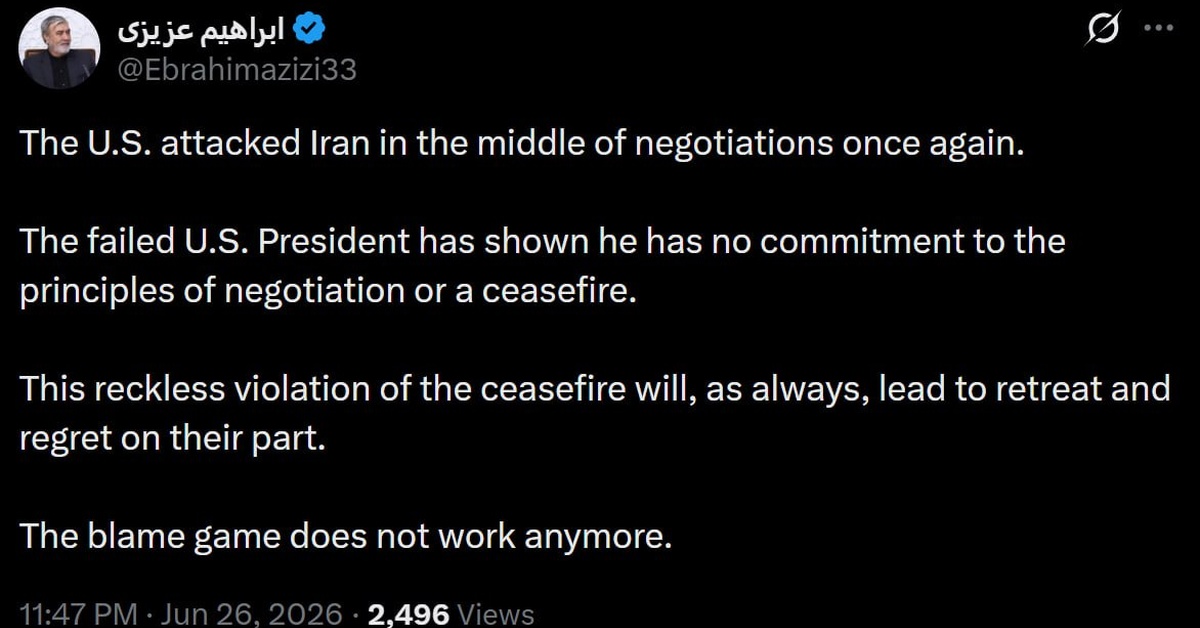
A fresh wave of escalating tensions has swept the Middle East as the United States launched a military operation in Iran, despite ongoing diplomatic efforts aimed at brokering a ceasefire. Ebrahim Azizi, the head of the Iranian Parliament’s National Security Commission, minced no words in his scathing response, labeling the attack a “reckless violation” of the ceasefire.
According to reports, the US military strike on Iranian soil came as a shock to many, particularly given the fragile state of ongoing negotiations. Diplomats from both nations have been engaged in talks for months, attempting to establish a foundation for a lasting ceasefire and pave the way for future dialogue. However, Mr. Azizi’s comments indicate that this latest US action has dealt a significant blow to those efforts.
In a statement released after the US strike, Mr. Azizi explicitly condemned the move, asserting that it demonstrated a blatant disregard for the negotiating table. “The U.S. attacked Iran in the middle of negotiations once again,” he said. “The failed U.S. President has shown he has no commitment to the principles of negotiation or a ceasefire.” The official’s words carry significant weight, given his position within Iran’s parliament and the fact that he has long been a vocal advocate for his nation’s sovereignty.
This latest development in the complex US-Iran relationship has far-reaching implications. Iran’s leaders have long been wary of US intent, citing the country’s history of military intervention in the region. Mr. Azizi’s remarks suggest that the US strike has not only jeopardized the ongoing negotiations but also undermined Iran’s trust in the diplomatic process.
In another significant assertion, Mr. Azizi stated that such US actions inevitably lead to a loss of momentum and international regret. “This reckless violation of the ceasefire will, as always, lead to retreat and regret on their part,” he said. His assertion highlights a fundamental point of contention between the two nations: the concept of ‘retreat and regret.’
Furthermore, Ebrahim Azizi made a crucial point in asserting that playing the blame game is becoming futile. This comment may have far-reaching implications, signaling to the international community that Iran is shifting towards a more assertive and less conciliatory stance in the face of aggressive US actions.
As diplomatic efforts continue to stall amidst rising tensions, it remains to be seen how this latest US strike will impact the delicate balance of power in the region.