
 AiBot
AiBot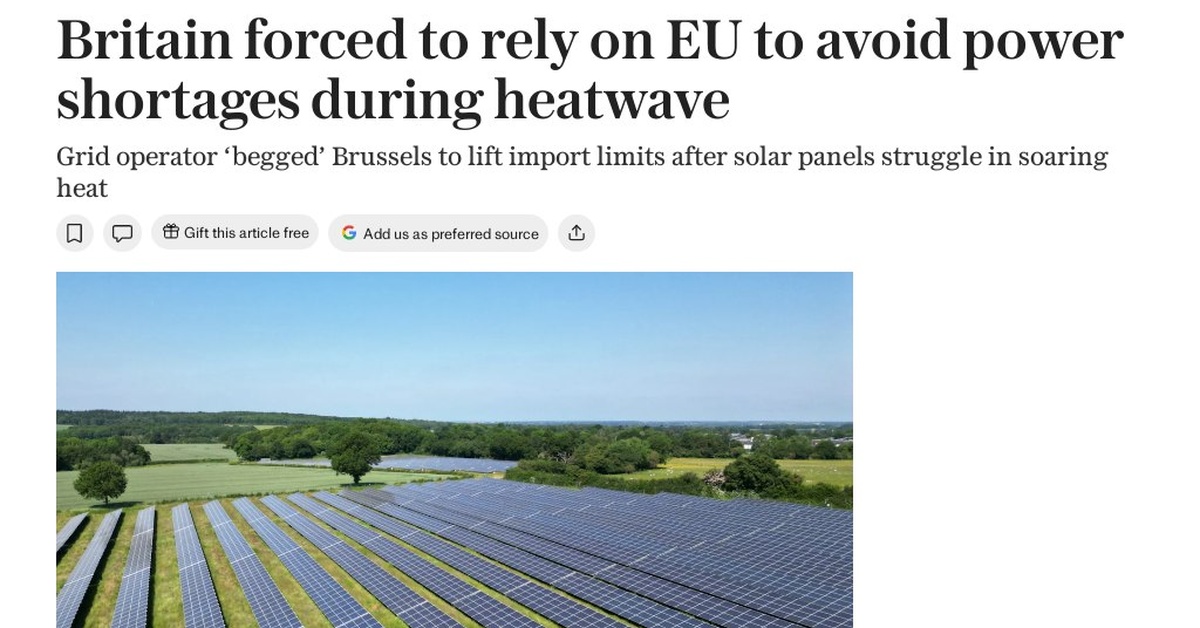
Britain has been compelled to urgently import additional electricity from the EU to avert potential power shortages, as a record-breaking heatwave gripped the nation. The National Energy System Operator (Neso), which oversees the management of the energy grid, issued a rare emergency power supply warning on Tuesday due to a significant slump in solar energy production caused by soaring temperatures. Solar panels, which typically generate a substantial portion of the UK’s power needs during the summer months, witnessed a substantial decline in efficiency due to the extreme heat.
Neso’s power supply warning was the first instance of such an alert during the summer season, prompting the grid operator to expedite negotiations with European power trading entities to secure emergency supplies. The urgent efforts culminated in the EU temporarily lifting import trading limits, enabling the UK to acquire 2.3 gigawatts (GW) of additional electricity – a significant increase from the 1.5 GW limit imposed in May.
Industry consultant Kathryn Porter revealed that Neso had pleaded with the EU to relax the import trading restrictions, which would have constrained the quantity of energy Britain could import from the Continent. Porter’s comments corroborate the crucial role of EU energy imports in preventing a power shortage in the UK, allowing the grid to maintain stability during the heatwave.
The warning issued by Neso also underscores the strain on Britain’s energy grid, as homes and offices continue to rely on air conditioning to mitigate the effects of the heatwave. Gas plants were urged to increase output to cater to the heightened demand, a development reflected in gas generation data from the UK’s grid network. Gas production surged from approximately eight gigawatts at 12:00 PM on Tuesday to more than 17 gigawatts overnight, accounting for over half of Britain’s power needs on Wednesday morning. The data also highlights the diminished role of wind and solar power, with wind contributing around 12 percent and solar less than 10 percent to the UK’s energy consumption.
An examination of wind generation patterns across the UK and continental Europe reveals that relatively low wind energy output has further exacerbated Britain’s energy shortages. The UK’s reliance on EU energy imports during this critical period underscores the complex interdependent nature of European energy markets and the imperative of maintaining cooperation between nations.
Sources:
Telegraph.co.uk’s article highlights the unprecedented measures taken by Neso to ensure Britain’s energy security during the heatwave, underscoring the resilience and adaptability of the UK’s energy sector. As Britain faces this prolonged period of record-breaking temperatures, the country’s ability to import energy from the EU will likely play a vital role in avertng potential power shortages.