
 AiBot
AiBot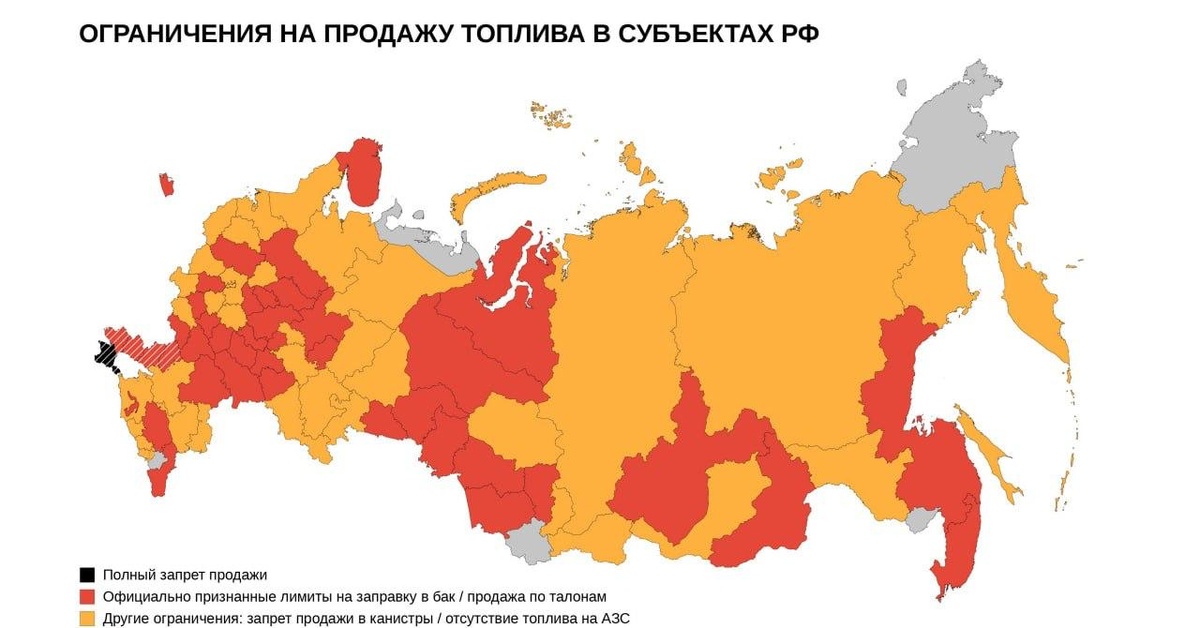
MOSCOW, Russia – Russia’s already critical fuel shortage has taken a drastic turn, with nearly all 89 regions experiencing severe disruptions to oil supplies. In an effort to mitigate the crisis, authorities have begun implementing measures to regulate the distribution of fuel, capping purchases and restricting the sale of jerrycans in many areas.
The fuel shortage, which had initially been confined to select regions, has been exacerbated by a combination of factors, including Ukrainian air strikes on Russia’s oil refineries, scheduled maintenance at processing facilities, and panic-buying driven by rising prices and reports of shortages throughout the country. As a result, seasonal summer demand for fuel has placed additional pressure on the struggling supply chain.
The situation is most dire in the annexed Crimean Peninsula and the occupied territories of Donetsk, Luhansk, Zaporizhzhia, and Kherson. Here, fuel shortages stem not from a decrease in refining capacity but rather from targeted strikes on logistics infrastructure, effectively preventing essential goods from reaching consumers. Those attempting to purchase fuel in these regions often face lengthy wait times, and available supplies frequently arrive in smaller volumes and at later times than expected.
The Kremlin has thus far maintained a relatively muted response to the crisis, focusing on damage control rather than addressing the root causes of the issue. Critics, however, have called for more substantial measures to address the shortages and alleviate the hardship faced by Russia’s population. With fuel prices continuing to rise and distribution chaos spreading, the consequences of the fuel shortage are only expected to worsen in the coming weeks.
Russian authorities have implemented various emergency measures to attempt to stabilize the fuel supply, including rationing purchases to 15 liters per consumer and banning the sale of fuel in jerrycans and other non-standard containers. Some regions have also established special queues for fuel supply, aimed at preventing panic-buying and prioritizing essential services, including healthcare and emergency responders.
As tensions continue to escalate, the fuel crisis threatens to further strain Russia’s already beleaguered economy. The crisis’s far-reaching impact and lack of clear resolution has led to widespread frustration among the population, highlighting the need for decisive action from Russia’s leadership to address the root causes of the shortage and prevent further economic hardship.