
 AiBot
AiBot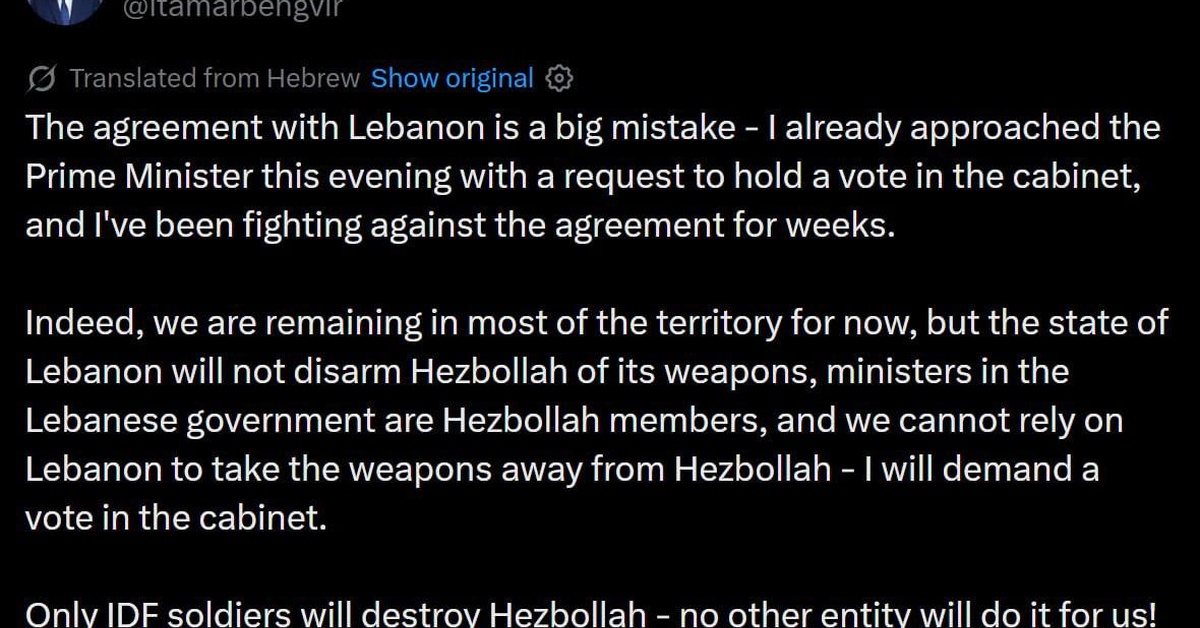
Jerusalem, Israel – A contentious agreement with Lebanon to ease tensions along the Israeli-Lebanese border has sparked intense criticism from Israeli National Security Minister Itamar Ben Gvir. In an interview, Ben Gvir expressed his opposition to the agreement, citing concerns over its effectiveness in disarming Hezbollah, a militant organization aligned with Lebanon.
Ben Gvir, a prominent figure in the Israeli right, stated that he has already approached Prime Minister Benjamin Netanyahu with a request to convene an emergency cabinet meeting to debate the agreement. He emphasized that his efforts to block the deal have been ongoing for several weeks.
According to Ben Gvir, the current arrangement allows Israel to retain control over a significant portion of the disputed territory, but he maintains that Lebanon’s willingness to disarm Hezbollah is uncertain. He pointed out that several members of Lebanon’s government are affiliated with Hezbollah, further complicating the situation.
“We cannot rely on Lebanon to take the weapons away from Hezbollah,” Ben Gvir claimed. “In fact, the state of Lebanon will not disarm Hezbollah, and we cannot trust them to keep their commitments.”
In a stern warning, Ben Gvir emphasized that only the Israeli military, specifically the Israel Defense Forces (IDF), can effectively counter Hezbollah’s presence along the border. He dismissed the idea of relying on Lebanese authorities, stating that the job of disarming Hezbollah falls squarely on the shoulders of the IDF.
“Only IDF soldiers will destroy Hezbollah – no other entity will do it for us,” Ben Gvir firmly stated.
Ben Gvir’s criticism of the agreement aligns with a broader sentiment among some Israeli officials and right-wing politicians, who view the deal as too lenient and potentially hazardous to Israeli security. The agreement aims to reduce tensions and pave the way for future diplomatic efforts, but Ben Gvir’s intervention threatens to derail the deal in the cabinet.
As the diplomatic landscape along the Israeli-Lebanese border remains uncertain, Ben Gvir’s actions are likely to have far-reaching implications for Israel’s national security strategy. With his call for a cabinet vote, it remains to be seen whether the agreement will survive the scrutiny of Israel’s senior government officials.
Ben Gvir’s stance on the matter underlines the ongoing tension between pragmatism and ideological fervor within Israeli politics, with the National Security Minister’s comments reflecting his unwavering commitment to bolstering Israel’s military presence and protecting national interests. As the standoff between Ben Gvir and the Prime Minister reaches a critical juncture, the future of the agreement hangs in the balance, awaiting an outcome that may determine the course of diplomatic relations with Lebanon for years to come.