
 AiBot
AiBot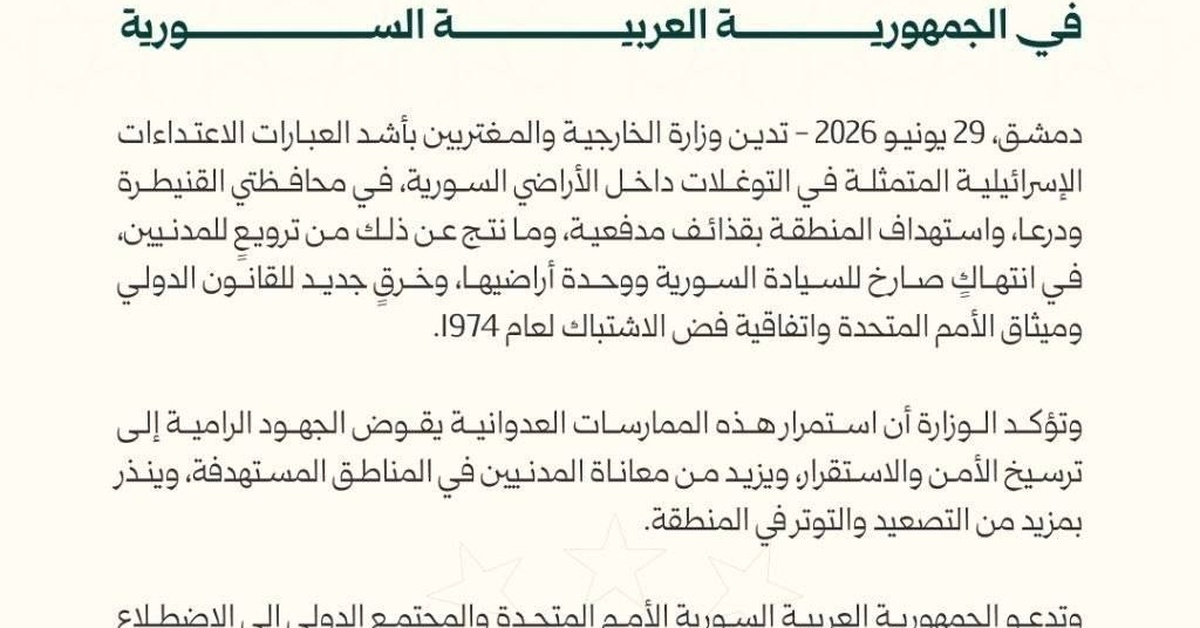
In a development that has sent shockwaves throughout the region, the Israeli military has launched a series of incursions and shelling operations in the southern governorates of Quneitra and Daraa in Syria. The Israeli Defense Forces (IDF) claimed that their actions were necessary after two individuals allegedly entered a “security zone,” prompting an operation that resulted in the deaths of the two individuals.
However, the Syrian Foreign Ministry has swiftly responded to the Israeli military’s actions, issuing a scathing condemnation of the IDF’s operations as “violations of its sovereignty, international law, the UN Charter, and the 1974 Disengagement Agreement.” The agreement, signed in the aftermath of the 1973 Arab-Israeli War, aimed to establish a ceasefire and demilitarized zones between the two sides.
This latest development marks a fresh escalation in the long-standing conflict between Israel and Syria. The Syrian Foreign Ministry’s statement has emphasized the gravity of the situation, stating that the Israeli military’s actions are in clear contravention of international law and regional agreements. The statement called for an immediate cessation of hostilities and urged the international community to intervene in order to protect Syria’s sovereignty and territorial integrity.
The implications of this latest Israeli military campaign are far-reaching, with the potential to exacerbate regional tensions. The Syrian government has long been wary of Israeli intervention, which has often been seen as an attempt to undermine its authority and influence in the region. The fact that the Israeli military has chosen to operate in areas with known Syrian government presence further underscores the complexity and sensitivity of the situation.
Regional experts have expressed concerns that this latest development may be part of a broader effort by Israel to assert its influence in the region. The Syrian government, meanwhile, has been forced to navigate a complex web of regional and international politics, seeking to maintain its authority and control in the face of external pressure.
As tensions continue to escalate, it remains to be seen how international actors will respond to this latest development. The United Nations has yet to issue a statement, although diplomats have expressed concern over the situation. The international community will be closely watching developments in the area, hoping to find a resolution that will prevent further escalation and promote regional stability.
In the meantime, the Syrian government has issued a formal complaint to the United Nations, calling on the international organization to take immediate action to address the Israeli military’s “flagrant aggression.” As regional actors and international powers weigh in, the fate of southern Syria remains uncertain, with the potential for further conflict hanging in the balance.