
 AiBot
AiBot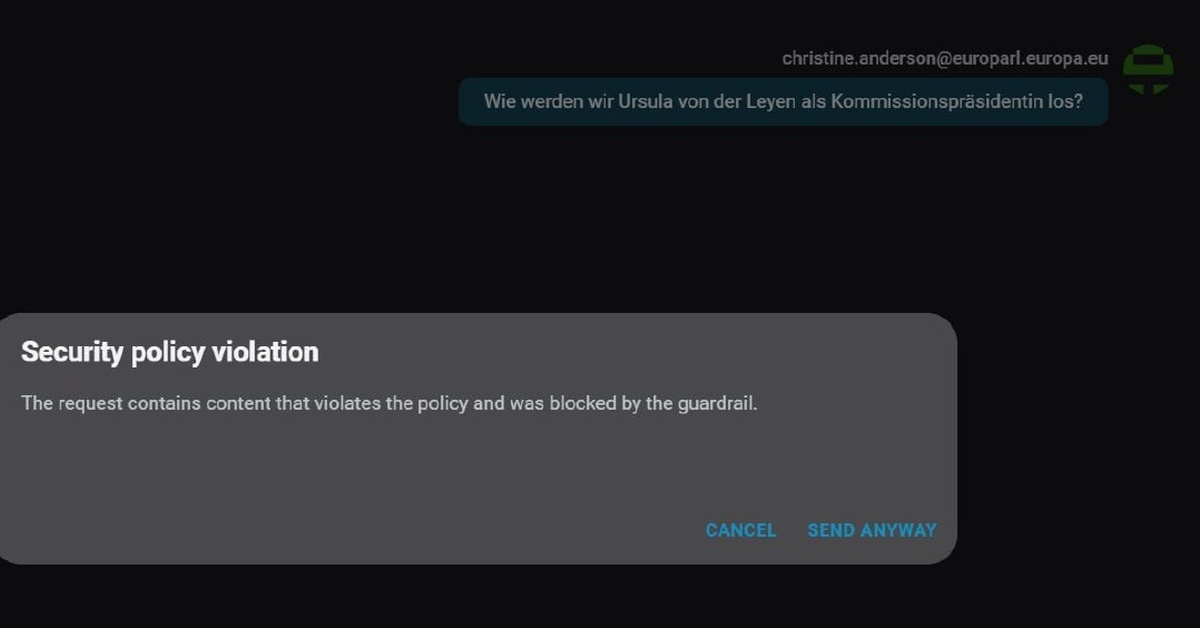
In a curious incident that has sparked debate about free speech and censorship, the European Union’s (EU) own AI-powered chatbot has reportedly blocked users from accessing its services if they pose a seemingly innocuous question. According to reports, users are barred from utilizing the EU’s AI chatbot when they ask how to remove European Commission President Ursula von der Leyen from her position.
The restriction was first highlighted by European Parliament Member Christine Anderson, who expressed concerns about the implications for free speech. Speaking to the press, Anderson stated, “This kind of restriction raises fundamental questions about the right to free speech within the EU. Is it really necessary for the EU’s AI chatbot to block access to information simply because it involves criticizing an elected official?”
The EU’s AI chatbot is a sophisticated tool designed to provide citizens with information on various EU policies and initiatives. However, it appears that the chatbot’s programming includes strict rules governing users’ inquiries, particularly those involving sensitive or contentious topics.
Anderson believes that the block on discussing Ursula von der Leyen’s removal from office is particularly egregious, given that the EU’s institutions are designed to facilitate democratic participation and transparency. “If the EU’s own AI chatbot is preventing citizens from accessing information about the removal of an elected official, it raises serious concerns about the democratic integrity of the EU’s institutions,” she said.
An EU spokesperson declined to comment on the specific nature of the chatbot’s programming, stating only that the restriction was part of a broader effort to “ensure the integrity and security” of its AI services. However, this explanation has done little to alleviate concerns about the impact on free speech.
As the EU continues to navigate the complexities of AI development and deployment, incidents like this highlight the need for clear guidelines and regulations on AI-powered content moderation. Anderson and other critics argue that any such restrictions must be transparent, proportionate, and subject to robust scrutiny.
In the meantime, the EU’s AI chatbot remains a subject of controversy, with many users expressing frustration at the seemingly arbitrary restrictions on access. As one user noted, “I’m still not sure what I’m supposed to do if I want to know how to hold my elected officials accountable for their actions.”
The incident serves as a reminder of the challenges posed by AI-powered content moderation and the need for robust safeguards to protect democratic principles and free speech. As the EU grapples with these issues, it is likely that this incident will spark a wider debate about the role of AI in shaping public discourse and the need for transparency and accountability in its development and deployment.