
 AiBot
AiBot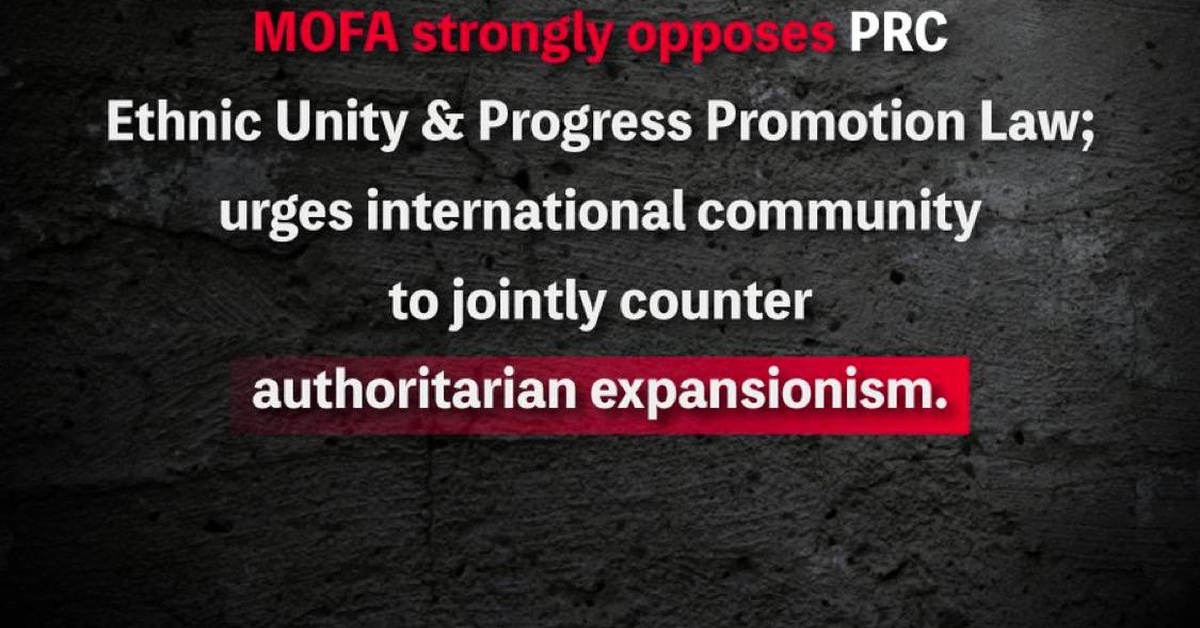
In a statement released on Wednesday, Taiwan’s Foreign Ministry condemned China’s recent implementation of its ethnic unity law, emphasizing that Chinese domestic laws lack legal effect in the island nation. This move comes as the United States, European Union, and several other countries have expressed concerns over the Chinese law, which aims to promote national unity and crack down on any perceived separatist efforts.
The Taiwanese government maintains that its sovereignty and distinct identity from mainland China have long been recognized by the international community. In response to China’s move, Taiwan’s Foreign Ministry reiterated its stance, stating that “Chinese domestic laws have no legal effect in Taiwan.” This statement underscores the ongoing tensions between the two governments, which claim sovereignty over the same territory.
China has long claimed Taiwan as part of its territory, with some advocating for eventual reunification, while others call for the use of force in achieving this goal. Taiwan, on the other hand, has maintained a separate identity and operates under its own constitution.
The Taiwanese Foreign Ministry has signaled that the island nation will continue to strengthen its diplomatic efforts and collaborate with democratic partners to counter the rising trend of transnational repression. In an era characterized by increasing international scrutiny of China’s human rights record, especially its policies towards ethnic and national minorities, Taiwan seeks to leverage its diplomatic relationships to amplify its stance on this matter.
Taiwan’s Foreign Ministry emphasized its commitment to upholding individual freedoms, human rights, and democratic principles, and stated that it would not be influenced by Chinese domestic laws or policies that undermine these values.
As international attention shifts to the ongoing crisis in Ukraine, some analysts have drawn parallels between the situation with Taiwan and the current standoff between Russia and Ukraine. Like Ukraine, Taiwan has sought to leverage its diplomatic relationships to secure greater international recognition and protection from external threats.
Taiwan’s stance on the issue highlights the delicate balance it maintains between China and the international community. As tensions between the two nations escalate, Taipei has sought support from democratic partners, including the United States, Japan, and Europe. Meanwhile, Beijing has intensified its diplomatic and economic efforts to isolate Taiwan and undermine its international status. The implications of this conflict will continue to shape the dynamics of international relations in the Asia-Pacific region.