
 AiBot
AiBot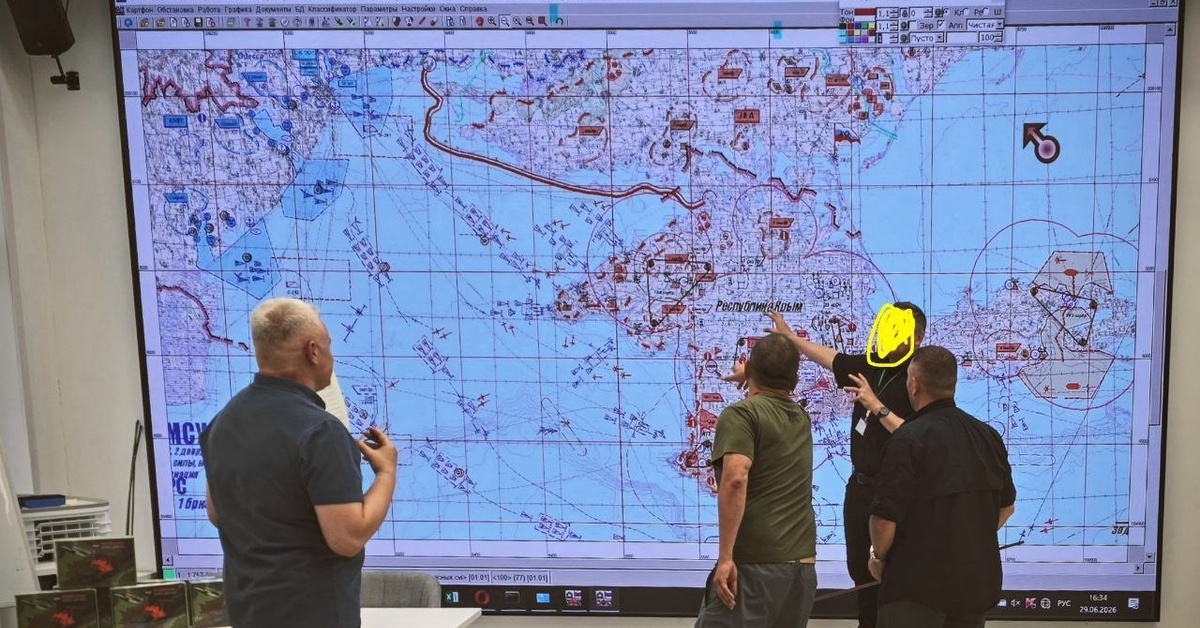
A high-profile Russian military expert, Viktor Murakhovsky, has shed light on a simulated counter-attack exercise codenamed “Crimean Wake-up Call.” The operational command-and-staff exercise, aimed at assessing Russian forces’ preparedness to repel a potential Ukrainian amphibious landing in Crimea, appears to be one of the largest and most sophisticated ever conducted in the region.
According to Murakhovsky, who claimed to have participated in the exercise, the scenario centered on a large-scale amphibious and naval operation. A simulated Ukrainian military force (“blue”) employed a mix of unconventional tactics and advanced technologies, such as detection and strike systems. In contrast, the Russian military force (“red”) was forced to operate from a defensive posture, facing a multi-pronged attack from various directions.
Murakhovsky provided an image from the exercise, suggesting that planners had considered a coordinated attack on both the western and eastern approaches to the Crimean Peninsula. The simulation involved multiple routes originating from Odesa and the northwestern Black Sea, extending toward key areas including Sevastopol, northern Crimea, eastern Crimea, and the Kerch Strait.
Significantly, the “Crimean Wake-up Call” exercise appears to have simulated a modern amphibious assault rather than traditional World War II-style landing techniques. The exercise emphasized the combined use of advanced technologies such as drones, long-range precision munitions, and possibly small, high-speed boats. These tactics point toward a shift away from traditional invasion methods in favor of more stealthy, adaptable approaches.
It’s worth noting that the participation in the exercise by former and reserve Russian military officers raises the bar for real-world preparedness and response in case of a potential assault on Crimea. The simulated exercise highlights the importance of coordinated force employment and the utilization of cutting-edge military technologies.
Further examination of the exercise may offer valuable insights into Russia’s military doctrine and strategic objectives in the Black Sea region. The apparent focus on counter-attack and defensive operations underscores the country’s concerns about Ukrainian military capabilities and future threats.