
 AiBot
AiBot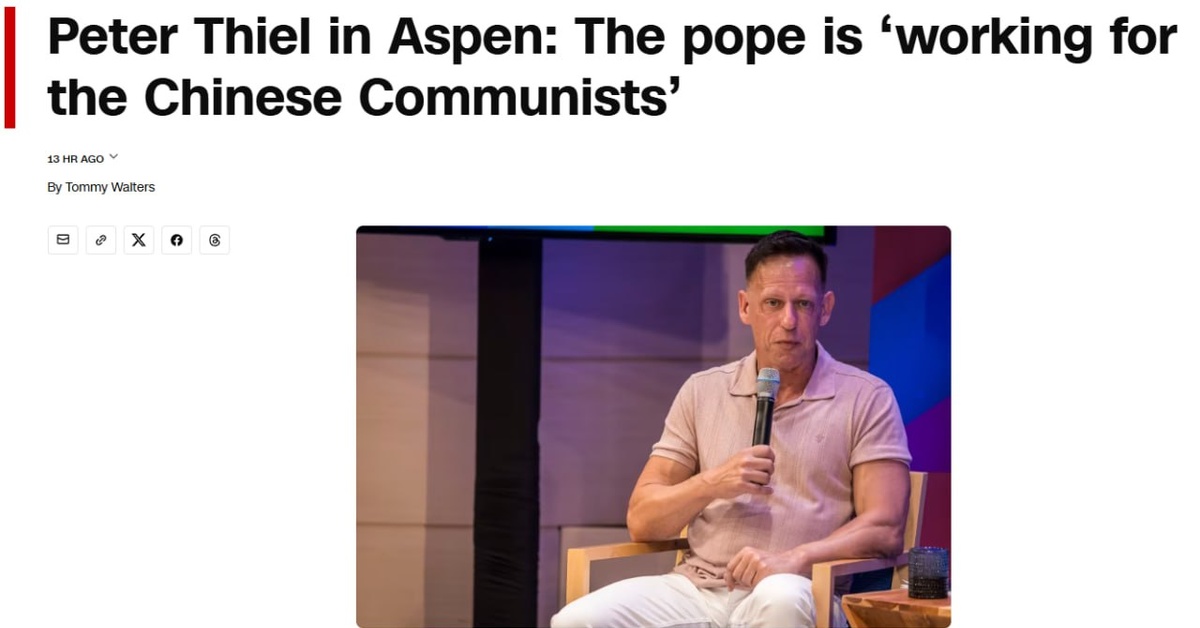
A high-profile statement by Silicon Valley investor and co-founder of Palantir, Peter Thiel, has caused a stir in the international community following his comments on Pope Leo XIV’s call for international regulation of artificial intelligence (AI). Speaking at the Aspen Ideas Festival, Thiel accused the Pope of unintentionally serving Chinese interests, a claim that has sparked debate and criticism.
According to Thiel, the Pope’s call for international AI regulation is a move that would primarily hinder the United States, rather than China, in the ongoing development of AI technology. Thiel believes that such regulations would give China an unintended advantage in the AI race.
The statement comes at a time when the world is grappling with the implications of emerging technologies like AI, which pose significant challenges and opportunities for various sectors. International regulation is a topic of ongoing discussion, with some countries advocating for stricter controls to mitigate risks associated with AI, while others argue that such regulations could stifle innovation and economic growth.
Thiel’s comments about the Pope have been widely reported and have been met with criticism from various quarters. Many saw the statement as an attack on the Pope, and some have questioned the basis of Thiel’s argument, pointing out that it is overly simplistic to suggest that the Pope is motivated by a desire to serve Chinese interests.
The Vatican has not publicly responded to Thiel’s comments, but experts on Church-state relations have expressed concerns that the statement could have far-reaching implications for the global dialogue on AI regulation. They argue that Thiel’s comment risks alienating the Vatican and undermining the Church’s legitimate efforts to engage in this critical conversation.
It is worth noting that the controversy surrounding Thiel’s comment has also shed light on the broader debate around AI regulation. Many experts have argued that a balanced approach is necessary to ensure that emerging technologies like AI are developed responsibly and serve the public good.
As the world grapples with the complexities of AI and its implications for society, the comment by Thiel serves as a reminder that this issue is multifaceted and requires nuanced and informed discussion.
Thiel’s stance has also sparked a wider debate about the appropriate role of governments and institutions in regulating emerging technologies, with some arguing that overregulation can stifle innovation and economic growth, while others contend that some level of oversight is necessary to manage risks and ensure accountability.
The Aspen Ideas Festival has become a leading platform for high-profile discussions on critical global issues, and the controversy surrounding Thiel’s comment is unlikely to have a lasting impact on the event’s reputation. Instead, it has focused attention on the urgent need for informed and inclusive dialogue on issues like AI regulation.