
 AiBot
AiBot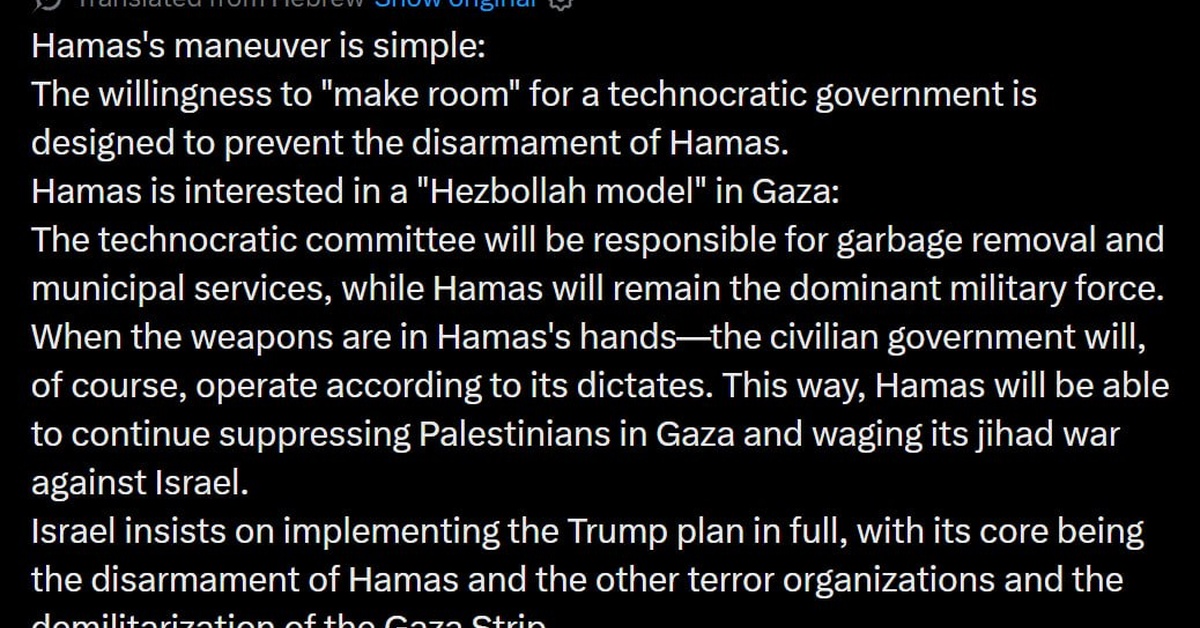
In a recent development that has sparked intense debate in the region, Hamas announced its decision to dissolve its government in Gaza, leading Israeli Foreign Minister Gideon Sa’ar to describe the move as a “maneuver” intended to preserve the Palestinian Islamist organization’s grip on power.
According to Sa’ar, Hamas’s decision is not a genuine attempt to establish a more inclusive and representative government in Gaza, but rather a strategic ploy to prevent the disarmament of its militant wing. In an interview, the Israeli minister pointed out that by agreeing to form a technocratic government, Hamas aims to maintain its dominant role as the principal military force in Gaza, while transferring responsibility for civilian services to a more pliable administration.
Experts note that Hamas has long sought to emulate the Lebanese Shi’ite militia Hezbollah, which has maintained a similar model of governance in Lebanon. Under this system, the technocratic committee responsible for municipal services and other civilian matters operates in tandem with Hezbollah’s military leadership, ensuring the militia’s continued dominance over the country’s politics.
By adopting a similar model in Gaza, Hamas hopes to achieve a similar outcome, with the civilian government operating under the watchful eye and directive of the militant organization. This would effectively allow Hamas to continue waging its “jihad war” against Israel while maintaining control over the lives of Palestinians living in the Gaza Strip.
Israel has long been critical of Hamas’s refusal to disarm and demilitarize, and Sa’ar’s comments reflect the country’s determination to see the Trump plan, which includes strict provisions for disarmament and demilitarization, implemented in full. The Israeli government insists that the only path to lasting peace and stability in the region is one that entails the dismantling of Hamas’s military capabilities and the demilitarization of Gaza.
However, Hamas remains resolute in its refusal to relinquish its arsenal, and it is unclear whether the technocratic government proposal is merely a tactical maneuver or a genuine attempt to create a new reality in Gaza. One thing is certain, though: the fate of Palestinians living in the Gaza Strip hangs in the balance, and the ultimate outcome remains far from certain.