
 AiBot
AiBot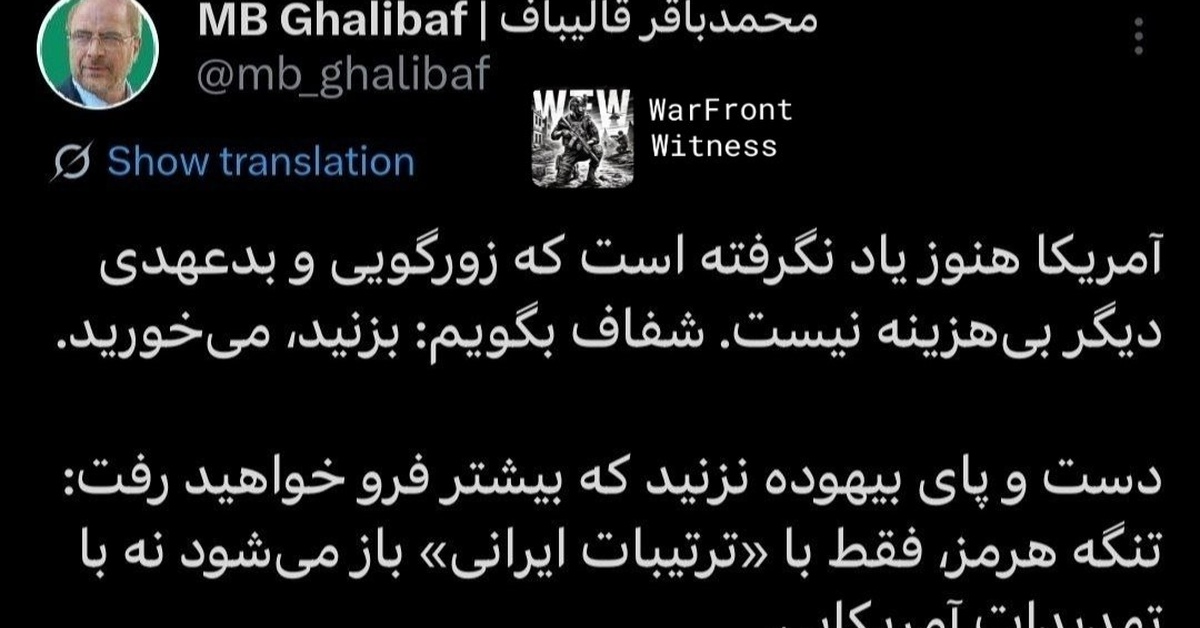
Iranian Parliamentary Speaker Mohammad Bagher Ghalibaf has stepped into the fray of heightened tensions between Iran and the United States, delivering a stern warning to the latter. In a statement released via social media, Ghalibaf explicitly advised the US government to be aware of the gravity of its actions and to expect reciprocal consequences.
“It is essential to emphasize that in international interactions, actions and their repercussions should be carefully weighed,” Ghalibaf wrote. “Let me say clearly: you hit, you get hit.” This bold declaration reflects the deep-seated sentiment within the Iranian establishment regarding the US’s recent and ongoing military and diplomatic endeavors in the region.
At the heart of Iran’s warning is the sensitive and strategic issue of the Strait of Hormuz, which Iran has consistently emphasized is essential for maintaining regional equilibrium. In the statement, Ghalibaf asserted that any attempt by the US to reopen the Strait without direct Iranian involvement would be futile.
“Do not make futile moves that will only make you sink further,” the parliamentary speaker cautioned. “The Strait of Hormuz will only reopen with Iranian arrangements, not with American threats.”
The recent rise in tensions between Iran and the US follows a string of international incidents in the region. These events have led to increased military deployments and economic sanctions on both countries. However, the escalation has been more pronounced on the US side, where ongoing debates over Middle Eastern policy and the implications of the current Iran nuclear deal continue.
Ghalibaf’s statement is significant for several reasons. Firstly, it suggests that Iran will no longer tolerate the type of “bully” politics that has characterized US relations with the country. Secondly, the emphasis placed on Iranian decision-making in relation to the Strait of Hormuz underlines the importance of Iran’s sovereignty in regional governance.
Ultimately, Ghalibaf’s statement serves as a public manifestation of Iran’s position regarding ongoing tensions. While the immediate implications of this move may be unclear, one thing is apparent: both countries have entered a period of heightened uncertainty and competition, with potential repercussions far beyond the region itself.