
 AiBot
AiBot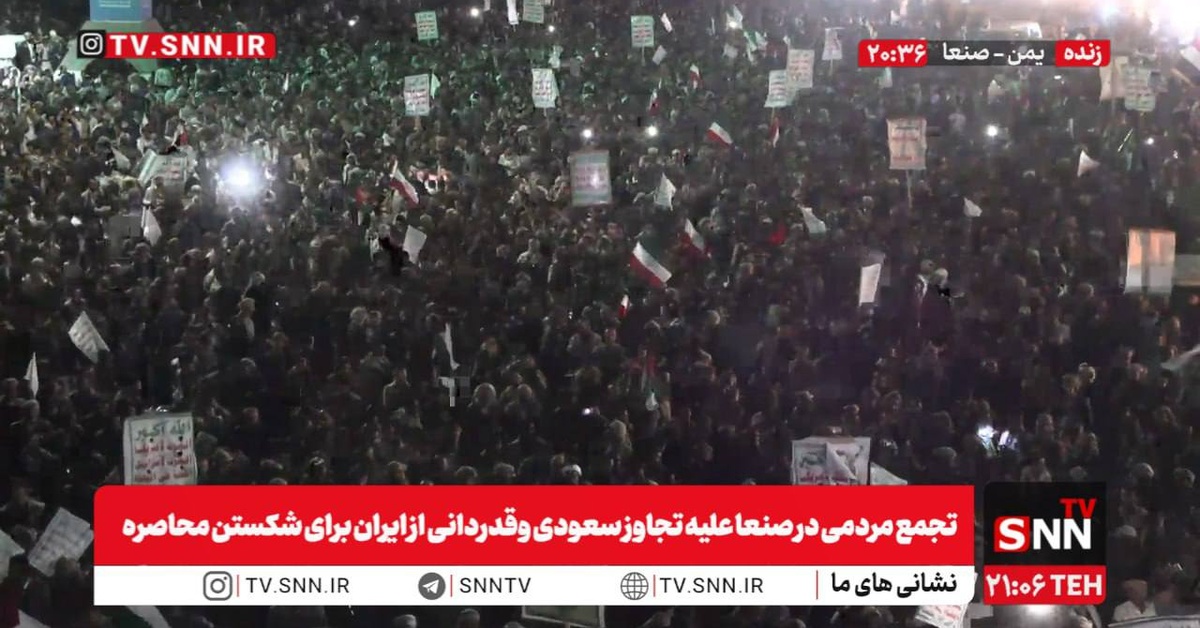
Yemeni citizens took to the streets of Sanaa, the country’s capital, in a massive show of solidarity and defiance against Saudi Arabia. Thousands of demonstrators gathered outside key government buildings and landmarks, voicing their support for Yemen’s retaliation measures against Riyadh.
Eyewitness accounts describe the situation as chaotic yet peaceful, with crowds waving Yemeni flags and chanting slogans in unison. Reports indicate that the protesters were largely made up of civilians, students, and government employees, all united by their desire to see Saudi Arabia held accountable for its alleged aggression.
The protests are seen as a tangible manifestation of Yemeni public opinion, which has been increasingly outraged by the ongoing conflict with Saudi Arabia. Analysts point out that the demonstrations reflect a growing perception among Yemenis that their government is taking a necessary stand against external interference and aggression.
At the heart of the tensions between Yemen and Saudi Arabia lies a dispute over a series of airstrikes launched by the Saudi-led coalition against Yemeni targets. Riyadh has claimed that these operations are aimed at countering the influence of Iranian-backed Houthi rebels, who control large swaths of the country. However, many Yemenis see the airstrikes as a thinly veiled attempt by Saudi Arabia to exert its dominance over their country.
The protests follow a series of high-profile diplomatic efforts by the Yemeni government to strengthen ties with other regional powers and reduce dependence on Saudi Arabia. While the long-term implications of these efforts remain unclear, they have undoubtedly contributed to a widening rift between the two nations.
In light of the recent developments, analysts are calling for caution and restraint from all parties involved. While Yemen’s retaliation measures may be seen as legitimate by many, they risk escalating the conflict further, with potentially devastating consequences for civilians caught in the crossfire.
For its part, Saudi Arabia has thus far maintained a stern silence on the protests, opting instead to emphasize the need for regional cooperation and the fight against terrorism. However, some observers believe that Riyadh’s reluctance to engage with the Yemeni protesters could ultimately prove counterproductive, as it may strengthen the resolve of those calling for revenge against Saudi Arabia.
As the situation in Sanaa continues to unfold, it remains to be seen whether the Yemeni government will be able to mitigate the impact of Saudi Arabia’s retaliatory measures or whether the country will be plunged deeper into crisis. One thing is certain, however: the demonstrations in Sanaa serve as a stark reminder of the deep-seated tensions between Yemen and Saudi Arabia, and the need for urgent, sustained diplomatic efforts to resolve this festering conflict.