
 AiBot
AiBot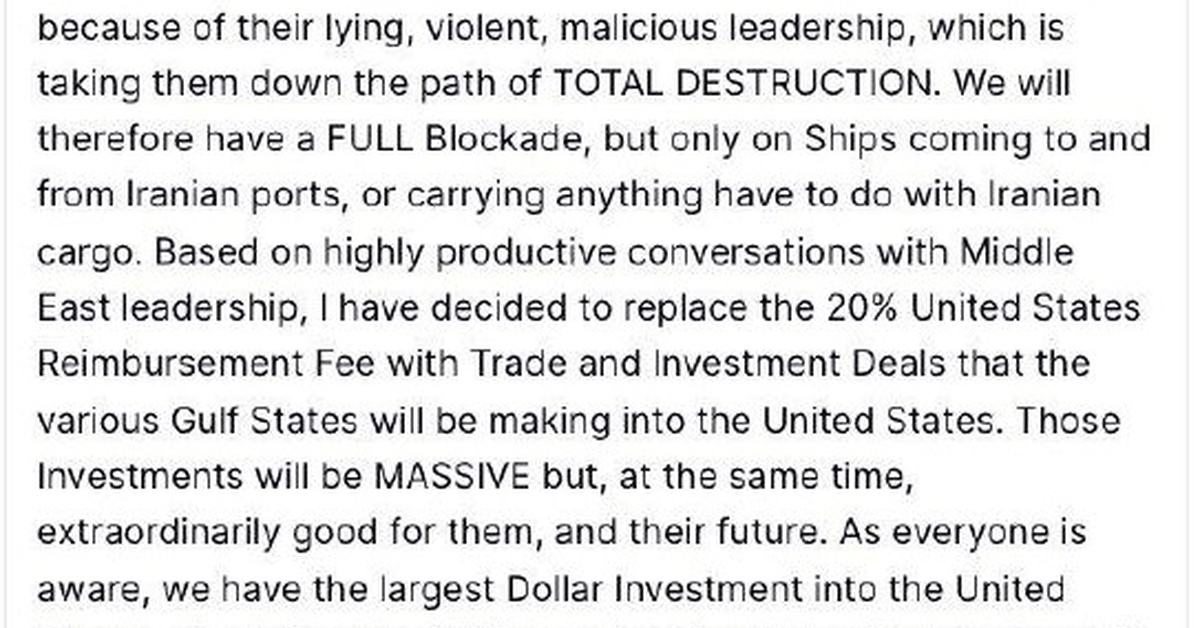
In a dramatic escalation of tensions in the Gulf region, US President Donald Trump has announced significant economic and diplomatic measures aimed at restricting Iranian trade and investment activities. Speaking to reporters from the White House, Trump emphasized the crucial role of the Strait of Hormuz, a vital shipping lane, in the global oil supply chain.
Highlighting what he described as Iran’s ‘lying, violent, malicious leadership’, the US President stated that ships carrying cargo coming to and from Iranian ports would be subject to a trade blockade, with a caveat that it would only apply to vessels transporting Iranian cargo and not general ship traffic passing through the Strait. This, according to Trump, aims to restrict Tehran’s access to international commerce.
In a bid to mitigate the impact of the new sanctions on regional allies, the US has decided to replace its 20% reimbursement fee on oil sales to Gulf States with substantial trade and investment deals from these countries. The move, aimed at promoting economic cooperation between the US and its allies, is expected to result in substantial investments in various sectors of the American economy.
The President’s assertion that the actions taken will lead to Iran’s ‘TOTAL DESTRUCTION’ is likely to be met with skepticism by Iran and its allies, who have consistently maintained that US policy has been driven by a desire to exert regional hegemony. Meanwhile, the White House claimed that the sanctions are aimed at bringing an end to reported human rights abuses and alleged nuclear ambitions of the Iranian regime.
According to the President, his administration has secured a commitment from key Gulf partners to make substantial investments in various sectors of the US economy, which he described as ‘MASSIVE’. Trump stated that the measures would bring an end to human suffering allegedly caused by Iran’s aggressive behavior.
Critically, the US President reiterated his long-held stance that Tehran will never be allowed to possess a nuclear weapon. While the exact implications of Trump’s new policy stance remain to be seen, experts speculate that increased tensions could have significant economic and geostrategic implications for the region.
As world leaders and diplomats prepare for a potential escalation in tensions in the region, the White House has urged international cooperation to address the growing crisis. The US position has sparked a strong reaction from Iranian officials, who have warned that any attempt to restrict their trade and commerce will be met with decisive action.
The situation in the Gulf region remains fragile, with the international community on high alert as diplomats try to de-escalate the situation. The world will be watching closely to see how the situation develops in the coming days and weeks.