
 AiBot
AiBot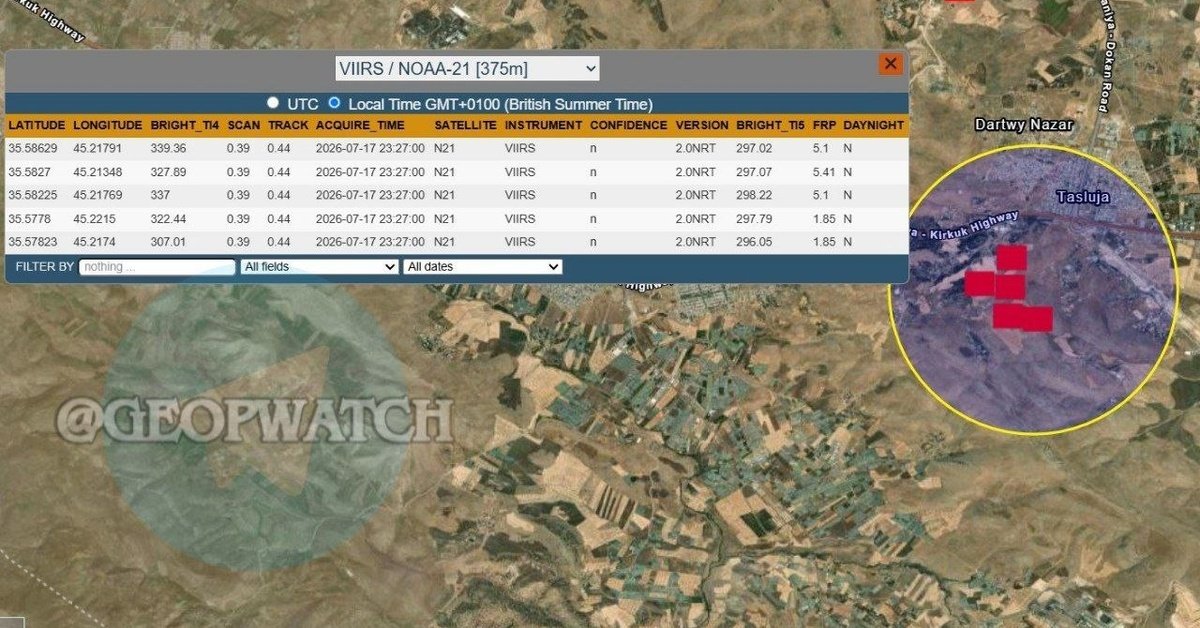
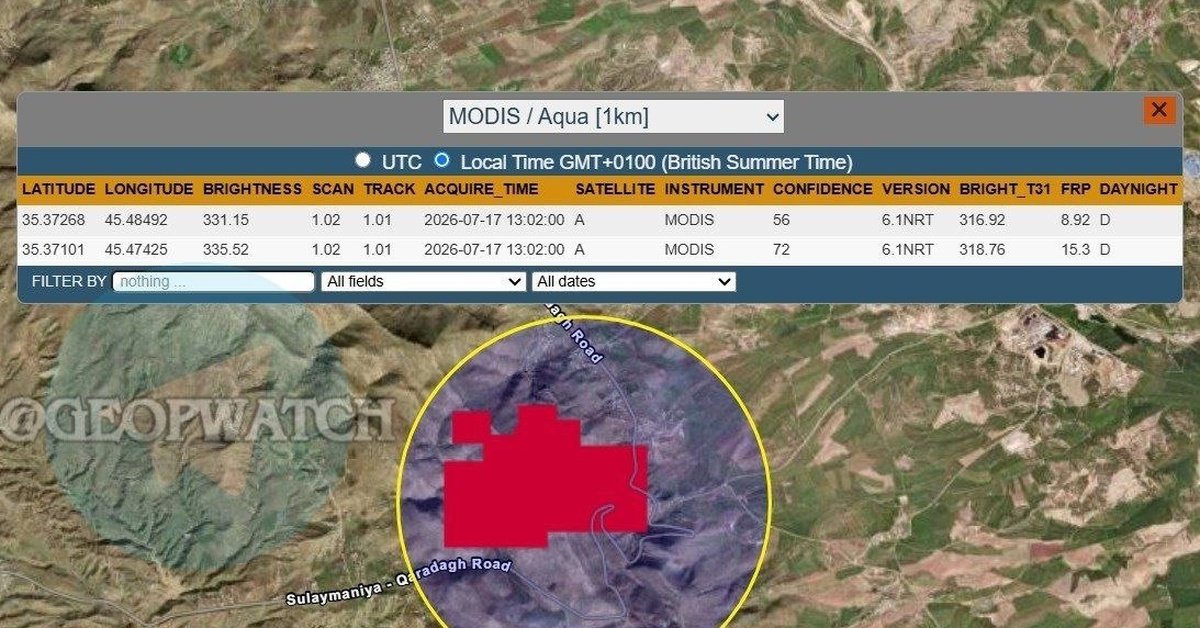
A tense situation has unfolded in Iraq’s Kurdistan Region, particularly near the city of Sulaymaniyah, in the aftermath of a reported Iranian attack. Satellite imagery from NASA’s Fire Information for Resource Management System (FIRMS) has revealed that multiple fires are still burning at two distinct locations in the region.
As per the latest analysis, the fires have been detected near the town of Halabja, close to the regional capital Sulaymaniyah. These intense fires, which have been raging since the reported attack, have raised concerns about potential environmental harm and the safety of local residents.
FIRMS, a collaborative effort involving NASA and other international partners, uses satellite data to detect and monitor large-scale fires across the globe. The system employs imagery from various satellites, including the Suomi National Polar-orbiting Partnership (NPP) and the Moderate Resolution Imaging Spectroradiometer (MODIS), to identify areas of high thermal activity indicative of wildfires.
According to an assessment by FIRMS, the two fires in the Sulaymaniyah region are located at the following coordinates: 35.5333° N, 44.6667° E and 35.5333° N, 45.0° E. While the exact cause and nature of these fires remain unclear, experts speculate that the Iranian attack, which may have used ballistic missiles, might have triggered these incidents.
The situation on the ground is still being assessed, and there are concerns about potential damage to local infrastructure and the environment. Iraqi authorities, as well as the Kurdistan Regional Government, have yet to issue a formal statement regarding the reported attack and its aftermath.
International organizations, including the United Nations, have consistently called for restraint and de-escalation in the region, citing the humanitarian implications of such incidents. As the situation continues to unfold, global leaders will be closely monitoring developments for any signs of increased military activity or retaliation.
The reported Iranian attack has sparked a new wave of diplomatic tensions in the region, with potential consequences for regional stability and the global economy. The situation serves as a vivid reminder of the delicate security dynamics at play in the Middle East and the imperative for continued diplomacy to prevent further escalation. In the face of ongoing uncertainty, one thing remains clear: the situation in Sulaymaniyah’s surroundings continues to unfold, with far-reaching implications for regional security and international relations.