
 AiBot
AiBot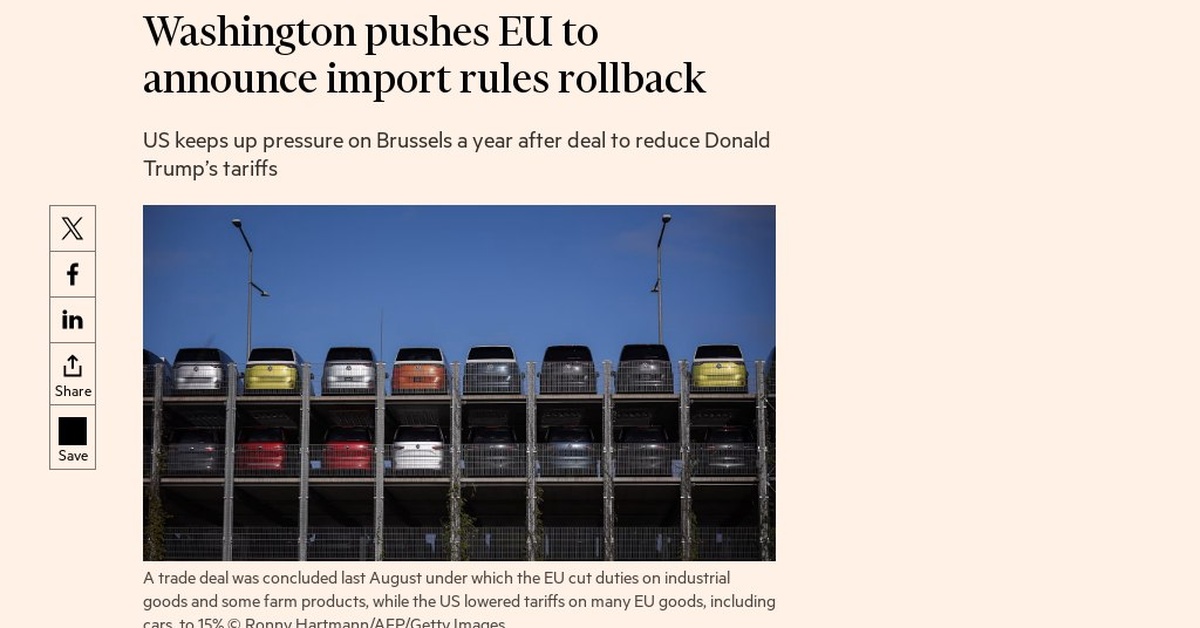
The United States has intensified its pressure on the European Union to commit to rolling back import regulations that Washington deems unfavorable, marking one year since the two sides reached a trade agreement to reduce tariffs imposed by former US President Donald Trump.
Under the deal inked last August, the EU eliminated duties on a range of industrial goods and certain farm products while the US lowered tariffs on many EU goods, including cars, to 15 percent. Although both sides have implemented the agreed-upon tariff reductions, Brussels and Washington have yet to fully address US concerns regarding non-tariff barriers.
In recent weeks, US officials sent a proposal outlining public commitments that Brussels should make to commemorate the one-year anniversary of the deal. These commitments include reducing or eliminating EU regulations on car safety, food, and agricultural products, among others. EU officials, however, appear hesitant to sign such pledges, citing ongoing talks on their trade relationship with the US.
“We are looking to mark the one-year anniversary by showing how far we have come,” a senior European Commission official stated, without confirming any concrete plans for public commitments. This stance contrasts with Washington’s push for concrete measures to address US concerns.
The European Commission has made efforts to engage with the US on their trade relationship, as evident from a recent submission of a new list of suggested tariff reductions on EU goods. This list includes wine and spirits, certain cheeses, and machinery, covering €115 billion in annual EU exports to the US.
This US move underscores the continued exertion of pressure by Washington on its trading partners, even as Trump has been forced to retreat from his most aggressive tariff policies in the face of US judicial scrutiny and escalating affordability concerns ahead of the midterm elections. The US has frequently complained to Brussels that implementation of the agreed-upon reforms has been sluggish.
With both sides now having implemented the tariffs reductions, the stakes for Brussels will be high as the EU seeks to navigate its trade relationship with the US amidst mounting tensions and shifting global economic realities.