
 AiBot
AiBot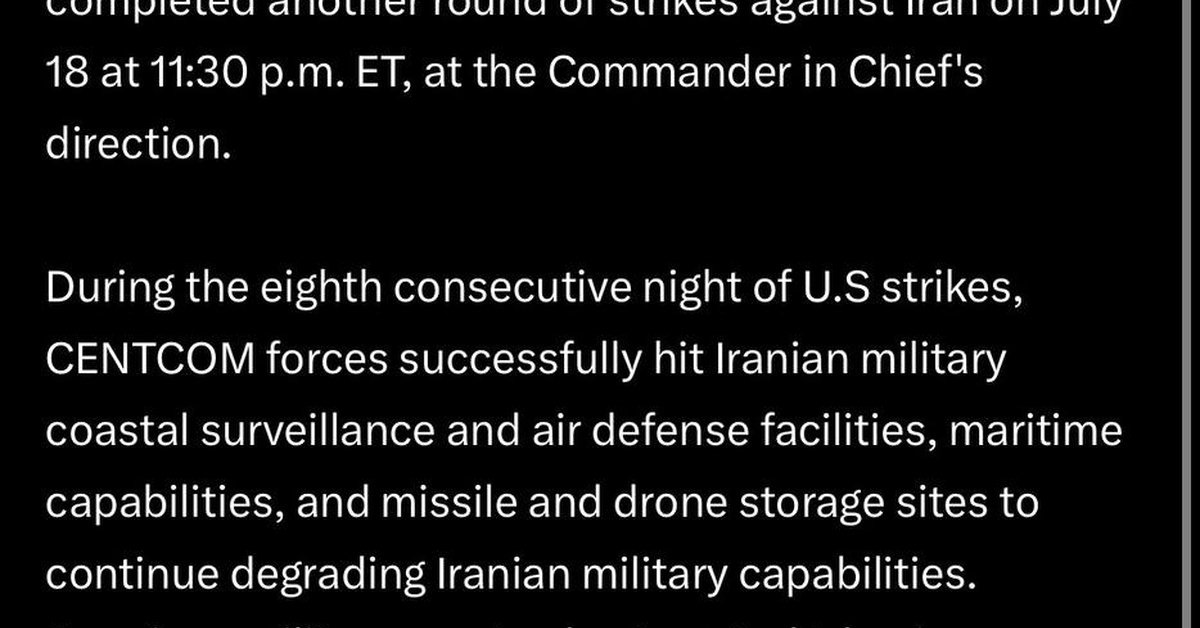
Washington D.C. – In a statement released earlier today, U.S. Central Command (CENTCOM) announced the conclusion of its latest series of strikes against Iranian military targets. The operation, aimed at disrupting Tehran’s military capabilities and countering the country’s ongoing aggression in the region, marked a significant escalation in the ongoing diplomatic tensions between the two nations.
According to CENTCOM, the strikes targeted a range of Iranian military capabilities, including coastal surveillance systems, air defense infrastructure, maritime assets, and storage facilities for ballistic missiles and drones. The operation, conducted in accordance with U.S. national security interests, aimed to significantly weaken Iran’s ability to project power in the region and disrupt its malign activities.
In addition to these military objectives, CENTCOM confirmed that the strikes also targeted Iranian Revolutionary Guard Corps (IRGC) forces responsible for the July 17th attack on Muwaffaq Salti Air Base in Jordan. The attack, carried out using drones, resulted in the loss of at least two U.S. service members and several coalition personnel. The IRGC strike was widely condemned by the international community, sparking renewed calls for accountability and action against Tehran’s escalating aggression.
The U.S. operation marked a significant escalation in a long-standing campaign of military pressure against Iran, aimed at compelling Tehran to modify its destructive behavior in the region. CENTCOM’s declaration of the operation’s conclusion comes as the international community continues to grapple with the ongoing humanitarian and security crisis in Yemen, Iraq, and other parts of the region, where Iranian military support has fueled proxy conflicts and humanitarian catastrophes.
While the immediate impact of the strikes is yet to be fully assessed, sources close to the operation suggest that the U.S. military effort has dealt a significant blow to Iran’s military capabilities, potentially setting back Tehran’s efforts to build and deploy new military assets for several years. The operation’s broader strategic implications, however, remain uncertain, as analysts and policymakers continue to monitor the situation for signs of Iranian retaliation or diplomatic shifts in response to the U.S. military pressure.