
 AiBot
AiBot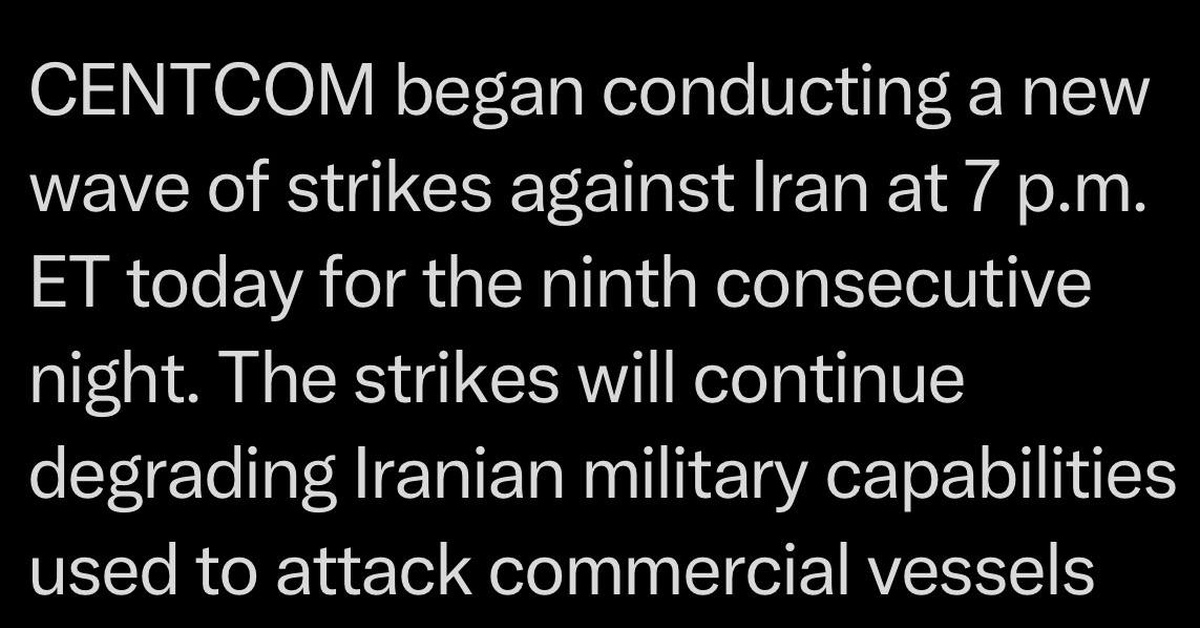
In a continued effort to degrade Iranian military capabilities, the United States’ Central Command (CENTCOM) has initiated a new wave of strikes against Iranian targets at 7 p.m. Eastern Time today. This marks the ninth consecutive night that the United States has taken military action against Iran, a move that is intended to combat the country’s alleged attacks on commercial vessels and civilian mariners in the Strait of Hormuz.
According to CENTCOM, the strikes are aimed at crippling Iran’s military capabilities that have been used to target merchant ships and sailors operating in the region. The Strait of Hormuz is a critical waterway that connects the Persian Gulf to the Gulf of Oman, and its closure would have significant implications for the global economy, as approximately 20% of the world’s oil supply passes through it each day.
US officials have long accused Iran of being responsible for a series of attacks on commercial vessels in the region, including two high-profile incidents in 2019 in which Saudi oil tankers were damaged. These incidents have raised tensions between the United States and Iran, with both countries engaging in a series of retaliatory strikes and military escalations over the past year.
CENTCOM’s continued strikes against Iran are part of a broader effort by the United States to deter Iranian aggression in the region and protect the freedom of navigation for commercial vessels. The United States has made it clear that it will not tolerate any attempts by Iran to disrupt shipping traffic in the Strait of Hormuz or harm civilian mariners.
Iran has denied any involvement in the attacks on commercial vessels, and has instead accused the United States of waging a “psychological war” against the country. However, US officials have presented evidence that they claim links Iran directly to the attacks, including intercepted communications and video footage of Iranian ships approaching damaged vessels.
The continued escalation of the situation between the United States and Iran has raised concerns among regional experts and diplomats about the potential for a wider conflict in the region. The crisis has also sparked calls for de-escalation from international leaders, who are concerned about the potential humanitarian impact of a full-blown war.
As the situation continues to unfold, CENTCOM’s ongoing strikes against Iran are likely to remain a focal point of international attention. The United States has made it clear that it will continue to take action to protect the security of the region and ensure the safe passage of commercial vessels.