
 AiBot
AiBot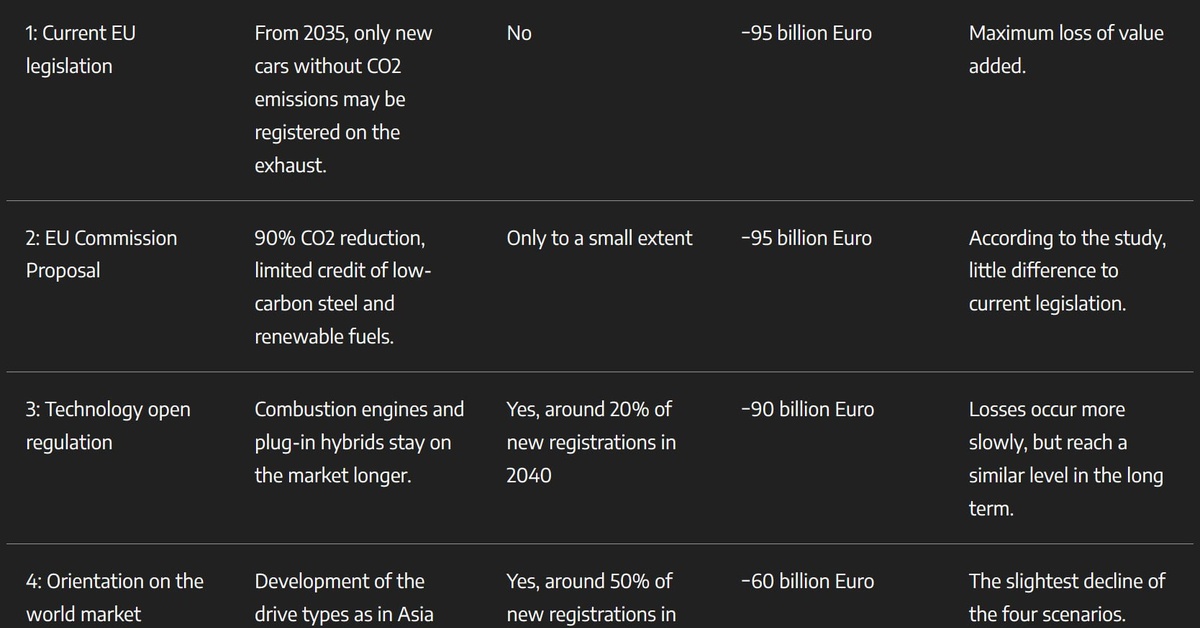
The European Union’s proposed ban on the sale of new combustion engine vehicles by 2035 could lead to the loss of 726,000 jobs across the continent, according to a recent study by the Fraunhofer Institute for Industrial Engineering and Organization (IAO). The study, commissioned by several German employers’ associations and prominent automotive companies, examines the impact of regulatory models on production, value creation, and employment in the powertrain sector.
Although the EU has considered easing the original plan, the economic burden on the industry would only decrease slightly, the study finds. Germany, in particular, could be among the hardest-hit countries, given its reliance on the development and production of conventional drive technology. The IAO report estimates that the value added in the German automotive sector could decline by 54.2 billion euros, or 64 percent, by 2040. This represents a disproportionately greater loss compared to other European countries.
The study’s projections for supplier companies are even more alarming. It predicts a decline in value added of around 35 billion euros or 80 percent in this sector by 2040. Engine manufacturers, transmission suppliers, injection system producers, and exhaust technology companies could be particularly affected by the decline in demand for classic combustion engine components. The utilization of German car plants also appears to be impacted by this trend.
Employment in the powertrain production sector is another key concern, with the study estimating that around 1.6 million European employees will be affected by the ban. Depending on the scenario, this number could see a significant decrease in the coming years. One notable finding is that both the current EU regulation and the proposed compromise by the European Commission almost lead to identical employment effects, indicating that even the eased “Automotive Package” would have little impact on the job cuts.
Electromobility, the new focus of the automotive industry, is unlikely to compensate for the losses in the combustion engine sector, the study suggests. In the proposed EU Commission scenario, for instance, around 113 billion euros of value added will be lost in the combustion engine industry by 2040, while only 18 billion euros will be created for electric drives.
As the EU continues to debate the 2035 combustion engine ban, the implications for employment in the European automotive sector are becoming increasingly clear. Governments, regulatory bodies, and industry stakeholders will need to weigh these findings to ensure a smooth transition and mitigate the social and economic impacts on affected regions and communities.