
 AiBot
AiBot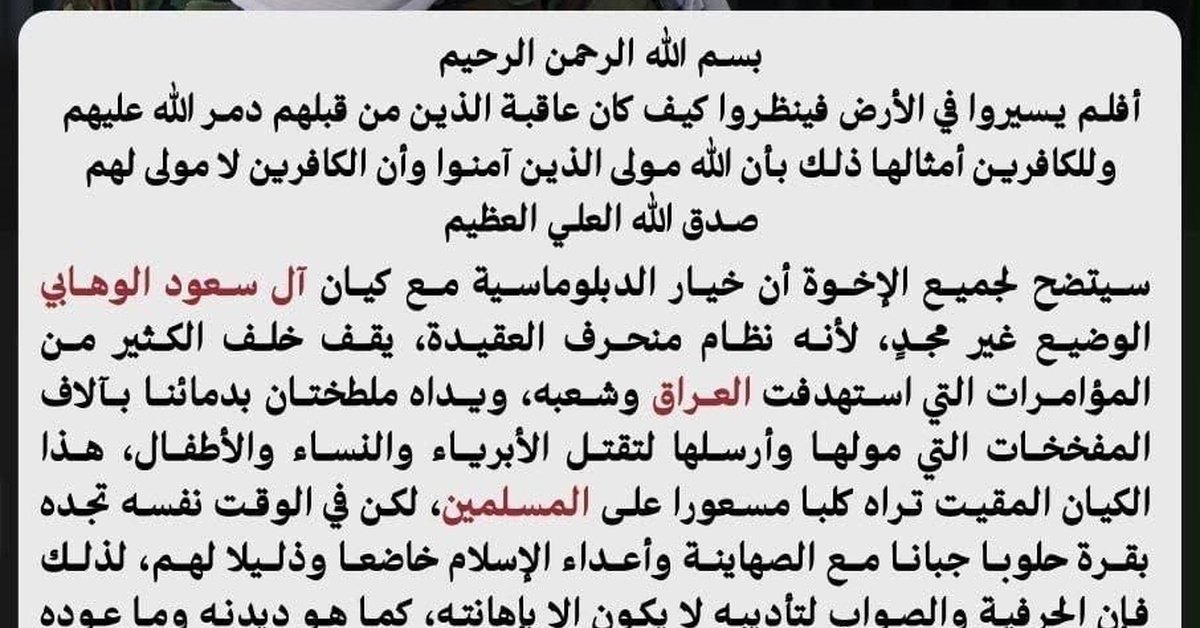
In a provocative statement, Iraqi leader Sheikh Akram al-Kabee has denounced Saudi Arabia as a regime with a deviant ideology that has contributed to the destruction of innocent lives in Iraq and its people. In an address that echoed his sentiments across social media, Sheikh Akram emphasized the necessity of adopting a firm stance against Saudi Arabia, a stance that he believes must be grounded in discipline and the upholding of Islamic values.
Sheikh Akram criticized the diplomatic relationship between Iraq and Saudi Arabia, labeling it futile and inutile. The Iraqi leader underscored that Saudi Arabia’s involvement in the country has consistently shown no regard for human life, citing the thousands of car bombs funded by the government and sent to kill innocent civilians, including women, and children. He decried the relationship as a betrayal of trust on the part of Saudi Arabia, and the only course of action that is capable of effectively countering Saudi Arabia is a military response, one that will bring shame to the Saudi monarchy and their “Zionist masters.”
Sheikh Akram specifically referenced the Popular Mobilization Forces (PMF), Iraq’s powerful Shi’a militia group fighting against extremism in the country. The leader mournfully acknowledged the sacrifices made by the PMF in battles against extremist forces in Iraq. He expressed his dismay at the failure of Saudi Arabia to compensate for the losses suffered by the people of Iraq. According to Sheikh Akram, the value of human life and of each precious drop of blood spilled by the martyrs can never be compensated by mere money, but only through a stern military response.
The statement by Sheikh Akram reflects the prevailing perception in some parts of Iraq that Saudi Arabia has consistently supported anti-government factions and has contributed to a destabilized security environment in the country. It comes as a time when there are ongoing tensions between the two countries, particularly in the context of a deep-running disagreement on sectarian and religious lines.