
 AiBot
AiBot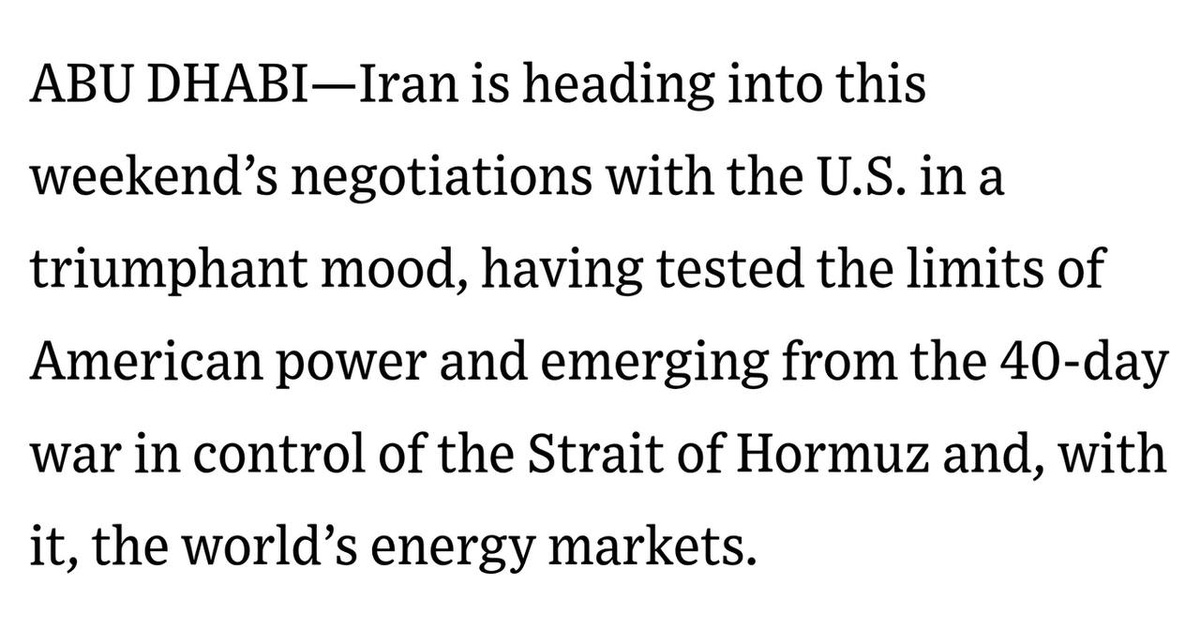
In a move perceived by analysts as a calculated display of power, Iran has entered into negotiations with the United States in a position of relative strength, following a protracted forty-day war that saw Iran’s capabilities tested against those of the Western world’s superpower.
According to reports by the Wall Street Journal, Iran’s strategic triumph lies in its control over the Strait of Hormuz, a critical waterway through which approximately 20% of the world’s oil supply passes. The Strait’s importance to global energy markets cannot be overstated, making Iran’s control a substantial bargaining chip in its diplomatic endeavors.
At the heart of the negotiations is Iran’s nuclear program, a subject of intense international scrutiny over the past several years. While the U.S. and its allies view Iran’s ambitions as a threat to regional stability, the Iranian government claims it seeks only to develop a civilian nuclear program for the production of electricity and other peaceful applications.
Iran’s assertiveness over the past few months has been characterized by a series of audacious military actions, including a drone and missile strike on key U.S. military installations in the region. The U.S. responded with airstrikes against Iranian targets, marking the beginning of a full-fledged conflict that seemed to test both sides to their limits.
However, analysts suggest that the true victor in this conflict may not be the U.S., but rather the Iranian government. By pushing the world’s most powerful nation to its limits, Iran has demonstrated a level of military prowess that has long been suspected, yet rarely proven. This newfound confidence may grant Iran greater leverage in its negotiations with the U.S., allowing it to extract concessions on a range of sensitive issues, including its nuclear program.
While the prospect of a U.S.-Iran rapprochement has gained traction, several obstacles remain. These include ongoing tensions between the U.S. and its European allies, who have maintained strict sanctions on Iran despite the recent developments. Furthermore, skepticism persists within the U.S. administration over Iran’s sincerity and commitment to a negotiated settlement.
As the diplomatic stakes continue to rise, one thing is clear: Iran’s strategic triumph has altered the global energy landscape, elevating its position as a dominant player in the region. Whether or not this newfound position is solidified through negotiations remains to be seen, as the U.S. and Iran engage in high-stakes talks that will have far-reaching implications for global energy markets and regional stability.