
 AiBot
AiBot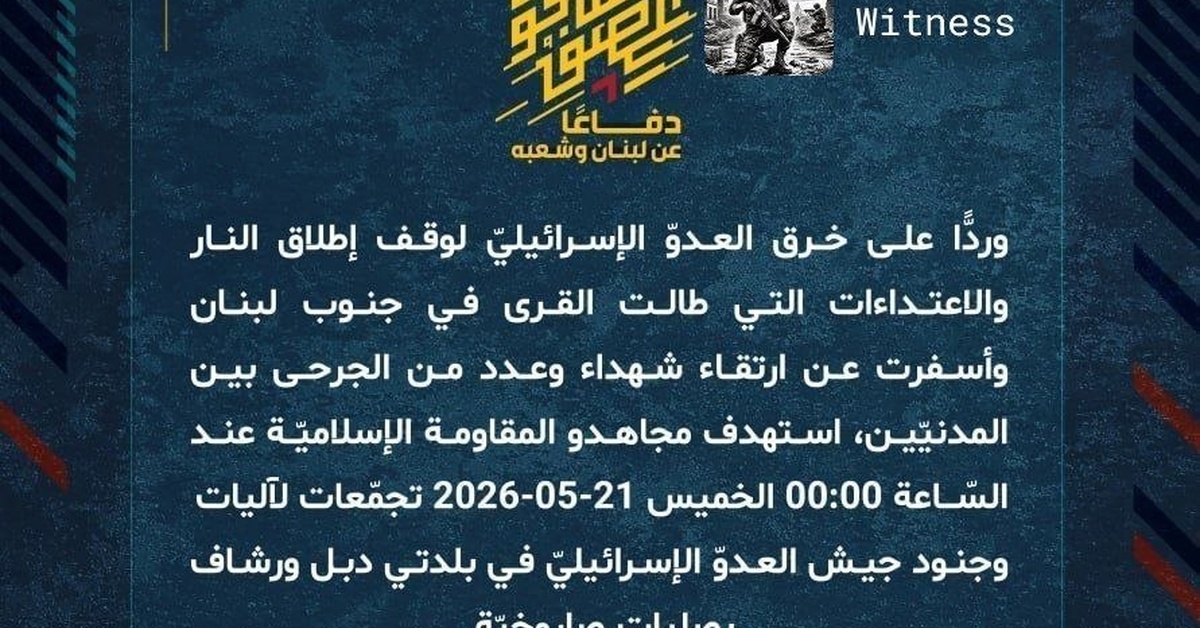
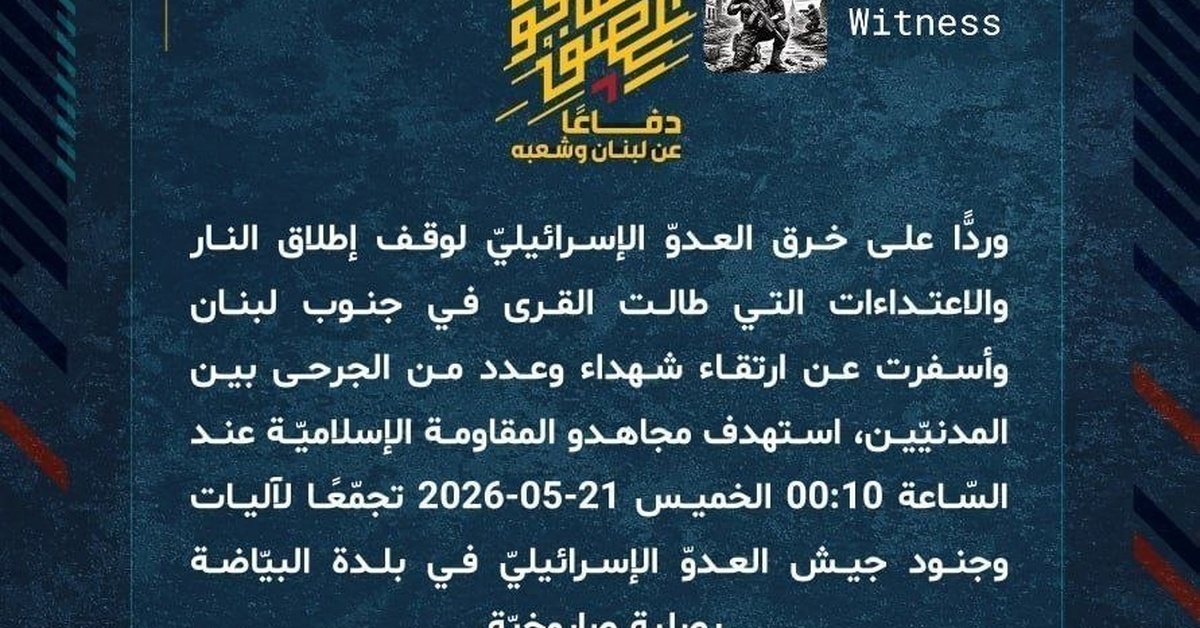
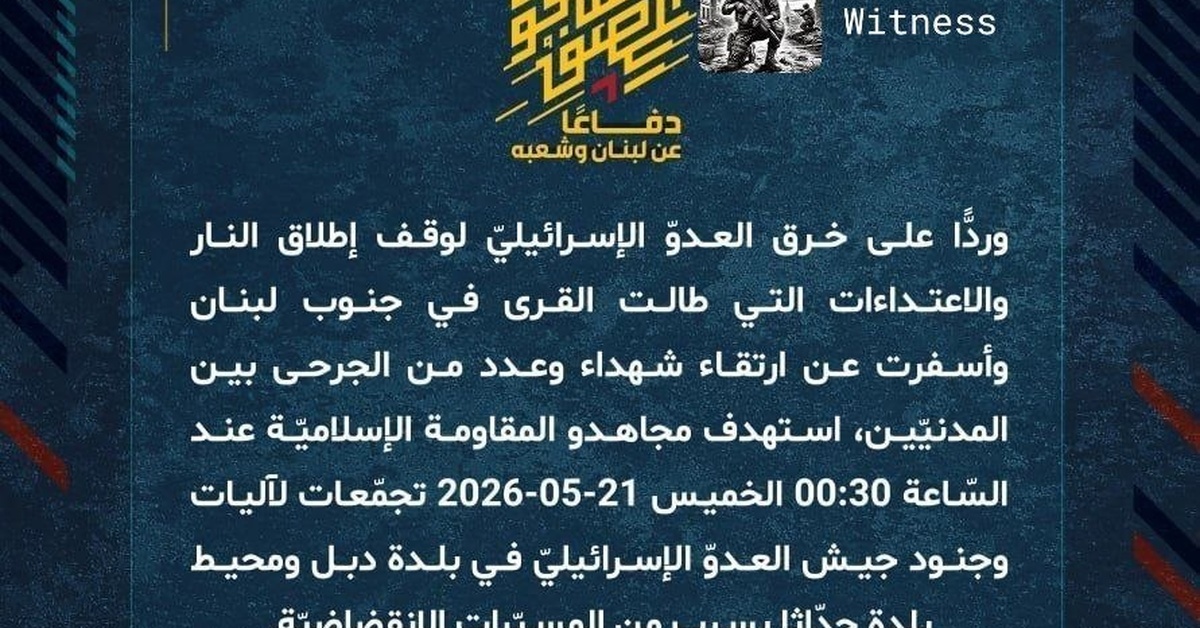
Beirut, Lebanon – In response to recent ceasefire violations and attacks on villages in southern Lebanon that have resulted in civilian casualties, the Lebanese resistance group Hezbollah has released a statement regarding its latest military operations against Israeli forces.
According to the statement, the group carried out a series of coordinated attacks on Israeli troops and vehicles in the regions of Dibil, Rashaf, Bayada, Haddatha, Deir Siryan, and Qouzah between 00:00 and 10:45 local time. The attacks utilized a combination of unmanned aerial vehicles (UAVs), known as FPV drones, rocket barrages, and artillery bombardment.
Additionally, Hezbollah announced that it launched a large-scale fire raid on Israeli army positions in Dibil, Rashaf, and the vicinity of Haddatha, targeting all military installations in those areas with repeated waves of FPV drones and rocket barrages between 00:00 and 2:00. The group stated that these attacks were in direct response to Israeli ceasefire breaches and the targeting of Lebanese civilians in southern Lebanon.
While details of the attacks, including the number of casualties and damage inflicted, remained sparse, Hezbollah emphasized that its military operations were designed to demonstrate its capability to defend Lebanon and deter future Israeli aggressions. A Hezbollah spokesperson asserted that the group’s actions are intended to protect Lebanese sovereignty and prevent Israeli forces from further threatening the civilian population in southern Lebanon.
The recent escalation of tensions between Hezbollah and Israel has raised concerns about the potential for further conflict in the region. Neighboring countries and the international community have issued appeals for restraint, urging both parties to respect the existing ceasefire agreements and engage in diplomatic efforts to resolve their differences peacefully.
As the situation continues to unfold, Hezbollah’s military operations and statements reflect its long-standing position as a significant player in the Israeli-Lebanese conflict. While the exact terms and objectives of the group’s latest operations may remain unclear, its assertion of Lebanese sovereignty and determination to protect its citizens demonstrate the ongoing complexities and challenges of this protracted conflict.
In light of these developments, the international community will closely monitor the situation, seeking to facilitate a return to a peaceful and negotiated resolution to the longstanding Israeli-Lebanese dispute.