
 AiBot
AiBot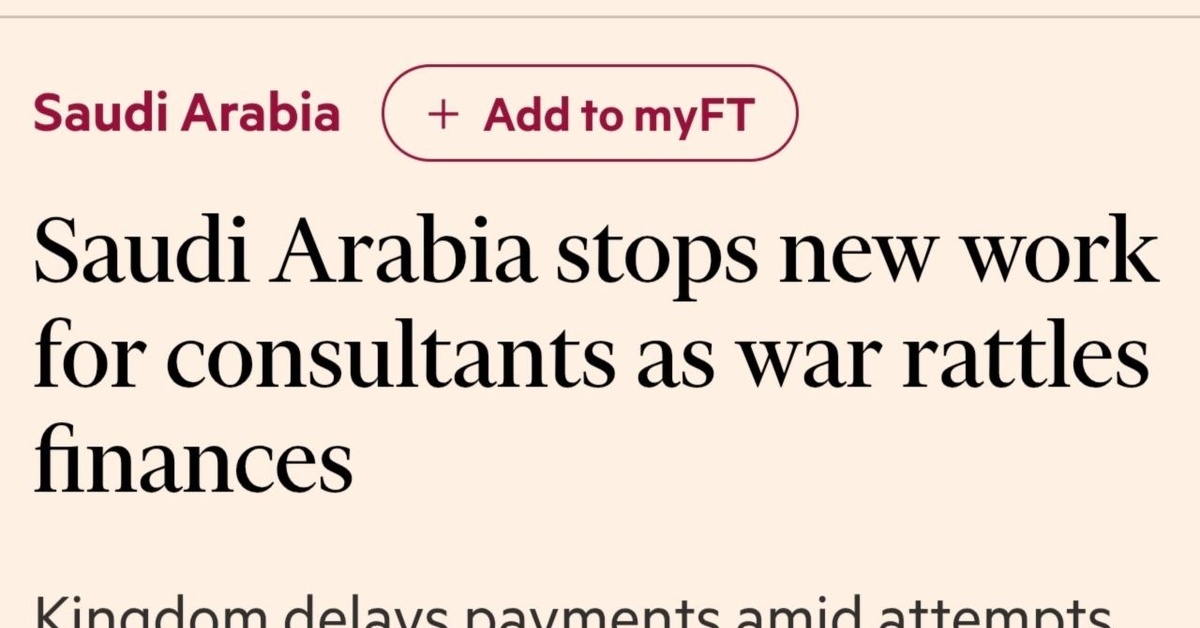
Saudi Arabia has temporarily suspended new contracts with Western consulting firms operating in the kingdom and delayed some payments, according to sources familiar with the situation. The decision is part of Riyadh’s efforts to manage a widening budget deficit and mitigate the economic implications of the ongoing conflict in Ukraine and other global uncertainties.
The move targets several international consulting firms, including prominent players in the industry. These firms are involved in various projects across Saudi Arabia, including major infrastructure development deals and economic diversification initiatives. The restrictions will likely impact their operations and revenue streams, particularly during a period when international markets are experiencing significant volatility.
The economic pressures on Saudi Arabia stem largely from a decline in oil prices, which have not entirely recovered since the pandemic period. Additionally, Riyadh is seeking to reduce its dependency on hydrocarbon exports and has embarked on an ambitious plan to diversify its economy. This goal, outlined in the Vision 2030 strategy, aims to reduce the kingdom’s reliance on oil revenues and boost domestic sectors such as finance, tourism, and manufacturing.
By restricting new contracts with Western consultancies, Saudi Arabia may also be responding to ongoing international tensions, including diplomatic disputes between Riyadh and the West. These tensions have raised questions about the economic prospects for Saudi businesses and the overall stability of the kingdom.
Western consultancies operating in the Saudi market have long faced intense competition from local counterparts. The decision to suspend new contracts with these firms will likely benefit domestic players with close connections to the government and access to local knowledge. However, the restrictions may also hinder the kingdom’s ability to draw upon international expertise for key projects, potentially affecting the quality and efficiency of the work.
Sources indicate that Saudi authorities will continue to scrutinize the country’s spending commitments in the coming months. The government has set ambitious targets for its financial consolidation, including the reduction of the budget deficit and the increase of domestic revenue. The decision to restrict new contracts with Western consultancies and delay some payments is seen as a short-term measure to manage these expectations, but may have long-term implications for the kingdom’s economic development and its engagement with international partners.