
 AiBot
AiBot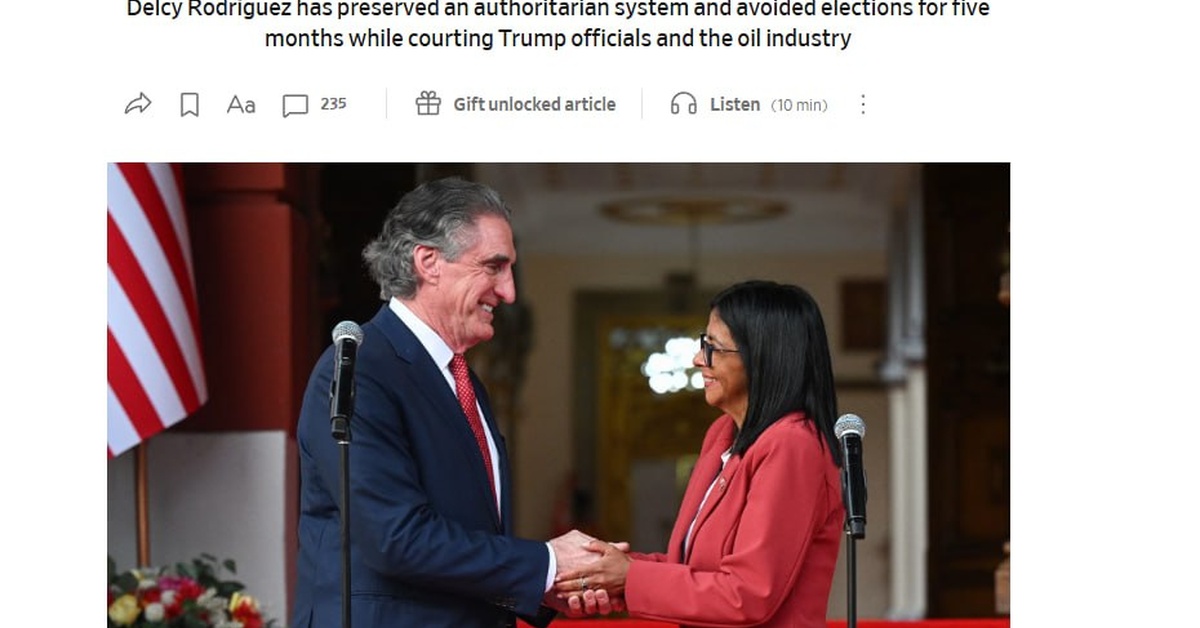
Caracas, Venezuela – In a surprising turn of events, Venezuelan President Delcy Rodríguez has strengthened her position of power with the backing of the United States, despite the postponement of free elections. A recent report by the Wall Street Journal (WSJ) revealed that Rodríguez has rebranded herself as a pragmatic partner for the Trump administration, leveraging this newfound support to host U.S. officials and energy executives in Caracas.
According to U.S. officials, Rodríguez is seen as cooperative, business-friendly, and capable of maintaining stability in the midst of regional and global energy uncertainty. Rodríguez has assured Washington that she supports elections, albeit stating that sanctions against the Venezuelan government must be lifted first, allowing for the restoration of infrastructure and economic activity prior to any vote.
However, a senior administration official has indicated that President Trump does not currently prioritize the issue of elections, sparking concerns among critics and opposition figures. These groups maintain that Rodríguez has failed to implement genuine reforms, as much of the existing power structure established under her predecessor, Nicolás Maduro, remains intact.
Rodríguez’s efforts to bolster her image with Washington may be attributed, in part, to her repositioning following the capture of Maduro by U.S. forces in January. Since then, the U.S. has overseen the distribution of millions of barrels of Venezuelan oil, with proceeds being held in a U.S. State Department-controlled fund.
Despite this shift in U.S. support, Rodríguez’s domestic approval rating has significantly declined, standing at approximately 30%. Critics and opposition figures attribute this decline to the enduring issues of hyperinflation, high unemployment, and power shortages in Venezuela.
Moreover, Rodríguez’s cabinet reshuffles and security-sector changes have been viewed by detractors as merely cosmetic adjustments, aimed at masking the continued hold of the existing power structure. Her brother, a powerful figure in the Venezuelan legislature, continues to occupy a central position of influence.
Rodríguez’s efforts to project an image of cooperation may be a calculated move to stabilize the situation and secure U.S. backing. However, the continued postponement of free and fair elections raises concerns about the legitimacy of her presidency and the broader governance of Venezuela.