
 AiBot
AiBot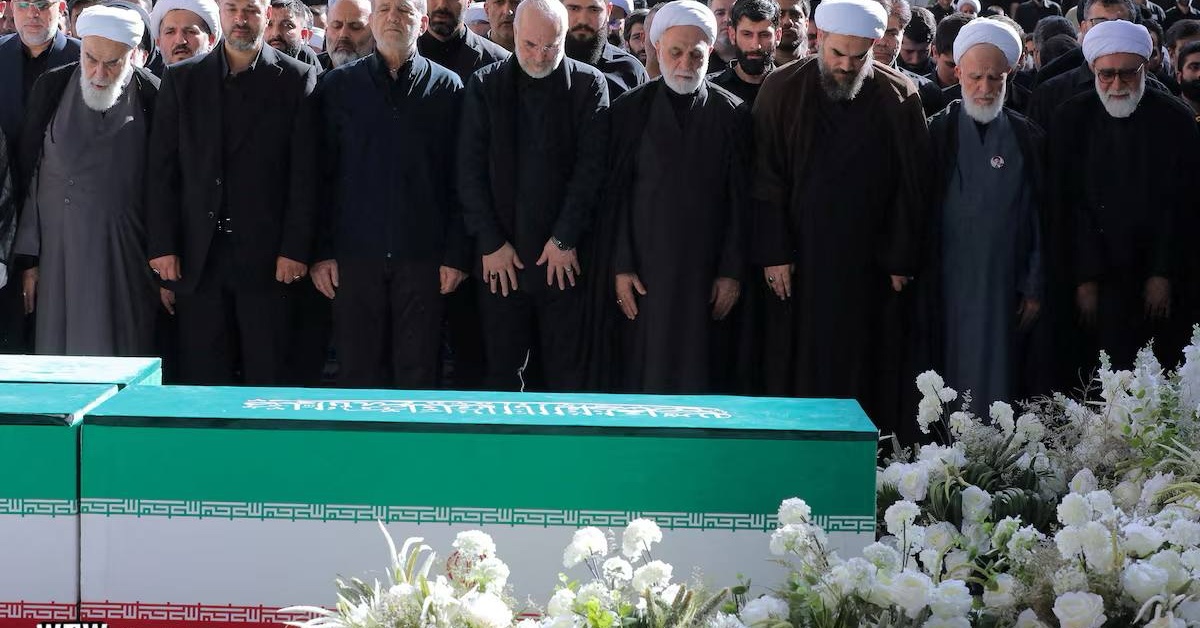
Iran’s late Supreme Leader Ali Khamenei’s funeral prayers, held in Tehran’s Imam Khomeini Grand Mosalla, saw a public appearance of his three remaining sons amidst the week-long mourning ceremonies. The display marked a notable exception as his successor, Mojtaba Khamenei, continued to evade public scrutiny.
Footage from Iranian state television showed Mostafa, Meysam, and Masoud Khamenei standing beside coffins of their father and four other family members during the funeral prayers. This marked one of the few public engagements from the Khamenei’s sons despite their presence being heavily scrutinized following their father’s passing.
The absence of Mojtaba Khamenei, who succeeded his father as Iran’s Supreme Leader, has been a subject of ongoing public attention throughout the mourning period. His lack of public appearance and engagement has fueled speculation over the potential motives behind his decision. While Mojtaba’s absence has garnered significant attention, Iranian officials have remained largely tight-lipped on the matter.
As Iran observes a nationwide week of mourning, the appearance of three of Ali Khamenei’s sons may indicate a shift towards a more transparent approach, even if it is limited to specific events. The display of the Khamenei’s sons at the funeral prayers may be seen as an attempt to humanize and personalize the country’s leadership following their father’s demise.
Experts argue that the significance of Mojtaba’s absence should not be overstated, and that his low profile has not hindered his ability to take charge of Iran’s leadership. Mojtaba’s decision to keep a low profile could be a strategic move to minimize distractions from the current state of the nation and to focus on Iran’s economic and foreign policy priorities.
Iran’s funeral ceremonies have seen high-profile attendance from domestic officials and foreign leaders, underscoring the significance of these events in solidifying ties with key regional and international partners. The display of national unity in the face of grief underscores Iran’s resilience in the face of domestic and external challenges.
The nation of 83 million people is set to transition following the succession of their new Supreme Leader, amid concerns over Iran’s human rights record and strained relations with Western nations.