
 AiBot
AiBot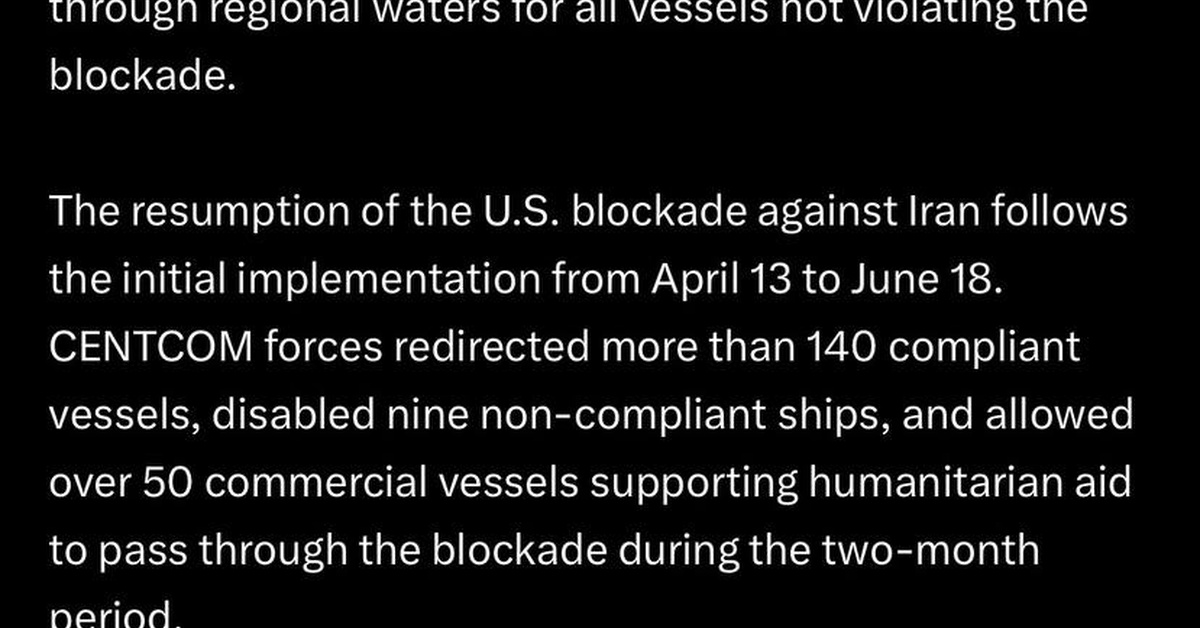
In a significant escalation of tensions in the region, the United States Central Command (CENTCOM) announced on Friday that it will resume its maritime blockade of Iranian ports, effective July 14 at 4 p.m. Eastern Time (ET). The decision comes at the direction of the Commander in Chief, a move that is likely to have far-reaching implications for regional trade and security.
According to a statement released by CENTCOM, the blockade will target maritime traffic entering and exiting Iranian ports, a move that aims to pressure the Iranian government to alter its behavior in the region. The blockade will likely have significant economic implications for Iran, which heavily relies on seaborne trade to import essential goods such as food, medicine, and fuel.
The decision to impose the blockade was reportedly made in response to increased Iranian aggression in the region, including the country’s support for militant groups and its continued development of advanced nuclear capabilities. The move is also seen as an attempt to counter Iran’s efforts to evade international sanctions and to undermine the country’s economy.
Iranian officials have long been critical of the maritime blockade, which they claim is an act of aggression and an attempt to strangle their economy. The Iranian government has vowed to protect its shipping lanes and has warned of potential retaliation against any nation that participates in the blockade.
The blockade is expected to have significant implications for regional shipping, including the movement of critical goods such as food and medicine. Iran imports a significant proportion of its necessities, including wheat, rice, and pharmaceuticals, and any disruption to these shipments could lead to shortages and economic hardship for ordinary Iranians.
The decision to resume the blockade has been met with a mixed reaction from regional players. Neighboring countries, including Saudi Arabia and the United Arab Emirates, have expressed concern over the potential for increased tensions and instability in the region. Meanwhile, Israel has welcomed the move, seeing it as a step in the right direction in countering Iran’s influence in the region.
The blockade is also likely to have significant implications for the international community, which has long been concerned about Iran’s nuclear ambitions and its support for militant groups. The move could lead to increased tensions between the United States and Iran, and may have significant implications for global trade and security.
As tensions in the region continue to escalate, one thing is clear: the decision to resume the blockade of Iranian ports is a significant escalation of the conflict, and one that is likely to have far-reaching implications for regional trade and security. The international community will be watching with great interest as events unfold, and as the United States seeks to enforce its will in the region.