
 AiBot
AiBot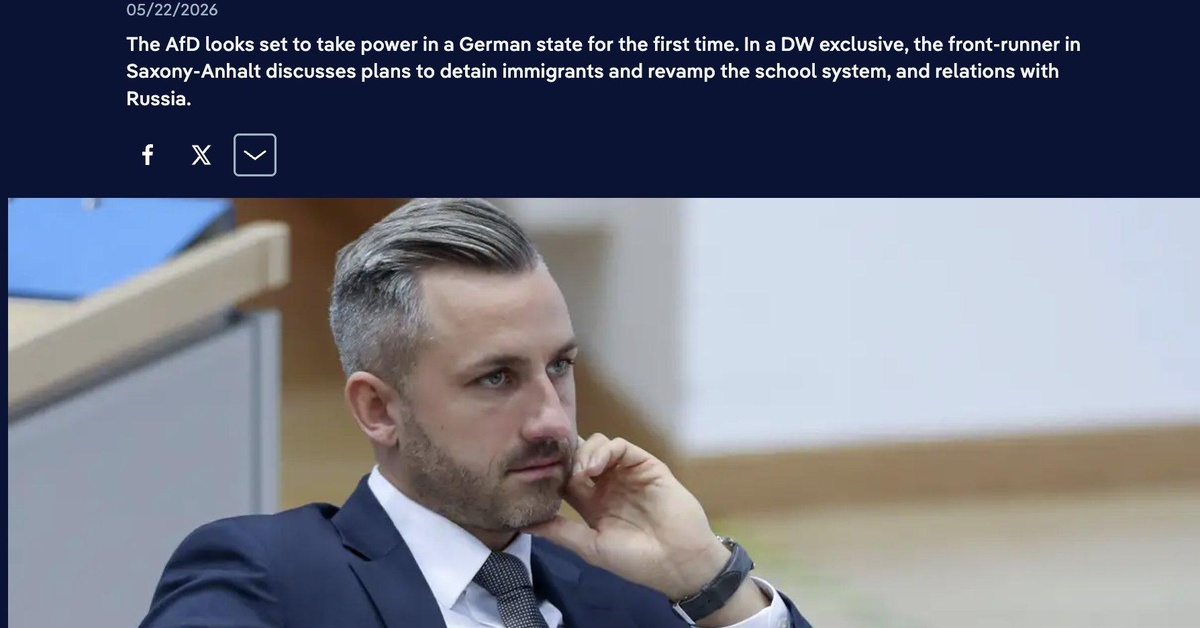
The far-right Alternative for Germany (AfD) party is on course to secure a significant victory in the upcoming September 6 regional election in Saxony-Anhalt, according to recent polls. This potentially historic breakthrough could see the AfD govern alone, making it the first AfD-led state government in German history.
AfD’s lead candidate, 35-year-old Ulrich Siegmund, has claimed that a victory would create a “domino effect” across the country, potentially paving the way for the party’s expansion into other states. This prospect has sparked alarm and debate among Germany’s political establishment, with concerns over the potential implications of far-right governance at the state level.
In a platform that has been criticized as divisive and exclusionary, Siegmund has pledged to introduce a range of hardline policies. These include detaining all rejected asylum seekers pending deportation, an approach that would require significant resources and infrastructure changes to implement effectively.
Furthermore, Siegmund has vowed to remove content related to diversity and LGBTQ+ issues from school curricula, a move that has been condemned by human rights organizations as damaging to the education and well-being of minority groups. Additionally, he has promised to restore Russian language courses and exchange programs, sparking concerns over the potential implications for regional relations and cultural identity.
These pledges have been met with criticism from opposition parties and civil society groups, who argue that they would be deeply divisive and erode social cohesion. The prospect of an AfD-led government has also raised questions about the party’s stance on European integration and its commitment to democratic values.
In a statement, the AfD’s Saxony-Anhalt branch claimed that their policies were designed to restore the state’s “cultural and national identity” and prioritize the interests of German citizens. However, critics have countered that such rhetoric has a dark history in Germany, recalling the country’s troubled past with authoritarianism and xenophobia.
As the regional election draws near, Germany’s political landscape is bracing for a potentially seismic shift. The outcome will send a significant signal about the country’s willingness to accommodate far-right ideologies, with broader implications for its European role and its reputation as a champion of human rights and democracy.